General Information
Nahiya (Subdistrict)
Efrîn
Also Known As
Abein, Aben, Bênê, ابين, بينه
Tribes
Rûbarî
Families, Clans, etc.
Bekro, Ebdo, Ebdî, Kedro, Kelto, Kenco, Mûsaco, Neaso, Sîdo, Xebariye
Photos
Basic Information about Bênê
Source: Tirej Afrin
Etymology: In Kurdish, the name means scent or breath/breathing (bên), or it is a corruption of the Kurdish word for long elevation (ben). Other theories suggest a Syriac origin meaning 'heap of stones, branches, and fruits' or an Aramaic origin meaning 'the monks' or 'heaps of stones'.
Foundation Date/Period: 500 years ago
Hills: Çiyayê Lêlûn, Dûranî
Other Landmarks: Wadiyê Tinib
Summaries
I. Summary from TirejAfrin Site (English) of Bênê
Source: https://www.tirejafrin.com/site/kura%20afrin%20markaz-bene.htm
The following is stated in the book جبل الكرد (عفرين) دراسة جغرافية Çiyayê Kurmênc (Efrîn): A Geographical Study by د. محمد عبدو علي Dr. Mihemed Ebdo Elî: Bên, Ebîn /4051 inhabitants, 25km, 485m/:
Bên or Bên: In Kurdish, it means scent or breath and breathing (bên). However, I believe it is corrupted from the Kurdish word (ben) which means long elevation. This name fits the terrain of the village site to a great extent, and the name was corrupted from (ben) to (Bn/Bên) according to the habit of the Kurds of Efrîn who tend to incline vowels heavily, sometimes inclining them twice. As for Khuri Bersûm, he says it is of Syriac origin meaning "heap of stones, branches, and fruits." In another place, he says about the word "Ebîn" that it is Aramaic meaning "the monks," which weakens his opinions.
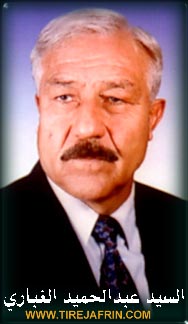
It is a large village with a high percentage of educated and cultured people, and their migration to Heleb is significant. From it comes the Kedro family, creative in the art of painting. It is one of the villages of the Rûbarî tribe, and from it is the member of the Syrian People's Council, Brigadier General Ebdulhemîd Xebarî.
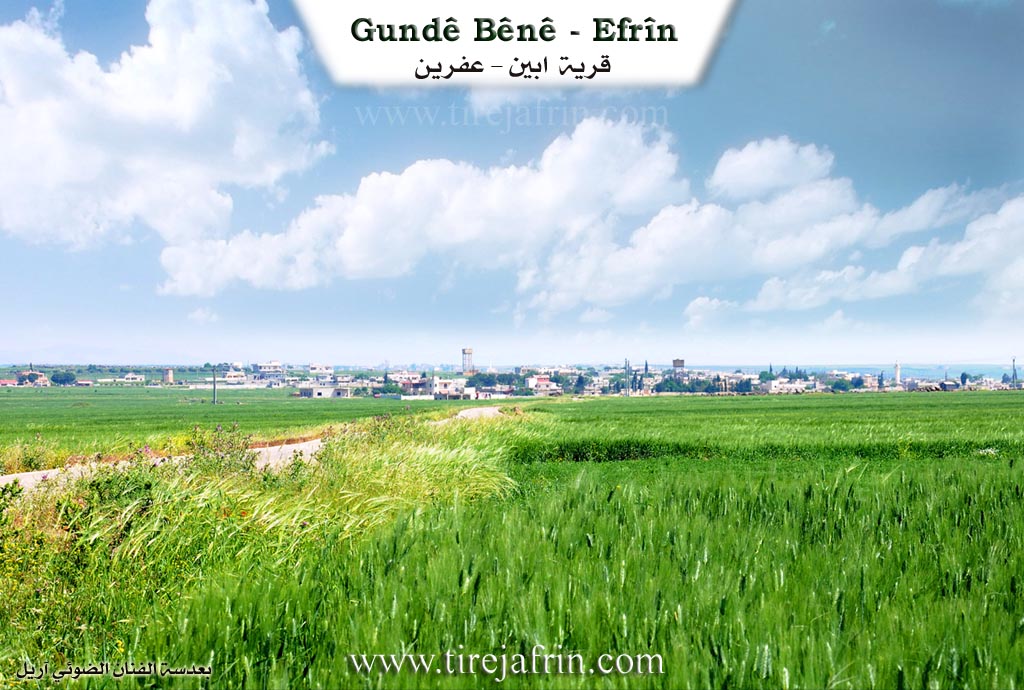
The following is stated in the book عفرين .... نهرها وروابيها الخضراء Efrîn... Her River and Her Green Hills by the writer عبدالرحمن محمد Ebdulrehman Mihemed from the village of Qetme: Ebîn is a village in Çiyayê Lêlûn, following the subdistrict of the villages of the center and district of Efrîn, Heleb Governorate. Its name is Akkadian Aramaic and means "heaps of stones." It is a large village located at the end of the southeastern slope of the Dûranî limestone plateau, from the southeast of which extends an undulating plain. It inclines towards the northeast, and a valley passes south of it heading with the slope of the plain to feed the valley of Tinib. Volcanic soil covers the plain and the plateau, on which basalt stones are scattered.
It is 20km away from the city of Efrîn towards the southeast. It is bordered on the north by a wide plain and the village of Tinib and Keştaar nearby; on the south by a wide plain and the village of Çetal Ziyaret; on the east by a wide plain of olive trees and the village of Dêr El-Cemal; and on the west by a wide plain planted with olive trees and the village of Baselhaya and Cilbir which follow the villages of the Efrîn center.
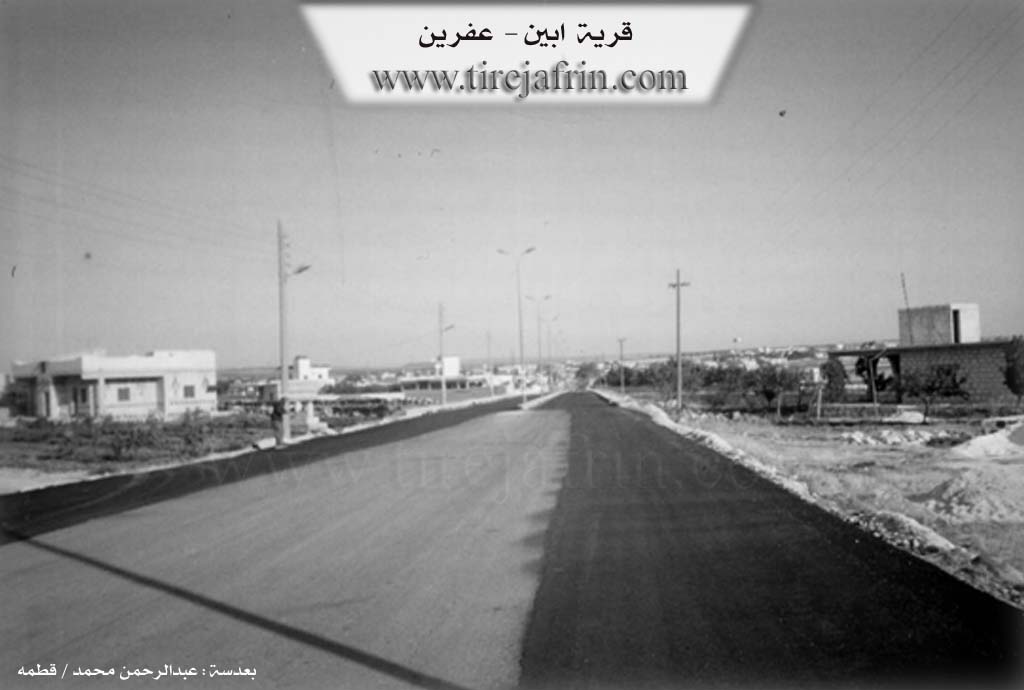
The number of its houses reaches about 250 houses and its age is 500 years. A municipality was established in it since 1984. It has an electricity network, drinking water, a primary and middle school, a telephone center, and a paved road branching from the Heleb road passing through the village of Dêr El-Cemal to Ebîn and the neighboring villages. It has a consumer institution, a peasant society, a mosque, three modern villas on the western and southern sides, and two pharmacies. Its modern houses are made of stones and cement, while the old ones are of stones, mud, and wooden roofs. The people of the village work in cultivating cereals, vegetables, olives, and raising livestock.
Among its most important families are the Xebariye family (specifically Ebdulhemîd Xebarî, a member of the People's Council several times), Kenco, Kedro, Ebdî, Mûsaco, Sîdo, Bekro, Ebdo, Kelto, and Neaso. Among the PhD holders from this village are Dr. Mihemed Hisên Ehmed who holds a PhD in Business Administration from France, Dr. Hisên Seado with a PhD in Nuclear Physics from Germany, and Dr. Îmad Mihemed Kenco with a PhD in Organic Chemistry from France. There are many university degree holders in all specializations. The mukhtar of the village is Elî Ibrahîm.
Preparation and execution:
Manager of the Tirej Efrîn site: Ebdulrehman Hacî Osman
20/12/2013
Sources:
- Book: جبل الكرد (عفرين) دراسة جغرافية Çiyayê Kurmênc (Efrîn): A Geographical Study by د. محمد عبدو علي Dr. Mihemed Ebdo Elî.
- Book: عفرين .... نهرها وروابيها الخضراء Efrîn... Her River and Her Green Hills by عبدالرحمن محمد Ebdulrehman Mihemed from the village of Qetme.
- Studies of Navenda Tirej Soft / Ebdulrehman Hacî Osman.
II. Ax û Walat Book 1
THE VILLAGE OF BÊNÊ
15.6.2016
The village of Bênê is affiliated with the Şêrewa district of Efrîn canton, located about 18 km east of the town of Basûtê and 27 km southeast of the city of Efrînê.
It is also 4 km from the town of Dêrcemal in the Şahba region and 35 km north of Helebê.
The name of the village Bênê comes from the meaning (Cool Wind) because it is located opposite the (Bêlan) pass, or it comes from the meaning (black and white stones), as stated in the book of Yaqûtê Hemwî called (Dictionary of Cities)
140
that: ((In the Robar region, there are many stones from volcanoes, and they are of white and black colors)).
The village of Bênê is one of the villages of the Robariyan region, which is the name of an ancient Kurdish tribe. It has been settled in the region for a long time. The Robariyan villages are 7 in number:
Bênê, Basilê, Cilbirê, Aqîbê, Ziyaretê, Xirêbkê, and Kişte’arê.
The altitude of the village of Bênê is 1300 m above sea level, and a special feature of this village is that it is very windy, because it is located opposite the pass or gate of ((Bêlan)) which is on the Turkish side, and the weather conditions of the region are pleasant in the summer.
The people of Bênê have spread to 3 villages: Kokana Jêrîn, Ebîdanê, and Mûsankê, and some families have also settled in Kurzêlê.
During the Ayyubid period, a person named ((Şerîf)) led the Basûtê Citadel. Also, about 250 years ago, a great war against the Ottomans took place under the leadership of Îsa Axa, because they wanted their autonomy, and as a result, a siege was imposed on the village, and many people fled from the Ottomans, and some were killed and captured.
141
The village of Bênê is an ancient village, and like many villages in Şêrawa, it had many towers and a castle or palace, and its traces are still present, known by the name (Hesarê). Next to it, there is also an ancient spring.
There are 11 families in the village:
Gota, Ce’fer, Reşa, Mosac, Robarî, Berekat, Korxelîl, Gemgeşî, Geblana, Mêrzo, and the Necar family. They are not all from one root, but most of them are Robarî.
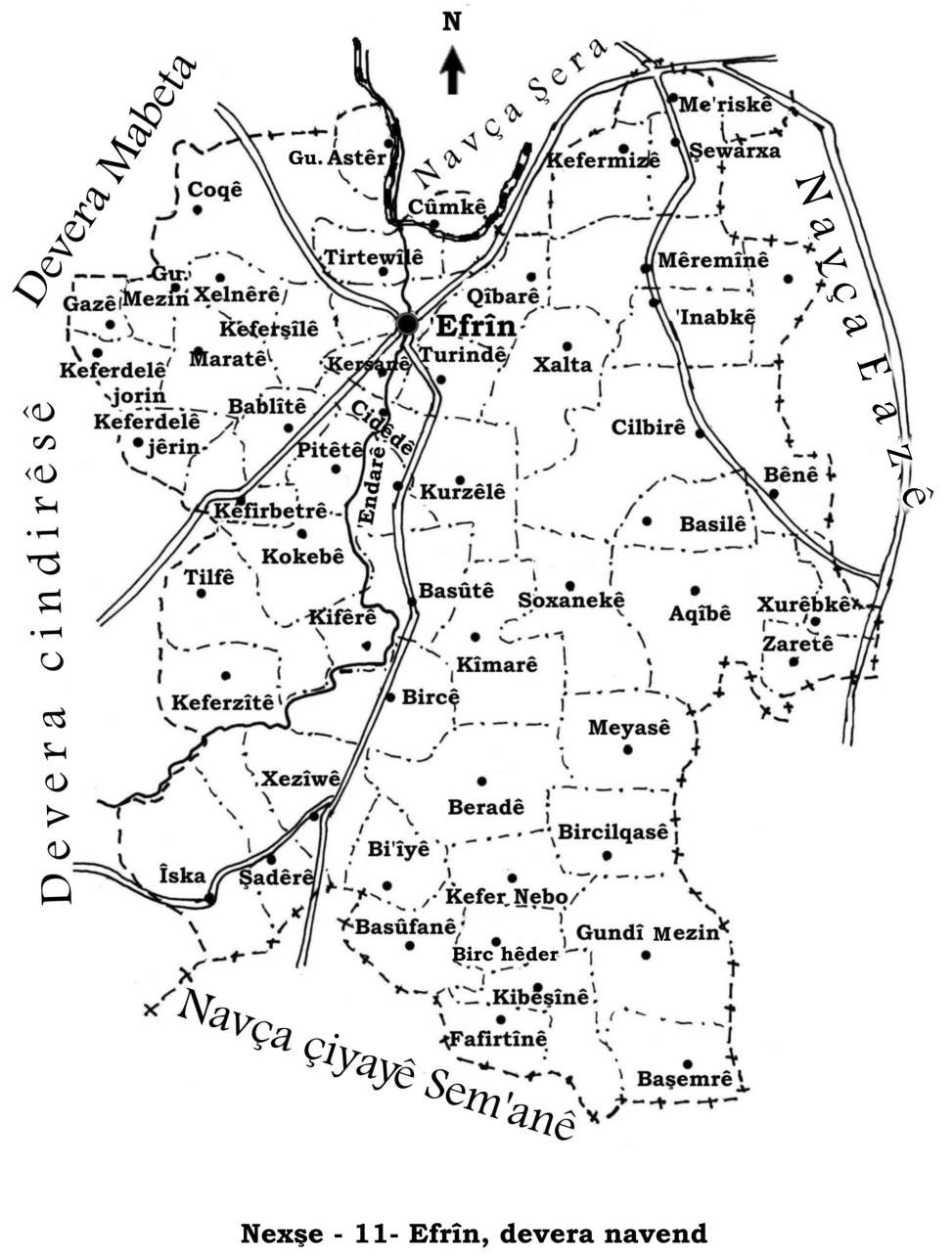
To the north of the village is the village of Tinib, to the northeast is Keşte’ar, to the east is the Keferhelê plain, to the southeast is the town of Dêrcimêlê, to the south are Xirêbkê and Ziyaretê, to the southwest is Aqîbê, and to the northwest is Cilbirê.
There are 3 shrines in the village: the shrine of Şêx Berekat, Şêx Mihemed, and Şêx Seîd.
The people of the village make their living from agriculture, from fields of wheat, barley, lentils, and vegetable gardens of long squash, tomatoes, okra, gourds, etc. All crops are rain-fed, meaning not irrigated. But like many villages in Şêrawa, it has few olive groves. The yield of wheat in the village reaches (450), barley (100), chickpeas (100), lentils (100), and cumin (50) loads per year. The striking thing is that this year (black cumin) was planted.
142
A large number of the village's people are intellectuals and state employees. About 300 people have obtained university degrees, meaning 60% of the men and women of the village have completed high school. About 10 people have obtained higher education after university, i.e., a doctorate, in the fields of economics, chemistry, and engineering.
Due to the village's proximity to the city of Helebê, many people work in various institutions in Helebê as civil servants. Also, in the 1970s, many people migrated to Helebê and settled there, but after the Syrian war, many people returned to the village.
Some people work in various factories in the city of Efrînê. Also in the village, there is a blacksmithing workshop, a human pharmacy, one for agriculture, and many shops; many people make their living from these.
About 50 people work in the institutions of the Democratic Autonomous Administration in Efîn and Basûtê.
There are 3 vineyards or grape orchards in the village, and their products are sold in Efrînê.
The village school was built in 1949.
There are 7 martyrs from the village:
Martyr Zekî, Beydar, Ehmed, Şêrciwan, Umer Hesen of culture and arts, Egîd, and Martyr Celal.
143
The village commune, named Ş. Beydar, was established a year ago and has provided an electric generator for the village, distributing electricity to all the houses and managing it.
The women's commune is also named Ş. Zinarîn.
There are many famous people in the village:
Zekeriya Bekro: he is one of the village elders, he has done a lot of work and service for the village, from repairing the village road, building the school, and connecting the water network.
Ezîz Gedro: a world-renowned painter.
Şêx Reşîd Gedro: known as a scholar of the Islamic religion.
Author Reşîd Gedro: works as a university professor in the city of Berlin, Germany, and has written a book about the Kurds, but due to his death, the book was not published.
Seîd Se’do: an atomic scientist who obtained a doctorate in physics, now lives in Germany.
Ebdilhemîd Xûbarî: was a high-ranking officer in the Syrian army, and for four terms from (1988 to 2002) was a member of the Syrian parliament.
Lawyer Mihemed Ezet Xûbarî: the first person to obtain a law degree from the Efrînê region, as
144
a high-ranking officer and chief of police in many provinces he worked, but because he was a Kurd, a lot of pressure was put on him, and he was sent to a civilian job and as a high-ranking employee in many civil institutions and agencies he worked. He was also a witness to the implementation of the racist project called the ((Arab Belt)) which took place in the Cizîrê region.
Hec Nasîf, Evdê His Gelto, and Salihê Osinê: as ancient folk singers, they have done a lot of artistic and folk singing work.
Because the Robariya villages on the border of Efrîn canton are with the Şahbada regions, in the years 2013 and 2014 they faced many wars and battles from the gangs.
On 17.10.2014, the gangs once again attacked the village of Bênê, and all the women and children left the village. Only the men and youth of the village remained, and a fierce battle against the gangs began. Within 24 hours and after an unparalleled resistance, they expelled them from the village and liberated their village with the help of the YPG and YPJ, writing a new page with pride in the book of history..
Foundation/Origin Information of Bênê
It is from the villages of the Robari tribe. Among its most important families is the Ghobariyah family, Kanjo, Kadro, Abdi, Musajo, Sido, Bakro, Abdo, Kalto, Naaso.
Source: TirejAfrin Site
Possible Village Name Meaning of Bênê
Bên or Bîn means in Kurdish the smell or breath and breathing. However, it is believed to be corrupted from the Kurdish word Benê which means the long elevation. Other theories suggest it is Syriac in origin meaning "stone heap, branches and fruits," or Aramaic meaning "the monks."
Source: TirejAfrin Site