General Information
Nahiya (Subdistrict)
Reco
Also Known As
Al-Batra, Çanqa, Çe'inka, Çenka, البتراء، جعنكي, جعنكلي, چعنكلي, جاعنكو
Tribes
Şêxan
Families, Clans, etc.
Etûn, Malbata Etûnê, Malbata Usibê Simo
Photos
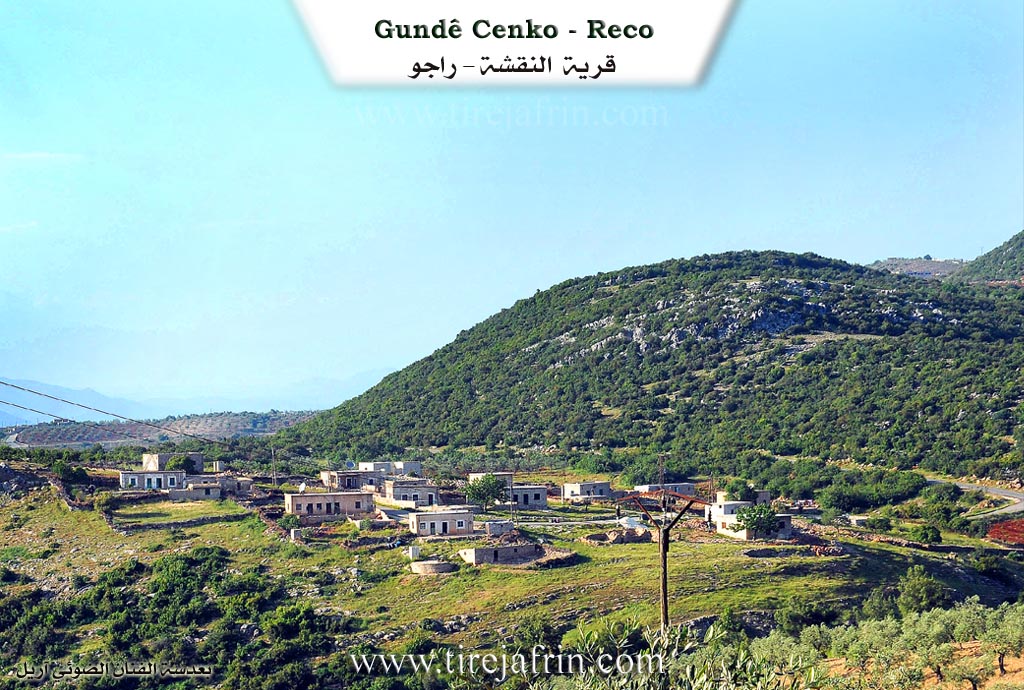
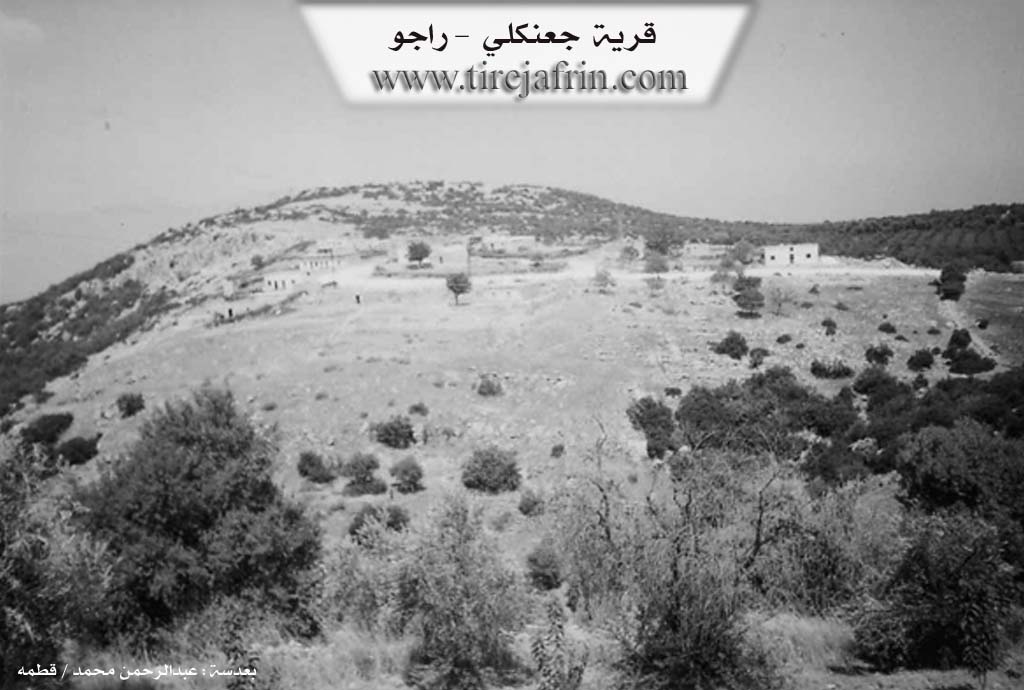
Basic Information about Çe'inka
Source: Ax û Welat
Etymology: The name Çanqa derives from the word for 'making' or 'crafting,' attributed to two Armenian craftsmen named Beqser and Helaç who used to make felt mats with designs there
Foundation Date/Period: Approximately 300 to 400 years ago
Springs: Kaniya Sînê, Kaniya Sînor
Hills: Çiyayê Bêlê, Çiyayê Mendala, Çiyayê Bêrê
Shrines: Ziyareta Etûnê
Ruins: Sêlekê
Wells: Bîra Xirêbe, Bîra Reza
Other Landmarks: Geliyê Sîvî, Geliyê Sînê, Geliyê Hêra, Geliyê Tîra
Summaries
I. Summary from TirejAfrin Site (English) of Çe'inka
Source: https://www.tirejafrin.com/site/kura%20afrin%20%20%20Reco%20-%20jenkale.htm
It is stated in the book Çiyayê Kurmênc Efrîn Geographical Study: E'inka, Çe'nkelî, El-Batrā' /2674p 386h - 10km - 920m/:
Çe'nka: meaning the engraving (neqiş) in Kurdish.
It is located on the southern forested slope of Çiyayê Bi'vê, and its elevation is 909m.
It is stated in the book Efrîn... Her River and Her Green Hills: Çe'nkelî: A village in Çiyayê Kurmênc belonging to the Reco township, Efrîn region, Heleb governorate. It is a small village located in the western part of Çiyayê Kurmênc above a flat limestone rocky slope. It is bordered to the north by a stream and a rugged mountain slope and the village of Elî Beskî, and to the south by a deep stream and a rugged mountain chain planted with oak trees and the village of Heyder Obasi, and to the east by a high mountain chain and Çiyayê Bilalîko and the village of Bilalîko, and to the west by a mountain chain and the village of Firfirêk Foqanî.
The number of its houses is about 10 houses and its age is about 200 years. Its old residences are stone and mud with wooden roofs, and the modern ones are cement. There are no public facilities in it due to the ruggedness of the village's location. Its mountainous lands are not suitable for agriculture and there are not many residents in it, and many of them come to the village during the days of holiday seasons. The residents who are present work in raising sheep and goats. The village has a rugged dirt road. Among its most important families is the mujahid Ebdullah Etûn.
Sources of Information:
- Book: جبل الكرد (عفرين) دراسة جغرافية Çiyayê Kurmênc (Efrîn): A Geographical Study by د. محمد عبدو علي Dr. Mihemed Ebdo Elî.
- Book: عفرين .... نهرها وروابيها الخضراء Efrîn... Her River and Her Green Hills by عبدالرحمن محمد Ebdulrehman Mihemed from the village of Qetme.
- Studies of Navenda Tirej Soft / Ebdulrehman Hacî Osman.
- Some residents of the villages.
Preparation and execution: Manager of the Tirej Efrîn website: Ebdulrehman Hacî Osman 20/12/2013
II. Summary of Çe'inka from Ax û Welat
Source: https://www.youtube.com/watch?v=i6hALzefDBM
The village of Çanqa, located in the Raco district of the Efrîn region, is a small but historically significant settlement situated in the high mountains of Çiyayê Kurmênc. The village was founded approximately three to four centuries ago by an individual named Usibê Simo. During the Ottoman era, the village was known as Gucik Heleb, meaning Little Aleppo, because it served as a central hub for the surrounding area. The current name, Çanqa, is derived from the history of craftsmanship in the village; elders recount that two Armenian figures, Beqser and Helaç, resided there and produced felt mats adorned with intricate designs.
The social structure of Çanqa is homogeneous, with the residents belonging to the Şêxan tribe and descending primarily from a single lineage known as Malbata Etûnê. This family is renowned for a history of resistance against foreign powers. The patriarch, Ebdullah Şêx Îsmaîl, known as Etûn, led a rebellion against the Ottoman governor of Heleb. To protect the villagers from collective punishment, Etûn eventually surrendered himself and was executed in Erzîn, where his resting place, Ziyareta Etûnê, is now regarded as a shrine.
This tradition of resistance continued with his sons, Emerê Etûnê and Mihemedê Etûnê (also referred to as Mehmed Atûn). They are described as key figures who fought against the French mandate forces and supported the uprising of Şêx Seîd. Oral history preserved by village elders details their connection to regional leaders like Qereyilan in Dîlok and Îbrahîm Paşayê Millî. One specific account describes an ambush on a French train in the Tîra valley, where the fighters disarmed a guard and disrupted supply lines using a telephone seized at a checkpoint.
Geographically, Çanqa is surrounded by rugged terrain and specific landmarks that define its boundaries. To the east lies Çiyayê Bêrê and Bîra Xirêbe, an ancient well site where a settlement once existed. To the south are Çiyayê Mendala and the ruins of Sêlekê. The village relies on wells such as Bîra Reza for water, as nearby springs like Kaniya Sînê are located at a distance. The inhabitants maintain a self sufficient lifestyle adapted to the snowy mountain winters, hunting partridges, gathering wood for heating, and processing their own bulgur, cheese, and olive oil. Despite migration to cities like Heleb in the past, many residents have returned to preserve their ancestral way of life in the mountains.
II. Ax û Walat Book 1
THE VILLAGE OF ÇENKA
16.12.2016
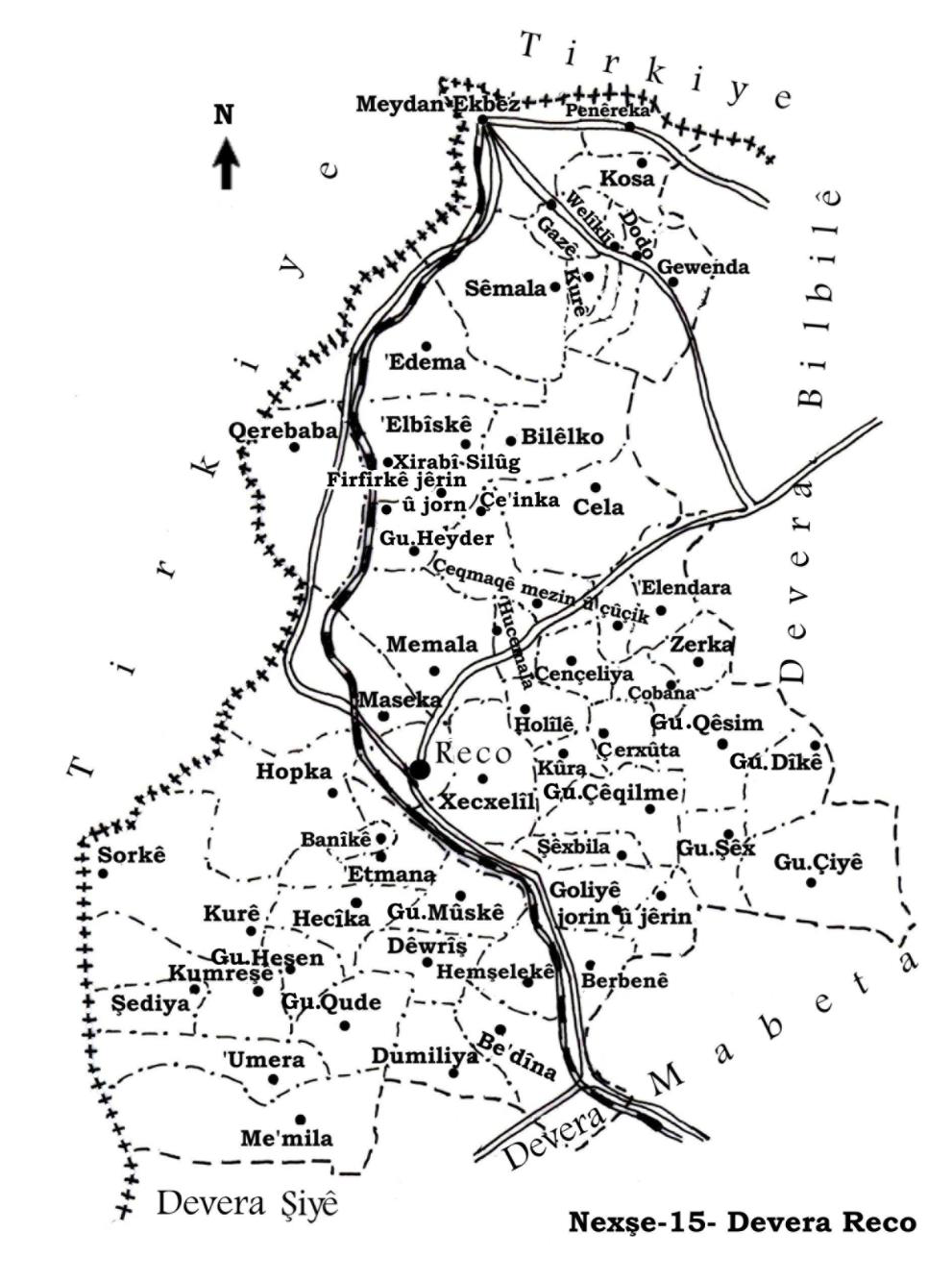
The village of Çenka is affiliated with the Reco district of the Efrîn canton. It is located 7 km north of the city of Reco and 37 km north of the city of Efrîn.
The name of the village means ((pattern/design)). This is because two Armenian men named Bexser and Helac used to make patterned hats in the village.
During the Ottoman era, the village was known by the name ((Guçik Heleb)) or (Little Aleppo), because this village served as a center for the surrounding villages.
96
Ûsib Hesen was the first person to settle in the village. Later, other families came and the village was settled. Because of this, the village of Çenka is very ancient, and many villages were founded from it, such as Bilêlko, Elbîskê, and Eltaniya.
The village has sometimes been subjected to destruction. Once, during the French era, because Umerê Etûnê, one of the men of the village, along with 21 others, participated in the Sheikh Seîd rebellion, and after a while, the Turkish state issued a death sentence for Umerê Etûn, so the people of the village were forced to flee from their homes.
To the east of the village are the Bêlê mountain, the land of Hecîkê, and the village of Cela. To the south are the Mendela mountain, the village of Eltaniya, the Zîvî valley, and the village of Sêlekê, which is now a ruin. To the west are the village of Firfirka Jorîn, the Sînê spring, the castle of the Şêx village, and the Sînê valley. And to the north are the land of Salê, the Hêra valley, and the village of Elbîskê.
The Xirêbe well is to the northeast of the village. There are many wells there, but now they are all without water. There was an ancient city there before.
The Reza well is to the southwest of the village. It is very ancient and its water is still available today. Shepherds also water their flocks at it.
The people of the village make their living from agriculture, from the cultivation of olive, almond, walnut, cherry, and pistachio groves,
97
and figs. Along with them, some families plant vegetable gardens for their homes.
One can say that for food, the people of the village rely on natural products from vegetables, fruits, and livestock products. Therefore, all the families in the village own livestock such as sheep, goats, and cows, and they sell their products at the Reco market.
Nearly 6 people work in the sewing workshops in Reco, and around 17 people work as employees in the institutions and bodies of the Autonomous Administration.
There are 20 houses and nearly 300 people in the village. The people of the village consist of one family, that is, the Etûn family, and they are from the Şêxî tribe.
There are 2 martyrs named Ş. Etûn and Ş. Dilşan from the village. The village commune is named Ş. Qehreman. There is no school in the village, so the students of the village are forced to study at the school in the village of Elbîskê.
Ebdelah Şêx Ismaîl, who was known by the name Etûno, was a rebel and against
98
the Ottomans, he rose up and entered many wars and battles. Therefore, on a Wednesday in front of a coffee house in the city of Erzîn in the year 1908, he was executed and with pride, he enters the pages of history. Now, in place of his grave, there is a shrine known as ((Etûno)).
Mihemedê Etûn and his brother Umerê Etûn led a rebellion against the French occupiers. In an operation against the French military train in the Tîra valley, they participated with the revolutionaries of the Kurmênc Mountains, such as Ehmedê Rûtê, Mihê Îbşaşo, Seydê Dîkê, and Mistefê Çolêq.
Mihemedê Etûn had established contact with the leader of the Syrian revolution, Îbrahîm Henano, and also had strong relations with the leaders of the Sheikh Seîd rebellion in Northern Kurdistan.
After many wars and battles, the two brothers Mihemed and Umerê Etûn ended their lives in their beds.
Xoce Etûno was a famous Islamic scholar. He worked as a mullah in many mosques, and many students learned the Quran at his hands.
Transcriptions and Subtitles
| Source | Video | Subtitles | Transcript |
|---|---|---|---|
| Ax û Welat 1 | Watch Video | Download SRT | View Transcript |
Foundation/Origin Information of Çe'inka
The earliest known inhabitants were two Armenian men named Baxsar and Haloc, who practiced the craft of making churns. During the Ottoman period, the village was a larger settlement of 23-24 households known as "Küçük Halep" (Little Aleppo). Some residents later migrated to found neighboring villages like Bilêlko and Elbîskê due to the barren terrain.
Source: Ax û Walat Transcript
Possible Village Name Meaning of Çe'inka
"Çe'inka" means "the relief" in Kurdish.
Source: TirejAfrin Site
The name derives from the Kurdish word for churns, "çanê," a craft practiced by its earliest inhabitants.
Source: Ax û Walat Transcript