General Information
Nahiya (Subdistrict)
Reco
Also Known As
Ba'dina, Ba'dinlî, Ba'dîna, Ba'dîno, Ba'dînê, Baadina, Badina, Badino, Badîna, Badînli, Badîno, Ba‘dîna, Ba’dîna, Be'dina, Be'dîna, Be'dîno, Bedîna, Bedîno, Behdîna, Behdînya, Beit Adeen, Bidinlî, Sheikh Rashid, بعدنلي, بيت عدين, بعدينو
Tribes
Badînan, Dumilî, Hemşelek, Korkan, Opî, Şêxan
Families, Clans, etc.
Alê, Bako, Bavê-wan Nayî, Bekrî Berî, Berî, Biniyanê gundî Dolgirê, Bota, Celxer, Cercî, Dîmso, Ebdî, Ebo Can, Ehmed, Ehmedê Zekî, Elî, Elî Bekrî Elî, Elî Gurpe, Elîf, Elîfo, Eslan, Ezazê, Habû, Hacî Hemke, Heccî, Hecî, Hecî Bekir, Heddad, Hemqofel, Hemzê, Hentêmbat, Hestûb, Hêvîdî, Kor Ehmed, Kora Ehmed, Mala Dumisa, Mala Hacîler, Mala Hecî, Mala Kurd Ehmed, Mala Sunturler, Mala di Colxolê, Malê Begê, Malê Sîno, Midawer, Miheme Cah, Mislim, Mistefa Elî, Mistike, Mistosef, Nezmî Mîrêt, Omerê Şêx, Reşîd, Seydko, Sunter, Sîno, Uskikler, Xelkê Hikmet, Xilofet, Xwedêdo, Yehya Eşo, Çerçîler, Îbo
Photos
Basic Information about Be'dîna
Source: Ax û Welat
Etymology: Named after the Bahdînan region in Başûrê Kurdistanê
Foundation Date/Period: 400 to 500 years ago
Springs: Eynê Bêlek
Hills: Çayê Piling, Sirtê Bilbilê
Shrines: Şêx Reşîd
Wells: Bîra Piling, Hafar
Other Landmarks: Çayê Dimîlo, Benê Keloşkê, Kinhaftarê, Golê, Biniya Mala
Source: Afrin 366
Shrines: Şêx Reşîd
Ruins: Xarobê Simaq
Other Landmarks: Sorkê, Geliyê Sorsînê
Source: Khalil Sino
Springs: Ava Reş, Kanîka nava Xosar
Hills: Kelawîrî
Other Landmarks: Batman, Şêxanî
Summaries
I. Summary from TirejAfrin Site (English) of Be'dîna
Source: https://www.tirejafrin.com/site/kura%20afrin%20%20%20Reco%20-%20badnle.htm
According to the book Çiyayê Kurmênc (Efrîn): A Geographical Study: Be'dîna, Ba'denlî, Bayt 'Edîn / 5246 inhabitants, 906 houses, 10km, 530m /:
Be'dîna: It is believed that its origin comes from the word "Behdînan" Behdînan, which is the name of a well known region in Southern Kurdistan. There is no connection between the Arabized name "Bayt 'Edîn" and the Kurdish designation.
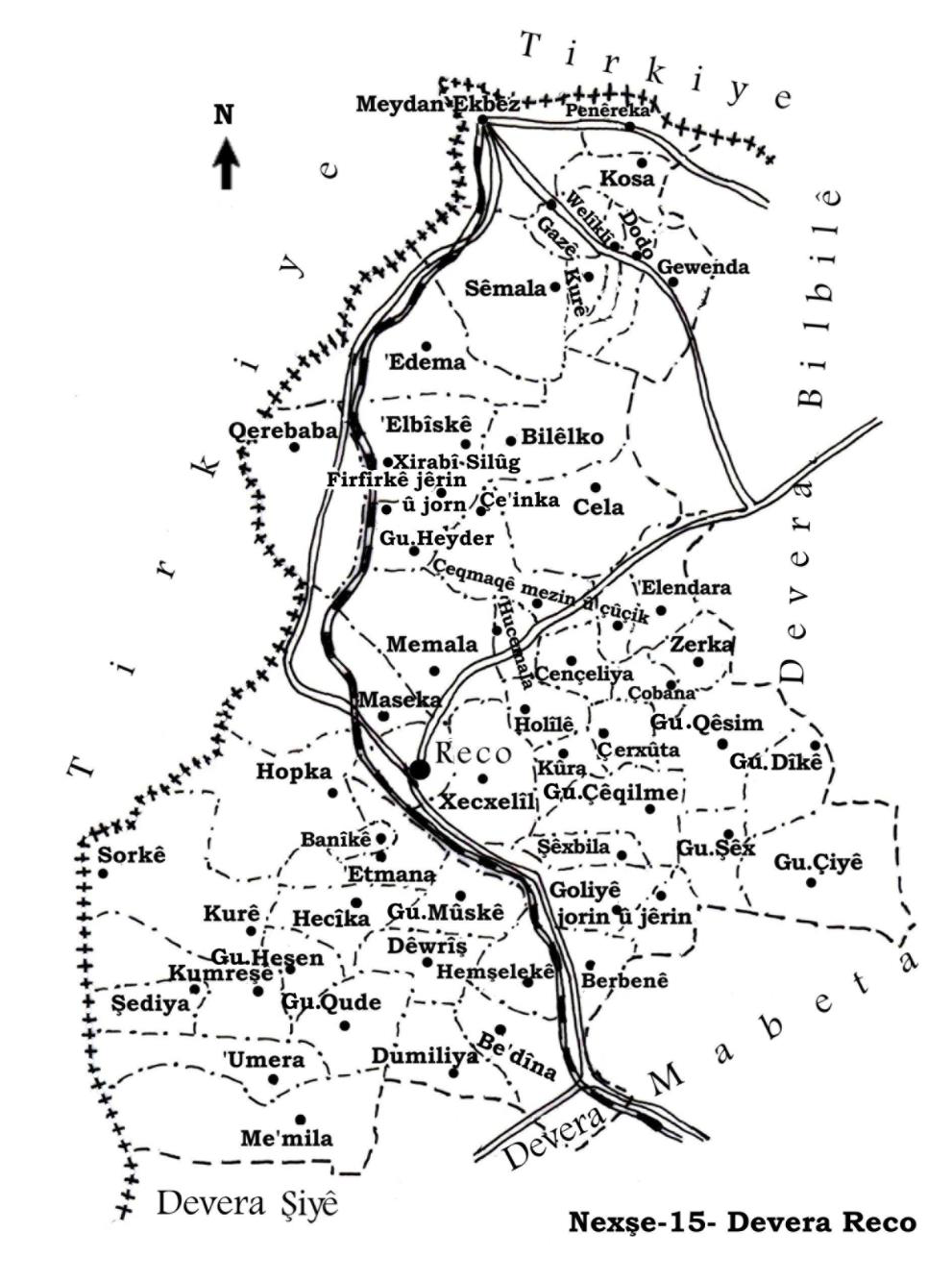
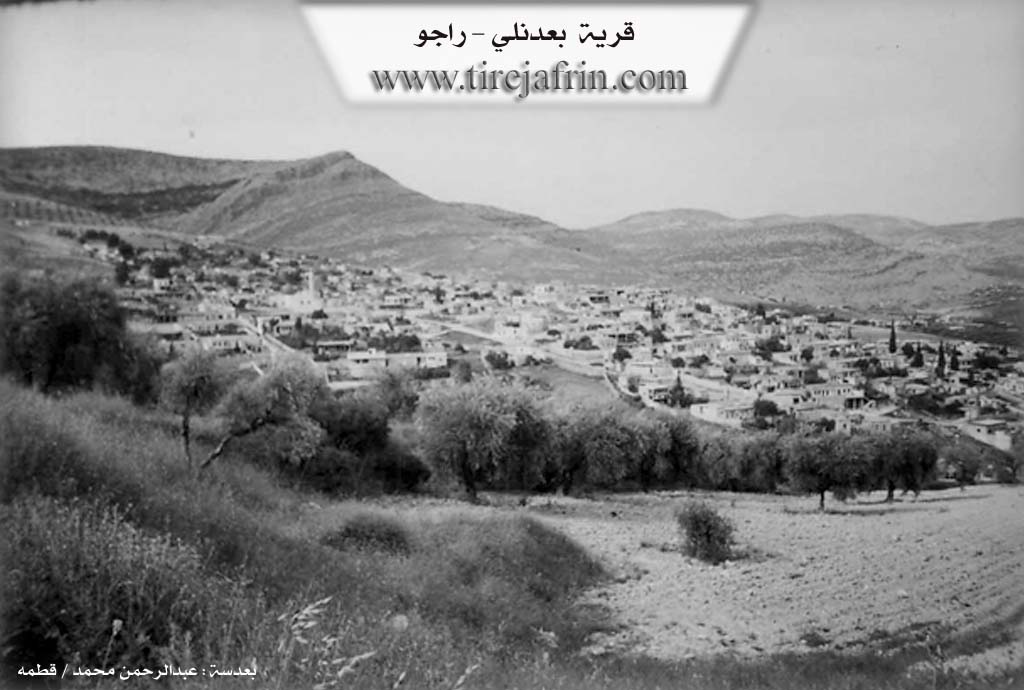
It is one of the large villages in the region and contains a municipality and a health center. It is located on the southern slope of Çiyayê Piling (Tiger Mountain). The Xeta Trêna Heleb-Meydan Ekbez (Aleppo-Meydan Ekbez railway line) passes 2km away from its eastern side as it enters Geliyê Neşab (Nashab Valley). Since 2008, a weekly market has been held there on Tuesdays.
According to the book Efrîn... Her River and Her Green Hills: Be'dîna is a village in Çiyayê Kurmênc that belongs to the Reco district, Efrîn region, Heleb governorate. It is a large village situated on the southern slope of the central part of Çiyayê Kurmênc. It is bordered to the north by a high, rugged mountain range and the village of Derwîş Obasî; to the south by a valley and plain planted with olive trees and vines, and the villages of Gurkan Jêrîn, Gurkan Jorîn, and Sarî Uşaxî; to the west by a rugged mountain range and the village of Dombilî; and to the east by a valley, a plain, the railway line, and the village of Hemşilê which is close to it.
The number of its houses reaches approximately 800, and its age is about 500 years. Its old dwellings are made of stone and mud with flat wooden roofs, while the modern ones are made of cement stone and have spread to the east, south, and west. The village is divided into three sections: the western section located on an elevation, the middle section in a plain, and the eastern section located on a graduated mountain slope. An electricity network is available, as well as drinking water from an artesian well or from cisterns dug into homes that store winter rainwater. It contains a primary and preparatory school, a telephone center, an agricultural center, and a mosque in the center of the village, along with several commercial and service shops. It connects to the district center and the region via two paved roads.
The residents work in the cultivation of olives, grains, vines, and fruit trees, alongside raising sheep and goats. The village is considered one of the beautiful villages due to its excellent location and modern construction. There are several luxurious villas in the village, especially in the western and southern areas. A municipality was recently established there.
Among the holders of higher degrees in the village are:
Xelîl Sebrî Ehmed / PhD in Ophthalmology / Russia
Mistefa Henan / PhD in Agriculture / Bulgaria
Yasir Henan / PhD in Aviation / Russia
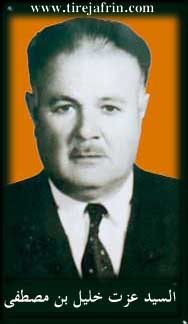
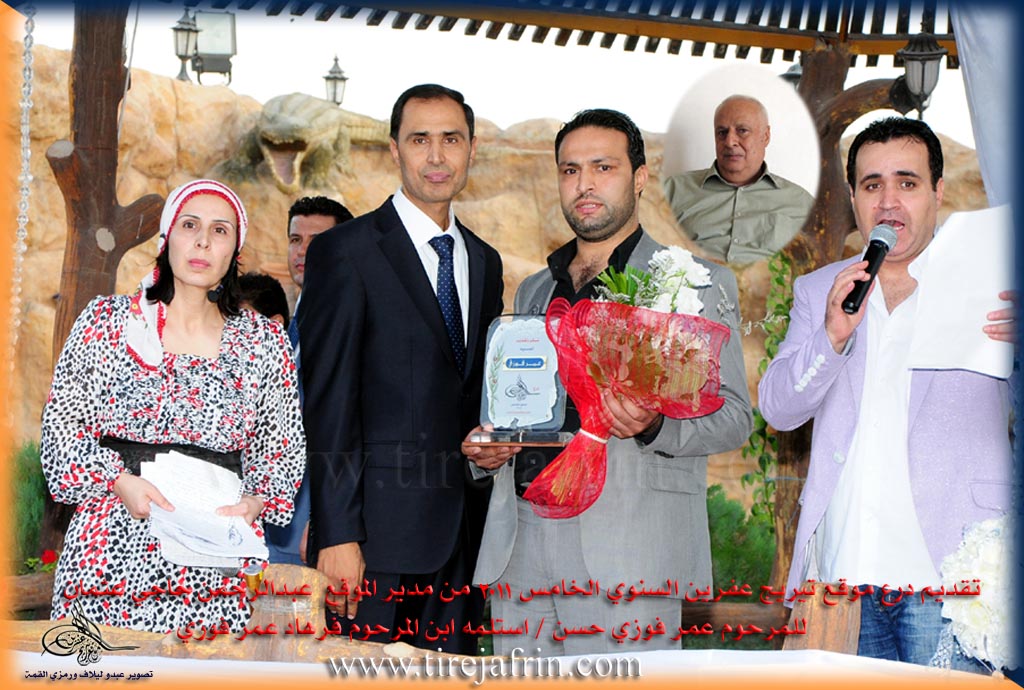
Among the families present in the village are: The family of Kor Ehmed (including Mistike, Berî, Hestûb, Habû, Miheme Cah, Bako...), the family of Sunter, the family of Elîf, the family of Heccî, the family of Cercî, and the family of Celxer. Among the social figures in the village is Mr. Xelîl Izzet son of Izzet. It is mentioned that the late Fewzî Arif, owner of Middle East Recordings, was one of the sons of this village.
Sources of Information:
- Book: جبل الكرد (عفرين) دراسة جغرافية Çiyayê Kurmênc (Efrîn): A Geographical Study by د. محمد عبدو علي Dr. Mihemed Ebdo Elî.
- Book: عفرين .... نهرها وروابيها الخضراء Efrîn... Her River and Her Green Hills by عبدالرحمن محمد Ebdulrehman Mihemed from the village of Qetme.
- Studies of Navenda Tirej Soft / Ebdulrehman Hacî Osman.
- Some residents of the villages.
Preparation and Execution: Director of the Tirej Efrîn website: Ebdulrehman Hacî Osman 20/12/2013
II. Summary of Be'dîna from Afrin Flo 2
The documentary footage focuses on the daily life and community activities of the youth in the village of Baedîna (also referred to as Badîna), located in the Efrîn region. Unlike historical accounts that rely on the testimony of elders to establish lineage or origins, this record highlights the current generation of residents during the summer season. The narrative is driven by the interactions between a host and a large group of local school-aged children, offering a snapshot of the village's demographics and social cohesion through play and communal service.
The social structure of the village is represented by the cohort of children interviewed, ranging from first to seventh grade. The host speaks with numerous boys, including Mihemed, who serves as the goalkeeper during their soccer match, as well as Mehmê Elî, Zênel, Hisên, Eyho, Ehme, N. Şêxo, Ehmed Ibrahîm, Ciwan, Reşîd, and Yûsif. While specific family names or tribal affiliations are not explicitly detailed, the diversity of the group suggests a robust youth population in Baedîna. One student, Ferhad, notes that he comes from Tirkiya (Turkey), which sparks a brief comment on his language skills, hinting at the cross-border movement and connections typical of families in this region.
A significant portion of the documentation centers on the maintenance of the village's primary sacred site, referred to simply as the tirba (cemetery/graves). Following their soccer game, the group mobilizes to clean the cemetery grounds. The participants, including older youths like Ehmed Ibrahîm and Mehmê Elî, work to remove dry grass and cardboard to prevent fires and maintain the dignity of the site. This collective action highlights the village's emphasis on respect for ancestors and communal responsibility. The speakers emphasize that "cleanliness comes from belief," reinforcing the spiritual and social importance of maintaining the tirba of Baedîna.
The documentary concludes by contextualizing Baedîna within the wider geography of Efrîn through a song. The lyrics praise the region's natural abundance, specifically mentioning the Çemê Efrîn (Afrin River) and the agricultural richness of the land, characterized by pomegranates, vineyards, and olive trees. While no specific historical landmarks such as castles or named springs are identified within the village itself during this recording, the footage serves as a testament to the living culture of Baedîna, defined by its energetic youth and their dedication to preserving the resting places of previous generations.
II. Summary of Be'dîna from Khalil Sino 3
Source: https://www.youtube.com/watch?v=MDbtdb_K9BE
The documentary focuses on the cultural life of Ba'dîna, a village located in the Efrîn region, by highlighting the establishment and training of a local folklore dance group named Koma Jîn Ba'dîna. While the specific founding date of the village is not provided, the transcript offers a detailed history of folklore preservation in the wider area. The host, Xelîl, speaks with two primary organizers, Reşîd and Azad, who describe their efforts to revive traditional dance among the local youth.
Reşîd, a twenty nine year old instructor, places the new group within a historical lineage of cultural organizations in Efrîn. He recounts that the first major folklore group in the region was Koma Qitmê, which was established in 1952. This was followed by Koma Qermilq and later a group representing Efrîn itself. Reşîd emphasizes that these groups were essential for defining the identity of the people. Following a period where a previous group in Ba'dîna had disbanded, the youth of the village decided to unite and form Koma Jîn Ba'dîna to carry on this legacy.
The name and symbols of the group are deeply meaningful to the residents. Azad, who is forty years old, explains that the word "Jîn" means "life," signifying their intent to build a vibrant life through their heritage. Reşîd adds that the name serves as a reference to "Rohat" (the coming of the sun) and is symbolically linked to the pelê zeytûnê (olive leaf). He notes that Efrîn is universally recognized by the olive tree, making it a fitting emblem for their cultural expression. The group consists of sixteen members ranging in age from twelve to thirty five years old.
At the time of the interview, the group had been training intensively for two months. Azad admits that the beginning was difficult, requiring sessions of two to three hours daily, but the members eventually synchronized their movements. They have successfully learned nine distinct folk dances. To ensure authenticity, the group traveled to Efrîn city to purchase specific fabric and employed a local tailor to create custom traditional costumes for all the members. The documentary concludes with a performance by the group, dancing to a song that references the snows of çiyayê Gêre and çiyayê reş.
II. Summary of Be'dîna from Ax û Welat
Source: https://www.youtube.com/watch?v=QJsANwsbZ84
The village of Bahdîna, located in the Mabata district of the Efrîn canton, traces its origins back four to five centuries. The village name is derived from Bahdînan, a region in Başûrê Kurdistanê, indicating the geographical origin of its founders. According to local oral history, the original settlers belonged to the Şêxan tribe. They migrated from Bahdînan and settled on a high ground known as Çayê Piling, attracted by the presence of caves and water sources. Over time, the settlement expanded to include approximately 650 households, with the village divided into six distinct neighborhoods such as Sirtê Bilbilê, Eynê Bêlek, and Hafar.
The social structure of Bahdîna is defined by several long standing families. While the village is comprised of the Şêxan tribe, specific lineage groups include Mala Kurd Ehmed, Mala Dumisa (formerly known as Hemqofel), Mala Sunturler, and Mala Hacîler. Other notable families mentioned include Mala di Colxolê, Uskikler, Çerçîler, Elîfo, Seydko, and Hêvîdî. A significant later addition was the Bavê-wan Nayî family, noted for their contributions to the village infrastructure, specifically bringing water approval in the 1950s.
The spiritual life of Bahdîna centers around the figure of Şêx Reşîd, originally named Îbrahîm Xelîl. He was a revered religious scholar who studied in France before returning to the region. His tomb has become a shrine (ziyaret) where people from across the region come to make vows and seek blessings. Locals recount miraculous stories about him, attributing supernatural powers to his faith. In one account, Şêx Reşîd stopped a train simply by raising his hand when the conductor refused to let him board. In another, he is said to have protected a cave full of people during a terrifying storm that brought down three hundred lightning strikes and a deluge of water; despite the flood, those inside remained dry due to his prayers.
Culturally and economically, Bahdîna is distinct within the Efrîn region. It was an early center for education, with a school opening in 1936 where Emîn Hafiz, who later became President of Syria, once taught. The village is famous for the production of suncix, a traditional sweet made from grape molasses, wheat starch, and walnuts. This labor intensive process involves dipping strings of walnuts into the boiling mixture up to twenty times. The village also dominates the regional trade in batteries and flashlights, with residents distributing these goods as far as Hema, Hums, and Laziqiyê. Additionally, the village is renowned for a specific culinary dish called Danik, a meal made with bulgur, onions, peppers, and tomatoes, which locals claim is tastier than meat. The history of daily life in Bahdîna has been meticulously chronicled by a local teacher, Mihemed Hesenîk, who filled thirty four notebooks recording every birth, death, wedding, and event in the village over several decades.
II. Summary of Be'dîna from Afrin Flo
Source: https://www.youtube.com/watch?v=M-IFX02HRZw
The documentary focuses on the village of Badîna, located in the Efrîn region. The primary subject of the transcript is the local shrine (mezer) of a revered religious figure named Şêx Reşîd, whose birth name is identified as Reşîd Hebeş. The village serves as a pilgrimage site where visitors from surrounding areas come to pay their respects, make vows, and seek blessings.
Şêx Reşîd is described as a local saint who was born in 1892 and passed away in the mid-20th century (the speaker stumbles on the exact year, saying "1990 50", likely meaning 1950). Despite having never attended school, he was celebrated for his ability to read, write, and recite the Quran. The transcript recounts several miracles (keramet) attributed to him. In one legend, he interacted with a black cat that appeared during his prayers. In another prominent story, a woman in the village was cooking lentil soup (şorbê nîskê) while her husband was away performing the Hec (Hajj). Şêx Reşîd instructed her to pour a bowl of the soup, which he then miraculously transported instantly to her husband in the holy lands. He was also reputed to have the ability to travel immense distances, such as to Misir (Egypt) or Efrîn, in a matter of seconds.
The shrine complex includes a spring (kanî) which is noted for its cold water, contrasting with the intense heat described by the visitors. The site is a center for specific local rituals. Pilgrims bring chickens (mirîşk) to be sacrificed (slaughtered) at the site as part of their religious vows. Another ritual mentioned involves driving a peg or nail (sing) into the ground or a structure at the shrine to seal a vow or request. The speakers express deep respect for Şêx Reşîd, referring to him as the "Sheikh of Badîna," and emphasize the spiritual significance of the location for the local community.
II. Summary of Be'dîna from Khalil Sino
Source: https://www.youtube.com/watch?v=XpTKBkA7qSg
This documentary captures the oral history and daily life of residents in a village within the Efrîn region. The speakers, including Fat, Sabah, Nezmi, and Elî, describe a transition from an agrarian, self sufficient lifestyle to modern times. While the specific name of the village is not explicitly stated, the residents mention their proximity to R’ajû and connections to the city of Heleb for trade. The narrative centers heavily on the Mala Hecî, a prominent family or household where some of the interviews take place.
The economic history of the village was defined by the labor intensive processing of local crops. Fat describes the production of grape molasses known as dêkoma and raisins called mûj, specifically distinguishing the mûjo variety made from long yellow grapes. Families also produced walnut logs called suncix and dried figs referred to as boçqê hejîra. These goods were transported to Heleb to be sold. Water scarcity was a significant historical challenge, as residents originally relied on hauling water until they dug their own cisterns, known as sarnîc. Women like Sabah also gathered at the Ava Reş to wash wool for making mattresses and quilts, a practice that has since been replaced by modern sponge bedding.
Social customs were strictly observed in the past. Nezmi recounts that men wore the traditional fîstan robe and only adopted trousers, or pantor, upon marriage or adulthood, noting that wearing pants too early could result in social reprimand. Education was initially religious, conducted by a Xuce who taught the Elîf bê and Ebced scripts before formal schools were established. Death notifications involved sending messengers on foot or animal to neighboring villages and the market at R’ajû to inform relatives.
The village men engaged in fishing and hunting at local landmarks such as Batman, Kelawîrî, and Şêxanî. Elî shares detailed anecdotes about fishing expeditions with friends like Es'edê Sîno, Mistefayê Mamê Hecî, and Eliyê Hebeşê Hemzê. One notable story involves Es'edê Sîno hiding fish inside his trousers during a crackdown by local guards. Many men also migrated for work, traveling to Lîbya and Lubnan to support their families. The community structure relies on extended lineages, with mentions of families such as Sîno, Hemzê, Eslan, Mislim, Hentêmbat, and Xwedêdo.
II. Summary of Be'dîna from Khalil Sino 2
Source: https://www.youtube.com/watch?v=gQIux2Bt1mM
The documentary provides an oral history of life in the neighboring villages of Be'dîna and Baadrê, situated in the Efrîn region near the Qenata Hatim. Through interviews with elders such as Hecî Ehmed, Fir, Mistefa, and Fatma, the narrative focuses heavily on the transition from a difficult past characterized by manual labor and water scarcity to a more modern present. The residents recount a time when transportation relied entirely on donkeys and walking, particularly for trade routes to Heleb where they sold their goods.
Water management and the struggle for resources define the historical memory of the area. In Be'dîna, the elder Hecî Ehmed explains the origin of a local landmark called Qûre Hefarê. The name refers to a site where a machine excavator, referred to as a "hefar," was used to dig a deep well after residents previously relied on a small hole or "bîrik." Before this development, the villagers struggled significantly with water access. In Baadrê, Fatma vividly describes the labor of women who had to carry water on their backs from distant locations. She specifically names Bîrî Piling and Reqa Xonîk as places where they would fetch water and carry heavy loads. Another mentioned location involved in these daily labors is Toqê Zêro.
The economic life of the village formerly revolved around agriculture and specifically the processing of "sincix," which refers to sumac. Mistefa details the labor intensive process where villagers would harvest the crop, boil it in large cauldrons, and dry it. This product was then transported to Heleb for sale. This trade was vital for the local economy before the arrival of cars and modern machinery. The residents also recall traveling to Şêx Hese Seydî to obtain flour, highlighting the regional connections between villages for essential supplies.
Socially, the transcript highlights specific households and lineages. Fir mentions the Bota family in the context of livestock and daily chores, as well as the house of Hecî Bekir. In Baadrê, reference is made to Malê Begê, suggesting a social stratification or a notable landed family in the past. The interviews also touch upon the caves in the area, with Mistefa mentioning Şkanî Berbana as a location they utilized. The cultural continuity of the region is maintained by younger generations, such as Hemze, who plays the tembûr, preserving the musical traditions of Çiyayê Kurmênc. The collective memory is one of resilience, moving from a time of "cefa" or great hardship to the relative comfort of the present day.
II. Summary of Be'dîna from Afrin 366 8
Source: https://www.youtube.com/watch?v=5MO7yBnFg10
The documentary centers on the village of Ba'dîna and the surrounding localities in the Afrin region, specifically highlighting the area's agricultural richness and social fabric. The narrative begins at the market in Raco before moving to a lush locality known as Sorkê. This area is celebrated for its abundant water and fertile vegetable gardens (bîstên), which produce eggplant and peppers. In Sorkê, the host encounters the Malê Sîno, a prominent local family described as the primary residents of that specific area.
The primary focus of the visit is the village of Ba'dîna, which the host identifies as his own home. He describes the village as large and beautiful, noting the historical depth of its population. specifically pointing out the Xelkê Hikmet (the people/family of Hikmet), characterizing them and the village foundations as "pir qedîm" (very ancient). The geography of the surrounding area is defined by the Geliyê Sorsînê (Sorsînê Valley) and a small nearby settlement called Xarobê Simaq, which consists of only eight households.
A significant portion of the transcript documents a religious pilgrimage to the local shrine of Şêx Reşîd. The host, accompanied by his mother Um Semîr, brings a sacrificial sheep to the shrine to perform a qurban. This offering is dedicated to the well-being and future success of three children: Salar, Bilind, and Birahîm. Prayers are offered for their health, education, and protection from misfortune.
The transcript also includes a personal account of a near-disastrous accident at the host's home. He details an event where a tractor carrying a water tank lost control and overturned near the house walls where children were playing. The host attributes the family's survival and the safety of the children to divine protection, reinforcing the community's reliance on faith and the significance of their visit to the shrine of Şêx Reşîd. Notable local figures mentioned include Xolê Ehmed, who runs a well-known sandwich shop in Ba'dîna utilizing local ingredients.
II. Summary of Be'dîna from Afrin 366 9
Source: https://www.youtube.com/watch?v=KxwVuwOpIt4
The documentary focuses on the village of Behdîna, also referred to by the speaker as Ba'drê, located in the Afrin region. The narrative centers on the distribution of charity during the Erefat (Eid) holiday, providing a glimpse into the village's spiritual focal point and its social dynamics.
The historical identity of Behdîna is deeply connected to a religious figure named Şêx Reşîd. He is described in the transcript as the "bunyadê gundê Ba'drê" (the founder of the Ba'drê village). His influence persists through his shrine, Tirba Şêx Reşîd, which serves as a significant pilgrimage site for the locals. Residents express a personal connection to the Sheikh; one woman notes that she and her family are neighbors to the shrine and recounts a story of Şêx Reşîd placing his hand on her mother, attributing a spiritual guardianship to him.
The social life of the village during the holiday revolves around a busy market area where people gather from Behdîna and surrounding locations, such as Dêmîlo and Dûr. The transcript highlights specific local characters who define the village's community atmosphere. Notable among them is Idrîs, a man locally nicknamed Agop. He holds the role of Heffar el-qubûr (gravedigger) and is respected for providing this service as a form of charity for the community, reportedly serving a wide area. Another prominent figure is Ebû Xelîl, who owns a shop near the mosque where young men gather.
The village maintains traditional spiritual practices centered on the shrine of Şêx Reşîd. An elderly woman at the site performs a specific ritual known as sîngê dikute (pounding the peg/stake). She explains that she hammers a stake into the ground as a form of prayer for those seeking help, specifically for people who cannot conceive children, those suffering from illness, or those seeking sustenance. This practice highlights the village's reputation as a place where locals seek divine intervention for health and fertility through traditional intercession at the founder's tomb.
II. Summary of Be'dîna from Afrin 366 10
Source: https://www.youtube.com/watch?v=CDF2TMqXJvo
The transcript documents a journey through the rural landscape of Afrin, centering on the speaker's home village of Badîno. The narrative highlights the close geographic proximity of numerous villages in this region. As the camera pans across the horizon, the speaker identifies neighboring settlements including Dêmîlo, Qideyê, Xwîtê, Kêl, Sêwiyan, Şeytana, Sorya, Haba, and Xezane. The area is defined by a mix of agricultural land and natural features, with specific trees serving as landmarks, such as Darê Badîno and Darê Dêmîlo.
A significant portion of the account focuses on a high ridge or area known as Reşê Karko. This location holds historical social importance for the locals. The speaker explains that before modern cellular networks were established in the region, villagers would climb to Reşê Karko to catch a signal from Turkey in order to call relatives living in Europe. The area around this ridge is divided into Karka jêr and Karka jor, meaning Lower and Upper Karko. Near these heights, the speaker points out specific local infrastructure, including Mekteba Dêmîlo and Maktaba Karko, which serve as schools or former school sites.
The group travels along a path identified as Rîka Meamelê, eventually stopping at a valley called Geliyê Mehmelê. Here, they visit a communal Sarinc, a cistern built to provide water for both people and livestock. The speaker notes that travelers and shepherds frequently stop at this cistern to drink. The social structure depicted in the footage involves a communal outing of family and neighbors, including individuals named Em Semîr, Bû 'Eze, and Qişko. They gather to prepare coffee over an open fire and cook a meal using local ingredients.
During the excursion, the group engages in foraging for wild edible plants. They collect puncar, a type of wild green, and sirdim or semsok, which refers to wild garlic found in the area. These ingredients are used to prepare tabûle and other dishes on site. The speaker emphasizes the pleasant weather despite it being the middle of winter, describing the atmosphere as a time for the youth ("şebab") to create memories in their ancestral lands. The gathering reflects a deep connection to the land, where specific rocks, trees, and paths like Eynûkê and the route to Meamel serve as enduring reference points for the community.
II. Summary of Be'dîna from Afrin 366 11
Source: https://www.youtube.com/watch?v=9f9R01rg7LM
The documentary portrays a village in the Afrin region where the residents identify themselves collectively as belonging to the Opî group. The village is home to several distinct households including the family of Hacî Hemke and the family of Nezmî Mîrêt. The narrator walks through the center of the village and observes daily life where residents are seen washing clothes and rugs outdoors in the heat. During a brief interaction with an elderly woman the narrator asks about her health and the location of a neighbor from the family of Ehmed who has apparently moved away.
A central feature of the village is its extensive cemetery referred to as Tirbê Be'dîna. The narrator emphasizes the immense size of this burial ground and suggests it contains three or four thousand graves. He notes that the cemetery is located near the valley or cêway and that it is so large one could wander for two hours trying to find a specific grave. This density of graves suggests a deep historical presence of the Opî people or the Be'dîna community in this specific location.
The spiritual life of the village revolves around a sacred site known as Mezora Şêx Reşîd. The narrator speaks of Şêx Reşîd with great reverence and describes him as a pure person who is like an angel. Visitors come to this shrine to pray for relief from debts poverty or other distress. The site features a specific ritual object or spot called singo where supplicants press their chests against the stone to ask for the fulfillment of their wishes. The narrator clarifies that while they view God as the ultimate power they believe that Şêx Reşîd acts as an intercessor for the villagers. The tour concludes with scenes of local youth playing soccer in the fields surrounding the village.
II. Summary of Be'dîna from Afrin 366 12
Source: https://www.youtube.com/watch?v=0N9cHlwslLE
The documentary footage focuses on a group of residents from the village of Badîna in the Efrîn region (specifically Çiyayê Kurmênc), who undertake an excursion to the surrounding highlands. While the transcript does not provide genealogical histories of tribes or founding dates, it offers a detailed geographical survey of the landmarks that define the village's territory.
The village is situated in a mountainous area, referred to generally as Çiyayê Badîna. The residents identify specific slopes and heights that characterize the landscape. One of the most prominent locations mentioned is Kenhaftorê, a well-known high point or area where the group settles to prepare their meal. From this vantage point, the speakers point out other specific topographical features, including the slopes of Bena Qeder and Bena Reş (The Black Slope). Another named elevation in the vicinity is Bena Korcê.
In addition to these heights, the landscape includes specific named rock formations and water sources. The speakers mention a feature called Kevrê Qemrê. For their water supply during the picnic, they rely on a site known as Cernê Qelik, which appears to be a cistern or water basin utilized by the locals.
The social context of the footage shows the villagers, including a notable figure addressed as Ebu Semîr, engaging in the traditional preparation of coffee over an open fire and cooking "sorme" (stuffed vine leaves). They describe the area as having "seven places" (heft ciyayê gundî) belonging to the village, emphasizing the community's extensive connection to the surrounding natural environment. The narrative centers on the appreciation of this rugged terrain, the specific names of the hills that encircle Badîna, and the enjoyment of the local climate before the evening set in.
II. Summary of Be'dîna from Afrin 366 13
Source: https://www.youtube.com/watch?v=6_SOgfl36Eo
The documentary centers on the village of Ba'dîno (also referred to as Ba'dînan) in the Efrîn region, located within the Racû district. The primary event recorded is the construction and inauguration of a charitable water cistern, known locally as a sebîl or sêrinc. This project serves as a memorial charity (sedeqa jariye) for the late Huseyn Ebdû Bekir, also known as Ebû Mihemed, a native of the village of 'Edamo, and his wife Elmas Huseyn Em Mihemed from the village of Bilîlko. The cistern is intended to provide water for the villagers, travelers, and local wildlife.
The village is situated in close proximity to a significant spiritual landmark, the Ziyareta Şêxreşî (Shrine of Sheikh Rashid), which lies opposite the village. During the gathering, a local religious figure shares the history of this site. He recounts that he served as a teacher in the area around 1985 and describes Şêx Reşîd as a holy figure belonging to the "ehlê xutwe" (people of the step), a term referring to saints believed to possess the miraculous ability to travel vast distances instantly. The oral history preserves a legend where Şêx Reşîd proved his sanctity by miraculously transporting warm soup from a distant location to the village. The village also contains the Tirba Badînan (Badinan Cemetery), where the community gathers to offer prayers.
The construction of the cistern is depicted as a communal effort involving local laborers like Ebû Semîr and Şabo, who work with concrete and stone to build the structure. The inauguration involves a traditional sacrifice (qurban) of animals to bless the new water source. The meat for this occasion is prepared by butchers associated with Mehela Farûqî Qonxle in the Racû area. Residents such as Zuhêr, described as being from the lineage of Dolgirê (Biniyanê gundî Dolgirê), participate in the event, highlighting the strong social ties between Ba'dîno and neighboring settlements like Sewkê, 'Edamo, and Bilîlko.
II. Summary of Be'dîna from Afrin 366 14
Source: https://www.youtube.com/watch?v=RqJIARnTLqI
The village of Ba'dîna, located in the Efrîn region, is a significant settlement described as containing approximately one thousand households. The history of the village is deeply rooted in the migration narratives of its inhabitants. According to a village elder named Xalê Ebdo, the community traces its origins back to the Badînan region. He recounts that their ancestors, including figures such as Kirko and Soro, migrated from Badînan and passed through Amûdê before settling in the current location. They lived in tents initially and dedicated themselves to serving the local people. This historical connection to the Badînan lineage gives the village its name and identity.
The social structure of Ba'dîna includes several distinct families and lineages. The transcript highlights specific households such as the Midawer family and the Mistosef family, the latter of whom maintains a local dispensary or medical center. Other notable residents include Xalê Elî, a ninety two year old shopkeeper known as Elî Gurpe, and Xalê Yûsiv, a seventy seven year old bonesetter who has practiced traditional healing for thirty five years. The village also maintains connections with neighboring settlements, as evidenced by Zuwêr, a craftsman from the village of Dolger, who voluntarily renovated the local cemetery and shrine.
Religious and communal life centers around the shrine known as Mezelê Şêx Reşîd. This site serves as a cemetery and a place of reverence for the villagers. Recent renovations led by Zuwêr and supported by a committee member named Şêx Reşîd involved installing electricity, lights, and new gates to maintain the sanctity of the area. The villagers visit this site to pay respects to their ancestors and deceased community members, including notable figures like Xalê Hisên and Xalê Cafo.
Geographically, Ba'dîna is situated near several distinct landmarks. The village utilizes a water source from Giya Pirtê, where a well was dug four hundred meters deep to supply the community. The area around the school is known as Heffarê, which was previously a ruin but has been repaired. To the north lie the heights of Sirtê Bilbilê, and the road leads toward the district of Raco. Other local features include the Serkanê area, which is described as a high vantage point, and Eynê Belek, another notable location within the village boundaries. The economy is heavily reliant on olive cultivation, with approximately six olive presses operating in the village, and residents frequently discuss the fluctuating price of oil in dollars.
II. Summary of Be'dîna from Afrin 366 15
Source: https://www.youtube.com/watch?v=R0vK98fNKfQ
The documentary provides a vibrant and energetic look into the communal life of the village of Ba'dînê, located in the broader Afrin region. Rather than a deep historical or genealogical recounting, this specific transcript captures a real time cultural event of immense significance to the local residents: the rigorous and highly coordinated preparations for the Newroz festival.
As the month of March begins, the village is consumed by a collective mission to build the traditional Newroz bonfire. The young men of Ba'dînê gather hundreds of heavy tires to burn on the mountain peak. The terrain is exceptionally steep and difficult to navigate. To overcome this, the villagers employ dozens of motorcycles to drag the massive tires up the rugged mountain paths. The community bands together, cheering on the riders and stepping in to push or pull the tires by hand when the motorcycles struggle against the severe incline.
Throughout the intense physical labor, the camaraderie among the villagers is palpable. The narrator and the surrounding crowd constantly encourage specific individuals involved in the heavy lifting and driving. Local men and boys such as Hesen, Mihemed, Ferudîn, Raşîd, Nazmî, Alî, and an elder affectionately called Apê Soro are actively participating or being called out by the enthusiastic crowd. The narrator praises the youth for their dedication and warm blooded spirit, noting that year after year, the village of Ba'dînê celebrates Newroz with unmatched enthusiasm and distinct local pride.
Amidst the joyous and chaotic preparations, there is also a moment of solemn regional solidarity. The speaker takes time to offer public condolences to an unnamed family from the nearby town of Cindirêsê, wishing them peace in the afterlife and praying that the coming year passes safely for everyone in the region.
The patriotic spirit of the event is undeniable. As the villagers work, children and teenagers fill the air with loud, rhythmic chants, repeatedly shouting "Yek, Yek, Yek, Kurdistan Yek, Yek, Yek" and wishing each other a happy Newroz. They celebrate the twenty first of March, singing traditional songs that welcome the spring season, the blooming flowers, and the enduring identity of the land. By the end of the day, with three to four hundred tires successfully transported to the summit, the narrator reflects on the success of their collective effort. He gently reprimands the youth for forgetting their motorcycle helmets but ultimately praises their incredible teamwork and dedication, wishing the entire village of Ba'dînê a blessed and joyful Newroz.
II. Summary of Be'dîna from Multi Channel
The village of Baedînlî is situated in the Efrîn region of north western Sûriya near the town of Raco. It is bordered by the Heleb to Meydan Ekbez railway line near Geliyê Neşab to the east Ereb Ûşaxî and Mabeta to the south and Derwêş Obasî to the north. Built roughly 400 years ago on a stepped mountain slope it was founded by migrants from the Behdînan region located between Êraq and Îran. According to local historian Mistefa Xelîl these settlers fled water scarcity and belonged to the Şêxan tribe which eventually inhabited 40 villages across the Raco district.
The ancestors found abundant pastures and water including a spring on Çiyayê Nimr and fertile lands in Deşta Baedînlî. Early households were built close together reflecting strong social bonds. Foundational families include Kor Ehmed Elî Hecî and Dîmso with others later arriving from Şera and Bilbilê. Tribal leadership of the Şêxan transitioned over time. Initially held by Reş Axa in Cûmê it shifted to Kor Ehmed in Baedînlî. Later Xelîl Beg obtained the title of Bey from the Osmanî empire when the region belonged to the Kilis province. In 1957 Izet Axa served in the Syrian parliament and later Xelîl Izet served in the Heleb local administration.
The original population of Baedînlî consists of Kurds though it recently welcomed 1500 displaced Arab and Sunni individuals from Kefer Betîx in Îdlib Rastan in Hims Çiyayê Zawiye and Xûta Dimaşq. An internally displaced man from Hema praised locals like his neighbor Huseyîn for their hospitality and lack of prejudice emphasizing their strong religious unity.
The village features a blend of modern and ancient stone houses. One of the oldest surviving homes belongs to Fatme Demîrel. Built roughly 71 years ago by her late husband Qadir it was constructed using stones extracted from olive groves and shaped by a builder named Heşîno alongside a craftsman from Hemşilk. Originally built near the homes of Bekrî Berî and Mistefa Elî it now sits surrounded by newer development. Baedînlî also features a 200 year old mosque with a minaret built in stages over the last 80 years.
Economically residents rely heavily on agriculture cultivating olives walnuts grapes and sumac. As elder Arif Elî notes they trade processed goods like raisins and olive oil with neighboring towns like Ezaz and Daret Ize and as far as Dimaşq. The villagers are also known for craftsmanship. A blacksmith named Mihemed Brahîm known locally as Ebû Zeîm has worked for 40 years building everything from windows to agricultural machinery such as walnut peelers ensuring the community thrives in its mountainous terrain.
II. Summary of Be'dîna from Multi Channel 2
The documentary explores the vibrant life and deep history of Bêdîna, a village located in the Raco district of the Çiyayê Kurmênc region. The village is entirely populated by members of the Şêxan tribe. Within this tribal structure, the Kora Ehmed family holds the historical leadership and authority over the wider community.
A central focal point of the village is the ancestral guesthouse belonging to the Kora Ehmed family, which has stood for over 241 years. Elder Amo Xelîl explains that this guesthouse has always kept its doors open to travelers and guests, providing food and shelter day and night without question. The family boasts a strong political legacy. The father of Amo Xelîl served as a parliamentary representative for the Partiya Gel during the era of Şukrî El Quwatlî, prior to the political union with Egypt under Ebdulnasir. The father used the guesthouse to receive local constituents and carry their demands directly to the government in Şam.
The village also holds unique connections to broader Syrian history. Former Syrian president Emîn El Hafiz worked as a school teacher in Bêdîna around 1942. Years later, remembering his time in the village and his deep friendship with the local leadership, he warmly welcomed Amo Xelîl and his father when they visited him at the Presidential Palace.
Historically, the people of Bêdîna maintained peaceful and cooperative relations with neighboring Kurdish tribes such as the Dumilî, Korkan, and Hemşelek. Furthermore, they enjoyed robust agricultural and commercial ties with Arab populations from nearby towns including Dar Izza, Ezazê, and Til Rifetê. Merchants from all backgrounds would converge to sell their goods at the main market in Heleb, trading freely and comfortably without any ethnic discrimination.
Culturally, Bêdîna is famous for its distinct and fast spoken Kurmanji dialect, where specific words are uniquely shortened. The residents are highly regarded by their neighbors, as evidenced by a man named Mihemed from the adjacent village of Kurka Jêrîn, who proudly states he loved the community so much that he married a woman from Bêdîna and later arranged for his son to marry a bride from the exact same village.
In contemporary times, the village is widely known as a major regional hub for electric battery manufacturing. This industry was established in the 1970s by a local pioneer named Mistefa Îbrahîm and saw massive growth and relocation to the village during the recent revolution. Additionally, the village serves as a safe haven for displaced people. A woman named Neîme Aslan, originally from Kefer Betîx, makes a steady living in Bêdîna by crafting traditional clay ovens using specific black sand transported from Korkan and Xan El Sibil.
II. Summary of Be'dîna from Khalil Sino 4
Source: https://www.youtube.com/watch?v=Uj7gvkfWoJA
This documentary episode takes the viewers to the village of Ba'dîna, located in the Raco district of the Efrîn region. The host, Heva Brahîm, visits the household of Xalê Reşîd and Ebo Can to document the daily lives, culinary skills, and rich cultural memories of the local women. Early in the episode, the host also sends greetings to a notable local figure named Mamoste Xelîl.
The village of Ba'dîna holds a special reputation across the region for the exceptional culinary skills of its women. This reputation is so strong that the village is commonly referred to as Donkî Ba'dîna, a name derived from their renowned traditional production of donkî, which is a local tomato paste. Some people mistakenly call it Donkî Me'milê, but the local women proudly correct this, asserting that the proper title belongs to their village. During the visit, an elder village woman named Dîlber demonstrates these highly respected skills by preparing fresh cheese and various seasonal provisions. She also shows the host how they make fruit leather, a traditional sweet treat that she notes the Arab people call Qemeredîn.
Throughout the conversation, Dîlber provides a deep historical perspective on the social structure and changing culture of the village. She reflects with great nostalgia on the past, describing a time when village life was defined by deep communal solidarity. In those days, if a family could not afford new clothes for a wedding, neighbors would gladly lend their own dresses so everyone could celebrate together. Modern times, she laments, have brought isolation and a lack of mutual support, where neighbors barely share a loaf of bread and social interactions have become highly materialistic.
The elder also vividly recounts old traditions surrounding childbirth and the forty day postpartum period known as the çile. According to ancestral beliefs, a woman in her çile was highly vulnerable and possessed a mystical protective aura. She was strictly confined to her home to protect both herself and the newborn. Dîlber shares an extraordinary personal story from her own past to illustrate this belief. She claims that while she was postpartum, a man pointed a gun at her, but because she was in her çile, the weapon miraculously failed to fire, validating the old legends of her ancestors.
The documentary also captures memories of childhood and communal celebrations. Dîlber describes how young girls used to play traditional street games like qilê, cûgê, şîşê, and dîktek using chalk and stones while balancing on one leg. Traditional village weddings were massive communal efforts where women gathered to bake flatbread on a sêl and families fed guests for seven days and nights. Today, she notes, these rich traditions have been replaced by catered food like lahmacûn and fried chicken. The episode concludes with the host thanking the family and announcing that their next journey will take them to the neighboring village of Tirmîşa.
II. Summary of Be'dîna from Khalil Sino 5
Source: https://www.youtube.com/watch?v=vXCAwdMiNMw
The provided transcript captures a humanitarian documentary focused on the village of Berdêna, which is also referred to locally as Bedîna or Badîna, situated in the district of Tirbespiyê. The program is associated with the Efrîn region and the broadcast of Telat Efrînî. It takes viewers directly into the homes of four local families facing severe physical and economic hardships. Although the documentary does not delve into the ancient history, tribal origins, or founding dates of the village, it provides a poignant look into the contemporary social struggles of its residents, whose lives are heavily marked by the aftermath of conflict and debilitating illnesses.
A central theme of the episode is the vital role of diaspora charity in sustaining the most vulnerable members of the community. The host acts as an intermediary for a Kurdish benefactor living in Amerîka named Elî Daxwaz, who is affectionately known to the villagers as Xalê Elî. Through his generous donations, the host delivers much needed financial assistance to these struggling families.
The first visit is to the household of the Yehya Eşo family. The mother recounts a tragic event that occurred roughly eight to ten years prior. While the family was sitting together inside their home, an explosive shell landed directly among them. The blast caused devastating injuries to her children. A daughter named Cano completely lost her eyesight, and another daughter was also permanently blinded. A son named Mehemed suffered severe bodily injuries, especially to his eyes. The family lost their original home to the violence and now resides in a borrowed house in the village, relying entirely on the kindness of others and sporadic charity to survive.
The host then visits the home of Ebdî, who is also addressed as Ebdîn. The family cares for a six year old child named Evon, who has been paralyzed and chronically ill for over four years. Ebdî explains the extensive and costly efforts they have made to find a cure, which included taking the child to Arab hospitals and traveling all the way to Tirkiyê for unsuccessful surgeries. The family is deeply traumatized by their past, having previously lost two other children to similar health conditions. Their monthly medical expenses are overwhelming, making the charitable intervention an absolute necessity.
The third segment features a family caring for a paralyzed five year old girl. Her aunt explains that the child is entirely dependent on expensive medications that cost hundreds of dollars every month. The family desperately seeks continued physical therapy and support, praying that the little girl will one day be able to walk. They express immense gratitude to the diaspora donors who alleviate their heavy financial burden.
Finally, the host visits a thirty seven year old man named Hemûdê, who has been completely paralyzed and restricted to a wheelchair for eight years. Despite his incredibly difficult circumstances, Hemûdê displays a resilient spirit and shares his heartfelt blessings toward the benefactor who sent the aid.
The documentary concludes by crediting the dedicated production team, including cameraman Bavê Kenî Hecî and writer Mamoste Ehmed. Ultimately, the transcript serves as a modern social record of Berdêna, highlighting the ongoing medical crises, the deep scars of explosive remnants, and the crucial socioeconomic bridge between the local villagers and the compassionate Kurdish diaspora.
Transcriptions and Subtitles
Foundation/Origin Information of Be'dîna
Founded by a few shepherds from the Sheikhan tribe of the Behdînan region in Southern Kurdistan. These founders settled on Çiyayê Pilengê (Tiger Mountain). The village is also known by the name of Sheikh Rashid, a revered religious figure whose real name was Kişon.
Source: Ax û Walat Transcript
An original village group was eventually disbanded.
Source: Halil Sino Transcript
The original inhabitants dug their homes out of the ground rather than building them up.
Source: Halil Sino Transcript
Possible Village Name Meaning of Be'dîna
It is believed that its origin is from the word "Behdînan", which is the name of a well-known region in southern Kurdistan.
Source: TirejAfrin Site
The village of Ba'dina was historically referred to by the specific name "Qureh Hafarê" (Village of the Driller/Excavator).
Source: Halil Sino Transcript
V. Links
- Tirej Afrin:
https://www.tirejafrin.com/site/kura%20afrin%20%20%20Reco%20-%20badnle.htm - Ax û Welat:
https://www.youtube.com/watch?v=VG67ardHoVM - Jawlat:
https://www.youtube.com/watch?v=_Hv0pQK01UM - Link:
https://www.youtube.com/watch?v=iSSDdHl4gXg - Drone:
https://www.youtube.com/watch?v=uMj47OTMk0I - Link:
https://www.youtube.com/watch?v=TO_E_hHUOyI - Video:
https://www.youtube.com/watch?v=wwNd-JMXUcw - Link:
https://www.youtube.com/watch?v=WRrjC-_FkhQ - Link:
https://www.youtube.com/watch?v=GP52WgbQ9Uc - Link:
https://www.youtube.com/watch?v=3dEVv4M76oo - Link:
https://www.youtube.com/watch?v=QJsANwsbZ84 - Afrin Flo:
https://www.youtube.com/watch?v=mAmKwdGyYFA - Afrin 366:
https://www.youtube.com/watch?v=5MO7yBnFg10 - Afrin 366:
https://www.youtube.com/watch?v=KxwVuwOpIt4 - Afrin 366:
https://www.youtube.com/watch?v=CDF2TMqXJvo - Afrin 366:
https://www.youtube.com/watch?v=0N9cHlwslLE - Afrin 366:
https://www.youtube.com/watch?v=6_SOgfl36Eo - Afrin 366:
https://www.youtube.com/watch?v=RqJIARnTLqI - Khalil Sino:
https://www.youtube.com/watch?v=MDbtdb_K9BE - Khalil Sino:
https://www.youtube.com/watch?v=XpTKBkA7qSg - Afrin Flo:
https://www.youtube.com/watch?v=M-IFX02HRZw - Afrin 366:
https://www.youtube.com/watch?v=9f9R01rg7LM - Afrin 366:
https://www.youtube.com/watch?v=R0vK98fNKfQ - Khalil Sino:
https://www.youtube.com/watch?v=gQIux2Bt1mM - Khalil Sino:
https://www.youtube.com/watch?v=Uj7gvkfWoJA - Khalil Sino:
https://www.youtube.com/watch?v=vXCAwdMiNMw