General Information
Nahiya (Subdistrict)
Efrîn
Also Known As
Barj Suleman, Burj Suleman, Burjikeh, Burç Qestelê min, برج سليمان, برجكه
Tribes
Dewrêş î Ebdî, Sergiyan
Families, Clans, etc.
Mala Silêman, Mala Şerqo
Photos
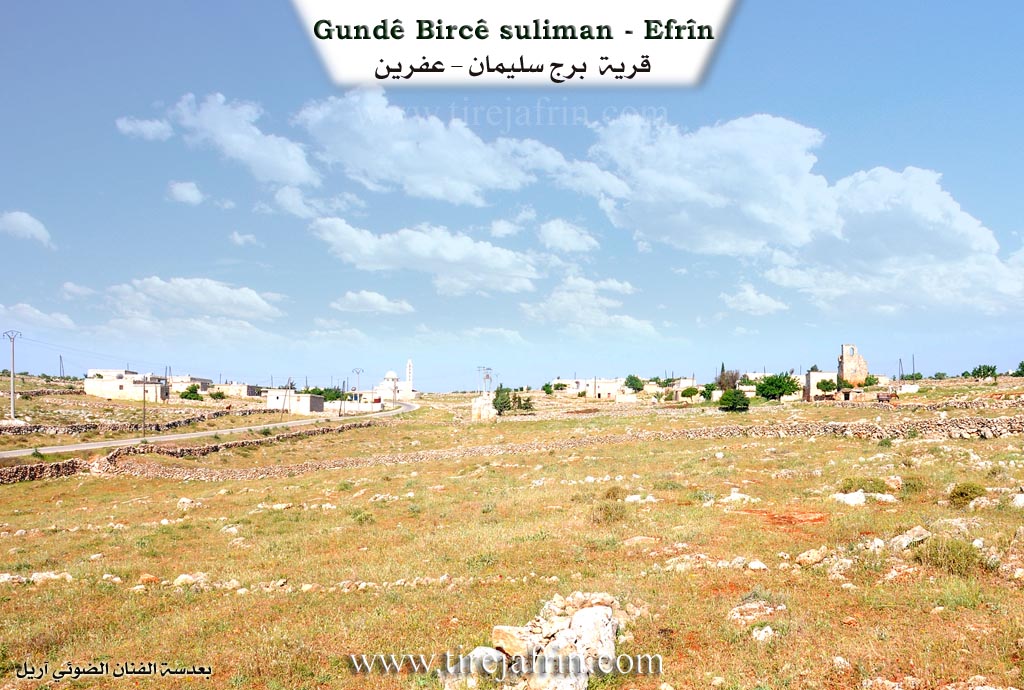
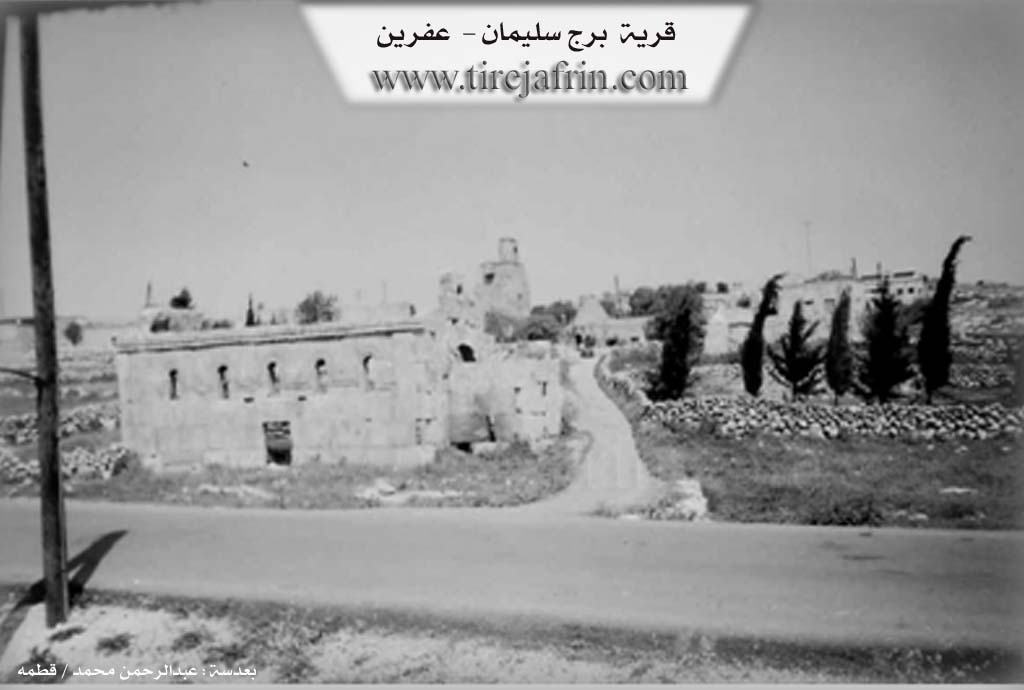
Basic Information about Bircikê Silêmên
Source: Ax û Welat
Etymology: Named Birca Silêman (Tower of Silêman) after the founder Silêman and the presence of a historical tower Birc
Foundation Date/Period: Approximately 300 years ago
Caves: Şkefta Ma'serê
Number of Caves: 17
Hills: Çiyayê Lêlûnê, Qetma cebel, Tepeya Çeqela, Tepeya Baniya Belek, Tepeya Fêza Xezala, Tepeya Badila, Tepeya Kefir li be
Ruins: Birca Silêman, Kela Semanê, Sorqin, Batûtê, Bazîrê, Şêx Silêman, Birca Heyderê
Other Landmarks: Geliyê Bostan, Geliyê Boş, Geliyê Sosê, Bêdera Nokan, Bêdera Reş, Bêdera Erdê
Summaries
I. Summary from TirejAfrin Site (English) of Bircikê Silêmên
Source: https://www.tirejafrin.com/site/kura%20afrin%20markaz-barj%20suleman.htm
It is stated in the book: عفرين .... نهرها وروابيها الخضراء Efrîn... Her River and Her Green Hills by the writer Ebdulrehman Mihemed from the village of Qetme:
Birc Sileman: A village in Çiyayê Semen (Mount Simeon), following the administrative jurisdiction of the Navenda Efrînê (Central Afrin) villages subdistrict, Efrîn region, Heleb governorate.
It is a small farm situated on the southern slope of the Çiyayê Semen range. It is bordered to the north by a rugged, rocky mountain range and the villages of Basûfan and Kefer Lab; to the south by some ancient ruins of the village and some villages of Çiyayê Semen; to the east by a slope and the village of Fafirtîn; and to the west by the Çiyayê Semen range, Kela Semen (Saint Simeon Citadel), and Daret Ize.
The origin of the residents goes back to the village of Fafirtîn. The number of its houses reaches about 25 houses, and the age of the village is 150 years. The habitation of the area is ancient, evidenced by the presence of the remains of a tower 15 meters in height and the walls of a church in the center of the village. Its old houses are made of stone and mud.
An electricity network has recently become available in it, and the residents drink from ponds and cisterns. The residents work in grain cultivation and livestock breeding (sheep and cattle). The road connecting to it is paved and passes through its center, coming from Fafirtîn towards the city of Efrîn, Kela Semen, and Daret Ize. There is no school in it; rather, it is shared with the school of Fafirtîn due to its proximity, located between the two villages.
Village Mukhtar: Diyab Ehmed
Preparation and Execution:
Director of Tirej Efrîn site: Ebdulrehman Hacî Osman
Sources:
- Book: عفرين .... نهرها وروابيها الخضراء Efrîn... Her River and Her Green Hills by عبدالرحمن محمد Ebdulrehman Mihemed from the village of Qetme.
- 20/12/2013
II. Summary of Bircikê Silêmên from Ax û Welat
Source: https://www.youtube.com/watch?v=dA0SzAZ3nRQ
The village of Birca Silêman is a historic settlement located in the Şêrawa district of the Efrîn region, situated on the rocky slopes of Çiyayê Lêlûnê. The village is named after its founder, Silêman, and is distinguished by the presence of a historical tower ("birc"). It is located approximately 30 kilometers south of Efrîn and near the famous ruins of Kela Semanê.
According to local oral history recounted by the elder Mihemed, the village was founded roughly 300 years ago. The inhabitants belong to the Mala Silêman family, which traces its lineage back to the founder, Silêman, son of Şêrqî. The residents are identified with the Dewrêş î Ebdî tribe, though the documentary narration also associates the village with the Sergiyan tribe. The ancestors of the villagers were originally shepherds who migrated from an area known as Megel Tambûrî. They settled briefly in Kibêşîn before establishing Birca Silêman on the site of ancient ruins.
A pivotal moment in the village's history involves a period where the adult population diminished significantly, leaving the settlement nearly empty. The lineage was preserved by Zêneb a Silêman, a woman who returned from Kibêşîn to raise the surviving children, specifically Elo and Şerqo, who were the sons of Mihemed and Ehmed (grandsons of the founder). These survivors repopulated the village, and the current residents, including the Mala Şerqo branch, are their direct descendants.
Birca Silêman is renowned for being built directly atop and within an ancient archaeological site, likely of Roman and Kurdish origin. The village contains approximately 17 caves, some of which feature ancient olive or grape presses known as Şkefta Ma'serê. In the past, villagers lived inside these caves and used them for stabling livestock before constructing modern stone houses. The site features roughly 10 ancient cisterns (Sahrînc) carved into the rock for water storage. The ruins feature carvings, including solar motifs associated with Kurdish heritage and other symbols.
The geography surrounding the village is rugged and defined by specific named hills and valleys. To the south lies Tepeya Baniya Belek and Geliyê Boş; to the west is Tepeya Fêza Xezala; and to the north are Geliyê Sosê, Tepeya Badila, and Tepeya Kefir li be. Notable threshing floors used for agriculture include Bêdera Nokan, Bêdera Reş, and Bêdera Erdê. The villagers retain a strong connection to their agricultural roots, cultivating olives, wheat, and lentils despite the difficult, rocky terrain. The community is also noted for its preservation of oral traditions, including songs like Siwaro and Zeriyê.
II. Ax û Walat Book 2
74
BIRCIKÊ SILÊMÊN
7.10.2017
The village of Bircikê Silêmên is the last village of the Şêrewa district of the Efrînê canton. It is built on Lêlûnê mountain, 20 km from the city of Daret Ezê and 30 km south of the city of Efrînê. The people of the village are mostly from the Sergiyan tribe.
The name of the village comes from the name of the person who founded the village, that is, Silêman, and because, like many villages in Şêrewa, it is famous for its towers.
The people of the village were initially sheep owners; they moved to the Ernê area of Tembûriyê, then moved to Kibêşînê, and later settled in the current location of the village.
75
The village consists of only one family, which is the Silêmên family.
There are 40 houses in the village and nearly 200 people live there.
The village is famous for its abundance of historical buildings; 15 caves, 10 ancient cisterns, 2 classical presses, as well as a church and a tower are found there.
There are 4 threshing floors in the village: the Nokan threshing floor, the Reş threshing floor, and the Erdê Qabê threshing floor.
To the east are the village of Fafirtînê, the Çeqela hill, and the Bostan valley. To the south is a hill named Baniya Belek hill and the Boş valley. To the west is the Fêza Xezala hill, which is between the village of Bircikê Silêmên and the village of Bazêrê, affiliated with the city of Daret Ezê. And to the north are the Sûsê valley, the Badila Hill, the Kefirlabê hill, and Birc Heyder.
The villagers make their living from animal husbandry, with sheep, goats, and cows, and alongside that, they also cultivate wheat, barley, lentils, and vetch.
Nearly 10 people work in the institutions and bodies of the Autonomous Administration.
The village commune is named after Martyr Dijwar, and the women's commune is named after Ş. Canda.
It is worth remembering that the village was attacked twice by gangs, but the people of the village, along with the YPG and YPJ fighters, defeated all those attacks and defended their village and did not abandon it.
76
It is worth mentioning that the role of women in this village is significant, from the work of shepherding, producing sheep products, farming, and harvesting grains.
A love for music and songs is a characteristic of the people of this village. They hold their own celebrations on the threshing floors, and everyone helps each other in joy and sorrow.
Cemîlê Elo was a famous flute player; he composed songs and melodies with the late artist Cemîl Horo.
Transcriptions and Subtitles
| Source | Video | Subtitles | Transcript |
|---|---|---|---|
| Ax û Welat 1 | Watch Video | Download SRT | View Transcript |
Foundation/Origin Information of Bircikê Silêmên
The origin of the people goes back to Fafirtin village.
Source: TirejAfrin Site