General Information
Nahiya (Subdistrict)
Efrîn
Also Known As
Keferdelê jêrin, Keferdêlê Jêr, Kefirdelê Jêrîn, Çîlo, Çîlê, كفردلي تحتاني
Tribes
Bêskî, Gûganî
Families, Clans, etc.
Brahîm Omer Sefûnê, Dado, Edanê, Elikî, Elî Axa, Elî Dawûd, Emersafînê, Erdo, Erebo, Goganî, Gênco, Hec Henan, Hec Henên, Hem Xurcikê, Hesen Efendî, Hesê, Mala Beskê, Mala Hec Henan, Mala Hemgulî, Mala Hemtê Elikê, Mala Hesen Sadiq, Mala Hesê, Mala Kolo, Mala Mehmed Elî, Mala Miradê Xidir, Mala Omerê Ebdî Gihenco, Mala Resûl, Mala Xalûtê, Mala Xelîlko, Mala Xelîlê Ereb, Mala Xelûçka, Mala Xoce, Mala Çatûzê, Malê 'Elkê, Malê Dedê, Malê Ebdî Agha, Malê Elî Agha, Malê Hecîlo, Malê Hemdo, Malê Hemgulî, Malê Hemxorjikê, Malê Hesê, Malê Qudûr Begê, Malê Rêsûl, Malê Totozê, Malê Xelîl, Malê Xelûtê, Malê Xidir, Malê Zêbê, Malê Şa'o, Malê Şûtê, Mistefê Îsmaîl, Mîro Daxadir, Necar, Neccar, Resûl, Resûlo, Ristiwî, Tatoz, Tatozê, Tawz, Xazî Dêpe, Xelecka, Xelîlê Ereb, Xelîçkan, Xelûşko, Xillo, Xoce, Zêbê, Çolaq, Çîlo, Îbiş
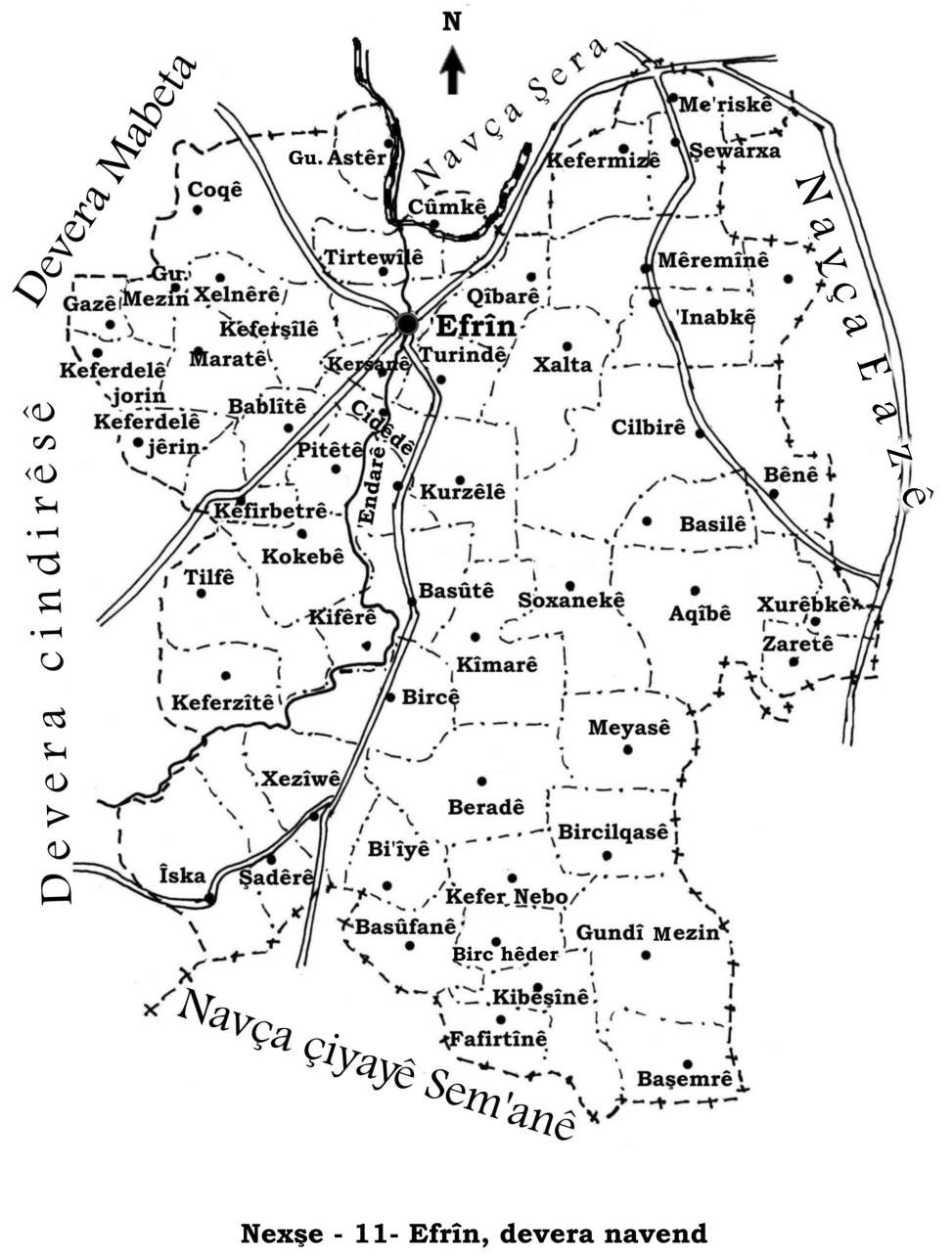
Photos
Basic Information about Keferdelê Jêrîn
Source: Ax û Welat
Etymology: Sivîn Dewlemend (Wealthy Plow/Ridge); formerly Xerabê Çîlo (Ruins of Çîlo, named after a bald resident)
Old Names: Xerabê Çîlo
Foundation Date/Period: 300 to 350 years ago
Hills: Qeracê Reş, Kelem Siwê
Shrines: Şêxşûr
Ruins: Xerabê Çîlo, Dêrek
Wells: Bîra Basikreşî, Bîra Bêrik, Bîra Xelûl
Other Landmarks: Deşta Cûmê
Source: Afrin Flo
Etymology: Originally called Gundê Çîlê or Çîlo after an individual named Çîlo who first brought his flock there to graze; later named Kefer Delê Jêr
Foundation Date/Period: Approximately 200 to 250 years ago
Shrines: Zahîretê Kefer Delê
Source: Afrin Zeyton
Other Landmarks: Keferdelê Jorîn
Summaries
I. Summary from TirejAfrin Site (English) of Keferdelê Jêrîn
Source: https://www.tirejafrin.com/site/kura%20afrin%20markaz-%20Keferdele%20jerin.htm
The following comes from the book جبل الكرد (عفرين) دراسة جغرافية Çiyayê Kurmênc (Efrîn): A Geographical Study by د. محمد عبدو علي Dr. Mihemed Ebdo Elî:
Keferdelê Jêrîn - Gundê Lêl / 1477 inhabitants - 440 (houses/hectares) - 12km - 385m. Its name is taken from the name of the village of Keferdelê Jorîn, as its early inhabitants originated from there. Its other name is Gundê Lêl, meaning "Village of the Blonde" in Kurdish. It is a medium-sized village located on both sides of a shallow valley called Geliyê Maraq, which comes from the direction of Keferdelê Jorîn and heads south. It is overlooked from the east by Çiyayê Ilmer.
The following comes from the book عفرين .... نهرها وروابيها الخضراء Efrîn... Her River and Her Green Hills by the writer عبدالرحمن محمد Ebdulrehman Mihemed from the village of Qetme:
Keferdelê Jêrîn is a village in Çiyayê Kurmênc, affiliated with the subdistrict of the Efrîn center and region, in the Aleppo governorate. It is a small village located on the edge of the flood valley Geliyê Sêlê which heads south. It is 15 km away from the city of Efrîn towards the west. It is bordered to the north by a wide plain of olive trees and the village of Keferdelê Jorîn; to the south by a fertile plain of olive trees and the Enderiyê farm; to the east by a mountain chain called Çiyayê Çilxane (Jabal Al-Arba'in), slopes planted with olive trees, and the village of Maratê; and to the west by a fertile plain of olive trees, Çiyayê Sotîn, and the village of Qerebaş (Feqîran).
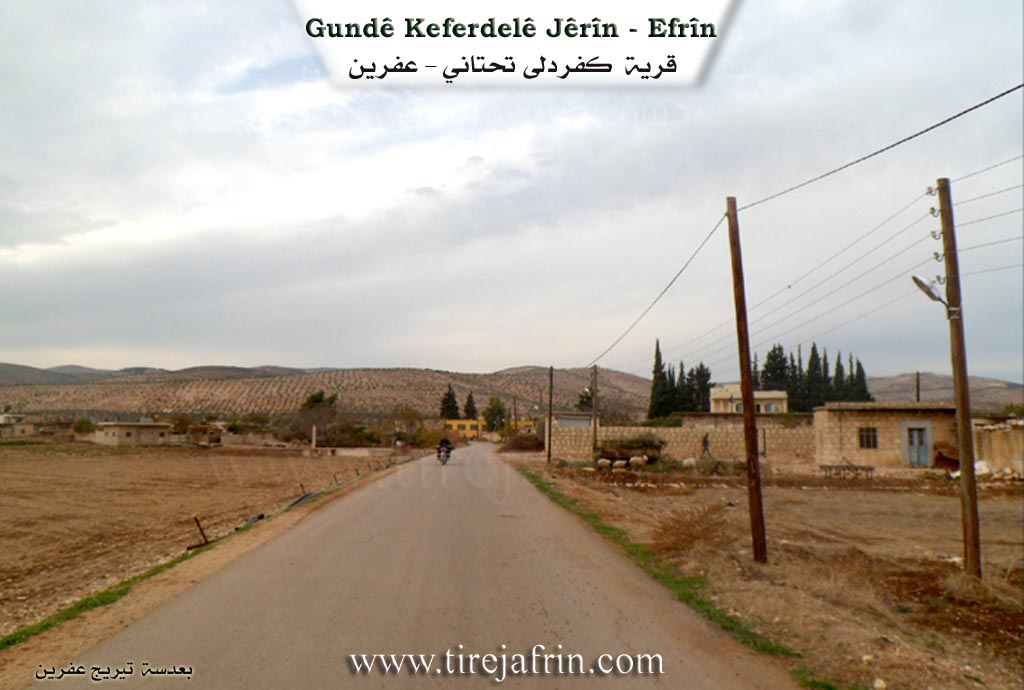
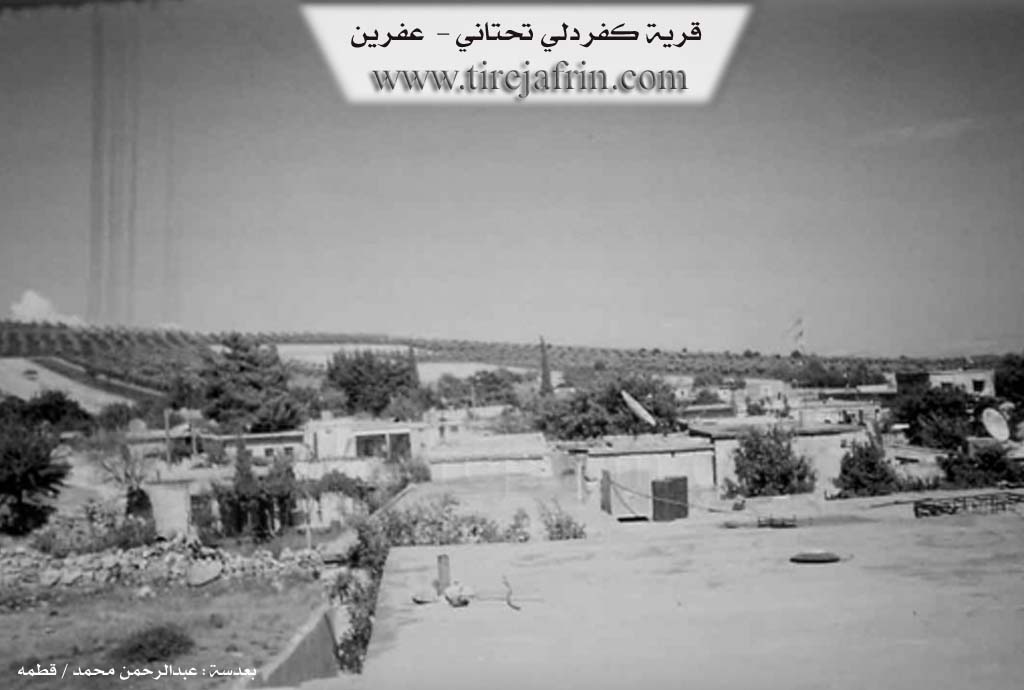
The number of houses reaches about 50, and its age is about 300 years. It is built upon the ruins of a Roman city (its name means "Farm of Hearts"). Its old residences are of stone and mud with flat wooden roofs, while the modern ones are of stone and reinforced concrete.
An electricity network is available, and a paved road passes through its center connecting to neighboring villages. It has a primary and preparatory school and a mosque. Residents drink water from artesian wells and pools. The inhabitants work in the cultivation of olives, grains, legumes, and summer vegetables. The first press in the village was the press of Mihemed Elî Necar and his children; recently, there is more than one modern press in the village.
Among the families present in the village are: the Resûlo family, the Necar family, and the Hec Henan family. The Xelecka family is considered to have the most university degree holders in the village, in addition to the presence of many university degrees generally in the village. There are two wells dating back to Byzantine history, one of which is called Bizinga Reş. Among the well-known sons of the village in the field of education is the teacher Ebdulrehman Nûrî Necar (Mathematics teacher). Among the holders of higher degrees in the village is Xelîl Mihemed Ebdullah (PhD in Economics / Russia).
The Mukhtar of the village is Faîq Îbiş.
Sources
Book: جبل الكرد (عفرين) دراسة جغرافية Çiyayê Kurmênc (Efrîn): A Geographical Study by د. محمد عبدو علي Dr. Mihemed Ebdo Elî.
Book: عفرين .... نهرها وروابيها الخضراء Efrîn... Her River and Her Green Hills by عبدالرحمن محمد Ebdulrehman Mihemed from the village of Qetme.
Preparation and Execution:
Manager of the Tirej Efrîn website: Ebdulrehman Hacî Osman
20/12/2013
II. Summary of Keferdelê Jêrîn from Ax û Welat
Source: https://www.youtube.com/watch?v=LLuAVA1cQok
The village of Keferdela Jêrin (Lower Keferdela), officially known as Keferdela Tehtanî, is located in the Cindirêsê district of the Efrîn region. According to local elder Sadiq, the village was founded approximately 300 to 350 years ago. Its origins are traced back to a founder named Resûl who migrated from Siftek. Resûl's lineage split into two main branches: Malê Rêsûl and Malê Xelîl (also known as Xelîçkan). Historically, the site was known as Xerabê Çîlo (Ruins of Çîlo), named after a bald (çîl) man who once lived among the ancient ruins there. The narrator notes that the current name, Keferdela, implies "Sivîn Dewlemend" (Wealthy Plow/Ridge).
The social structure of Keferdela Jêrin is composed of approximately eight to nine main families, including Malê Şa'o, Malê Hecîlo, Goganî, Malê 'Elkê, and Malê Totozê. While the founders arrived centuries ago, other families like Malê Ebdî Agha migrated later from the village of Gazê to be closer to their agricultural lands. The village maintains close ties with its twin village, Keferdela Jûrin (Upper Keferdela), sharing bloodlines and intermarriage for generations. Leadership historically fell to the Mukhtar; Xelîlê Xelûçka is remembered as a famous Mukhtar whose family held the position for three generations. Community disputes were also resolved by elders like Mehmûdê Çûşevî and Miradê Xidir.
Significant landmarks define the village's geography and history. The ruins of a church, referred to as Dêrek, once stood in the center of the village but have disappeared. A shrine named Şêxşûr acts as a spiritual site to the south. Water sources played a vital role in the village's development; the Bîra Basikreşî well is located in the village center, while the Bîra Bêrik lies to the east. The Bîra Xelûl is notable for being the site of the first motorized water pump established in 1940.
The village is also known for its traditional knowledge and culture. Apê Mehemed is a local herbalist who prepares remedies using plants like Gongil, Korûş, and Meyan. He describes a specific cure for a sickness caused by a bird called Tewrî, using a plant also named Tewrî. Weaving traditions are preserved by women like Arîfe and Emîne, who craft items from straw and beads. Musically, the village is home to the Malê Hemgulî family, including musicians Xelîl and Omer, who continue a lineage of playing the tembûr passed down from their grandfather Xelîl and father Ebdirehman.
Modern Keferdela Jêrin has faced the impacts of war and displacement, with many residents moving to Aleppo or Europe. However, the community honors its recent history, including the construction of the school by Yûnis Efendî and the sacrifice of seven martyrs, including Dimhat, Zinar, Sîpan, and Rehîme.
II. Summary of Keferdelê Jêrîn and Keferdelê Jorin from Ax û Welat
Source: https://www.youtube.com/watch?v=ntK5ucTs_TE
The village of Keferdelê is a historic settlement in the Efrîn region that consists of two distinct sections known as Keferdeleya Jorin and Keferdeleya Jêrîn. Residents explain that the name has Aramaic origins where the word Kefer signifies a village making the meaning Gundê Delê. The history of the settlement spans between four and five centuries. Originally Keferdeleya Jêrîn served merely as an agricultural mezra or farm for the upper village before the population expanded the cultivated land and established a permanent presence there. The geography is defined by Çiyayê Hemdû to the east and north and Çiyayê Elî Îsa to the south.
The social structure and reputation of Keferdelê are deeply tied to education and intellectual achievement. The village is famous for having a high density of university graduates including over 110 professionals such as doctors and engineers. This legacy began with Heyder Gênco who is celebrated as the first teacher in the Efrîn region. In 1947 he established a school that served students from seven surrounding villages including Satya and Gewrika and Çolaqa. Before the construction of this formal schoolhouse education took place in caves under the guidance of religious figures like Mela Ebdurehmanê Siltanê and Xoce Nebatî as early as 1932. The Îbiş family is noted for its many educated members while Mehmedê Evdile 'Erdo is remembered as the mukhtar who assisted in building the first school.
The village landscape features significant natural and sacred sites. There are approximately 30 caves in the area which were historically used for habitation and sheltering livestock. Notable among these are Şikefta Govşka Zeytûna and Şikefta Ga the latter being the widest. A 400 year old well exists north of the village and residents still use traditional methods to locate water sources. For spiritual practices the community reveres the shrine of Şêx Ûzim located to the south. This site contains a sacred palot tree where locals light candles and pray for rain or personal wishes.
Culturally the village maintains strong traditions in agriculture and folklore. Residents like Mihemed Şêx Zekî are skilled in grafting lemon trees and other fruits. The village also hosts a dedicated folklore group that preserves Efrîn specific dances. They perform distinct routines such as Avî Rişko and Avî Çençeno and Avî Mekbeskî and Avî Qertel. The community has celebrated Newroz openly since 1959 often gathering in the village square to light fires and distribute sweets.
II. Summary of Keferdelê Jêrîn from Afrin Flo
Source: https://www.youtube.com/watch?v=5zeVpZ4SNCU
The village of Kefer Delê Jêr (also referred to as Kefardelê Jêr) is located in the Efrîn region, administratively attached to the Cindirês district within the Cûmê area. According to local elders, the village history spans approximately 200 to 250 years. Its origins are traced back to an era when the site was rich in vegetation and water, attracting a man named Çîlo who brought his herds to graze there. Consequently, the settlement was originally known as Gundê Çîlê or Çîlo before acquiring its current name.
The social fabric of Kefer Delê Jêr is defined by specific tribal origins and waves of family migration. One elder, Ebû Kawa, notes that the earliest inhabitants came from Piyê Cîjanê and Piyê Şerqa. The primary tribal affiliation mentioned is Bêskî, though the Gûganî tribe is cited as a foundational root ("bav û eşîrek"). The settlement process occurred in stages, with Mala Xelîlko being among the first families to establish homes, followed by Mala Resûl. Over time, many other families migrated to the village, including Mala Hesê, Mala Xelûçka, Mala Xoce, Mala Çatûzê, Mala Xelîlê Ereb, Mala Miradê Xidir, Mala Hec Henan, Mala Hemtê Elikê, Elî Dawûd, Mala Omerê Ebdî Gihenco, Mala Mehmed Elî, Mala Hesen Sadiq, and Mala Hemgulî. Today, the village comprises roughly 60 households, though many residents have emigrated to places like Heleb (Aleppo) or Europe.
The village economy has traditionally relied on olive cultivation (zeytûn), livestock, and crops such as wheat, lentils, and barley. Elders recall a past defined by strong communal solidarity, where families would eat together and work collectively during harvest seasons on the threshing floors. A significant testament to this communal spirit was the construction of the village school about 30 years ago. The villagers pooled their money and labor to fight illiteracy ("şerê cehel"), ensuring their children received an education. Notable early educated figures from the village include Xelîl Efendî, a teacher who worked in Efrîn, and Mamoste Heyder (specifically Ebdil Heyder, son of Şêxûren).
Regarding sacred sites, the village contains a shrine known as Zahîretê Kefer Delê. This site includes ancient tombs and serves as a burial place for notable ancestors, including the grave of Merhûm Xelîl Ebdurehman. While modern life has introduced new technologies and changes, the elders emphasize the enduring value of the village's history of cooperation and the deep roots of its families.
II. Summary of Keferdelê Jêrîn from Afrin Zeyton
Source: https://www.youtube.com/watch?v=_FUs3ew_7Pc
The history of Keferdelê Jêrîn is defined by its distinct settlement pattern and its historical social relationship with the neighboring upper village. According to local elders, the village was established through the successive arrival of four specific families who built the community together. The first lineage to settle was Mala Resûl, followed by Mala Mehmed Elî, then Mala Kolo, and finally Mala Xoce. These families developed the village on the plains, cultivating the black earth soil for agriculture.
Socially, the village historically operated under the shadow of Keferdelê Jorîn, the upper village. The residents of the upper village were known as begs or lords, specifically the Malê Hemdo family. Elders recall that Malê Hemdo owned the trees and land in the area, while the people of Keferdelê Jêrîn were historically poor shepherds or laborers who served them. Over time, the local economy shifted toward independent farming, with residents now cultivating olives, coriander, cumin, barley, and wheat.
Water resources have played a critical role in the evolution of the landscape. In the past, the plains surrounding the village hosted approximately twenty natural springs with abundant flow. However, these natural sources have since dried up, forcing residents to rely on drilled wells. The water quality varies significantly across the village territory. Wells on the western side often produce water that is bitter or smells of sulfur, while other areas provide potable water.
The community maintains a rich memory of cultural traditions and leadership. Residents describe elaborate weddings from the past that lasted seven or eight days, featuring the traditional procession of the bride on a horse. They recall local musicians such as the drummer Xelîl and Pîşo Melta. The village also holds deep respect for a former leader named Xelûçka, who served as the mukhtar. He is remembered for his ability to manage village affairs efficiently and shield his people from external problems. The elders lament the decline of these traditional structures and the loss of oral history, citing legendary figures from Kurdish folklore like Memê Alan and Dewrêşê Evdî whose stories were once recited regularly in village gatherings.
II. Summary of Keferdelê Jêrîn from Multi Channel
Keferdelê Tehtanî, also known as lower Keferdelê, is a historical village in the Efrîn region. While written history is scarce, oral tradition traces the current Kurdish settlement back over 350 years. Elders count nine generations of local grandfathers, including Sadiq, Mihemed Elî, Xelîl, Mihemed, and Resûl. Long before these nomadic ancestors arrived with their livestock, the site held immense religious significance during the Byzantine era. This is evidenced by the ruins of an Eastern church linked to Entakiya, which consisted of two stone houses joined by a stone arch and a southern entrance.
The village structure is rooted in families who originally arrived seeking pasture. The Neccar family is one of the oldest. Their ancestor was the sole carpenter from Cindirês to the village, and he taught his trade to apprentices in neighboring places like Gewrîkan and Cwêq. The Resûlo lineage is a branch of the Neccar family. Other foundational lineages include Dado, Tawz, Tatoz, and Hec Henan. Historically, much of the agricultural land was owned by figures such as Brahîm Omer Sefûnê, Hesen Efendî, Xazî Dêpe, and Elî Axa from the neighboring Keferdelê Fawqanî. These landowners built houses in the village specifically to save their peasant farmers a daily commute. Decades ago, an Arab family named Erebo settled in the western part of the village. Today, the village also hosts displaced persons, including a woman from Qibtan living in a tent whose husband works in the Efrîn market.
Historically, the village was heavily agricultural and renowned for its extensive vineyards. Locals pressed grapes manually in large stone basins to make molasses. Later, olive presses were constructed, with a prominent one built in 1961. The local valleys, Geliyê Seylî and Geliyê Mezin, once provided ample water, and residents used to build temporary dams near Şêx Ebdurehman to catch fish and irrigate fields. They also utilized the Meydankê and Bablîtê canals. Today, however, water scarcity forces residents to purchase water from tanks, and they lack state electricity.
The village is famous for the remarkable longevity of its residents. While the average lifespan is around 70, several elders have lived past 110 or 120 years. Locals attribute this health to an organic diet of raisins, dried figs, honey from local apiaries, and natural animal fats. One Erebo family member lived to 110, and a relative in Enderiyê reached 115.
Culturally, the village preserves the deeply emotional Kurdish musical tradition. Singers draw inspiration from legends like Cemîl Horo, Mihemed Elî Teco, and Bavê Selah. Their songs reflect the historical tragedies and migrations of the region, transforming profound sorrow into art. A prime example is the epic ballad of Eşê, which residents consider the master key to all Kurdish singing.
II. Summary of Keferdelê Jêrîn from Afrin 366
The documentary explores Kafar Delê Jêrin, a historically rich village in the Afrin region, known historically as Çiyayê Kurmênc or Kurd Dax.
The village boasts a history spanning over a thousand years, with origins traced back to the Roman and Byzantine eras. Local elders emphasize that there is no Arab origin to these ancient structures. Over the centuries, the village name evolved significantly. Initially called Berkevir, meaning near the stone, it later became known as Gundê Çîlê or Çil Xirabeyê Çîlo. During the Ottoman period, it was called Xirabçîlo, named after the Çîlo family who no longer reside there. Ultimately, it adopted the name Keferdel, which an elder explains is derived from a Syriac term meaning a fertile farm.
The ancient roots of the settlement are highly visible in its architecture, with many houses built directly upon Roman and Byzantine foundations. Locals note that one must dig five to six meters deep to reach the bottom of these ancient stones. The village territory features expansive areas of historical ruins stretching towards Şêx Ebdurehman, Pisek, and Cengewirê. The area was once large enough to be considered a city, evidenced by an ancient cemetery spanning fifteen dunams and the presence of an old church. There is also a valley dividing the village, featuring caves that historically served as military refuges.
Today, Kafar Delê Jêrin is home to about eighty households. Although no specific tribes are mentioned, the village is inhabited by numerous long established families who live together in unity. These prominent lineages include the Xelûşko, Resûl, Hec Henên, Hesê, Xelîlê Ereb, Xillo, Edanê, Tatozê, Xoce, Ristiwî, Mîro Daxadir, Elikî, Zêbê, and Hem Xurcikê families.
The village is highly regarded for its beautiful nature, clean air, and fertile lands. While historically known for its vineyards and fig trees, the agricultural focus has shifted predominantly to olive groves, alongside wheat and lentils. The community is deeply respected for its high level of education, with elders proudly stating that seventy percent of the residents are educated and hold degrees. The village has no singular leader or Agha, functioning instead as a collective community where homes are constructed of solid stone and lime.
During conversations, community leaders urge the Kurdish diaspora living in Europe to return and invest in their homeland in Efrîn. They encourage opening bakeries, macaroni factories, or brick making businesses to support the local economy and provide sustainable jobs for the surrounding villages.
Transcriptions and Subtitles
| Source | Video | Subtitles | Transcript |
|---|---|---|---|
| Afrin 366 1 | Watch Video | Download SRT | View Transcript |
| Afrin Flo 1 | Watch Video | Download SRT | View Transcript |
| Afrin Zeyton 1 | Watch Video | Download SRT | View Transcript |
| Ax û Welat 1 | Watch Video | Download SRT | View Transcript |
| Multi Channel 1 | Watch Video | Download SRT | View Transcript |
| Ax û Welat 1 | Watch Video | Download SRT | View Transcript |
Foundation/Origin Information of Keferdelê Jêrîn
Its first inhabitants came from Keferdelê Jorin village. It is built on the ruins of a Roman city.
Source: TirejAfrin Site
Founded on the site of older ruins known as Xirabê Çîlo by three primary families—Malê Reşo, Malê Xelîl, and Malê Mistê.
Source: Ax û Walat Transcript
Originally founded on the Kîşarkê mountain under the name Çîlo before its inhabitants migrated down to the plain. The community was established by several founding families, including the Beskê, Hasê, and Xelûçko.
Source: Afrin Flo Transcript
Possible Village Name Meaning of Keferdelê Jêrîn
Its name is taken from Keferdelê Jorin village. Its other name is Gundî Çîlê, meaning "village of the blondes" in Kurdish.
Source: TirejAfrin Site
V. Links
- Tirej Afrin:
https://www.tirejafrin.com/site/kura%20afrin%20markaz-%20Keferdele%20jerin.htm - Ax û Welat:
https://www.youtube.com/watch?v=-J9CkwvwAlQ - Jawlat (post-2018):
https://www.youtube.com/watch?v=G0BGZARE5D8 - Gundên Me (post-2018):
https://www.youtube.com/watch?v=_FUs3ew_7Pc - Drone video:
https://www.youtube.com/watch?v=fuRreV_78U8 - Link:
https://www.youtube.com/watch?v=WjYxM7cXJsE - Video:
https://www.youtube.com/watch?v=dG0jQOAOwpY - Link:
https://www.youtube.com/watch?v=C65nql24n0k - Link:
https://www.youtube.com/watch?v=LLuAVA1cQok - Ax û Welat:
https://www.youtube.com/watch?v=ntK5ucTs_TE - Afrin Flo:
https://www.youtube.com/watch?v=5zeVpZ4SNCU - Afrin 366:
https://www.youtube.com/watch?v=W84x2NB4xhU