General Information
Nahiya (Subdistrict)
Cindires
Also Known As
Tel Hemo, Til Hemo, Til Ĝemo, تل حمو
Families, Clans, etc.
Îbo, Şêx Heyder
Photos
Basic Information about Til Ĥemo
Source: Afrin Flo
Shrines: Ziyareta Şêx Ebdurehman
Summaries
I. Summary from TirejAfrin Site (English) of Til Ĥemo
Source: https://www.tirejafrin.com/site/kura%20afrin%20Cindires%20-%20til%20hemo.htm
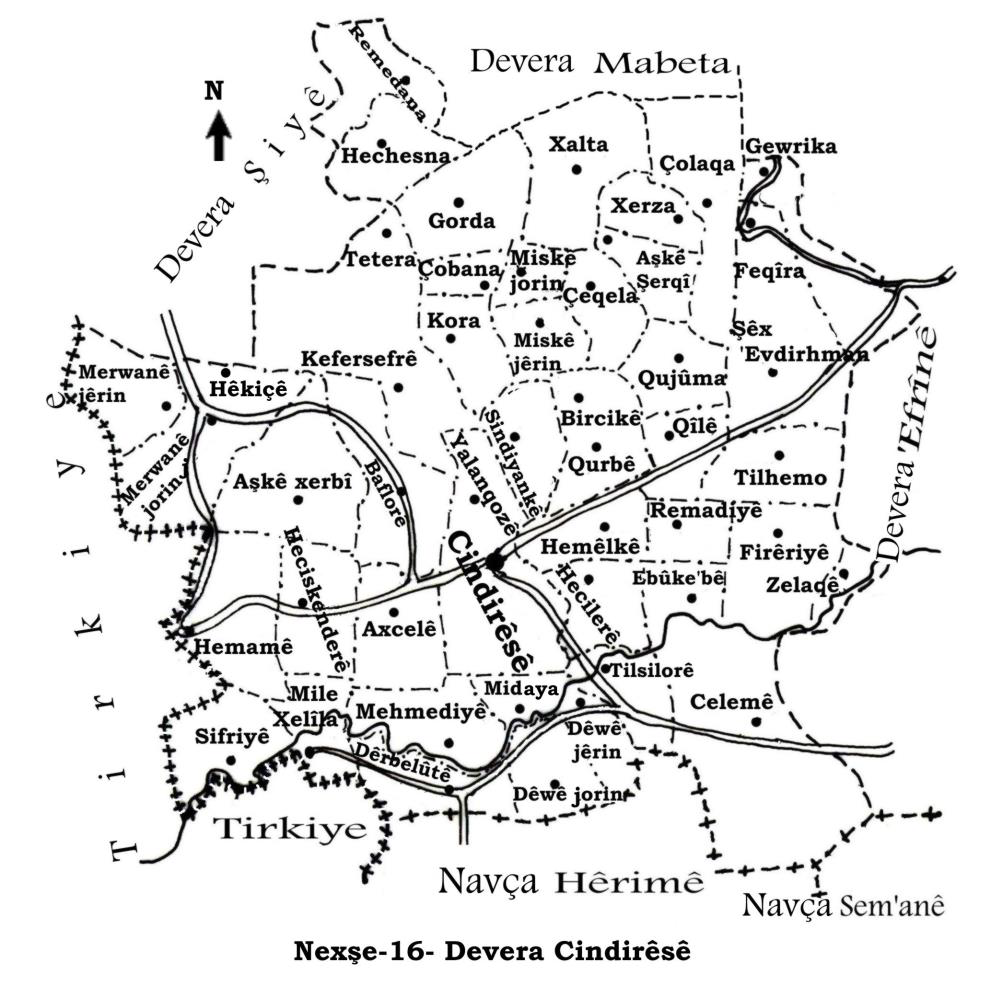
It is stated in the book جبل الكرد (عفرين) دراسة جغرافية Çiyayê Kurmênc (Efrîn): A Geographical Study by د. محمد عبدو علي Dr. Mihemed Ebdo Elî regarding Til Ĥemo / Til Hemo: 258 inhabitants, 843 hectares, 8 km from the center, 230 m altitude.
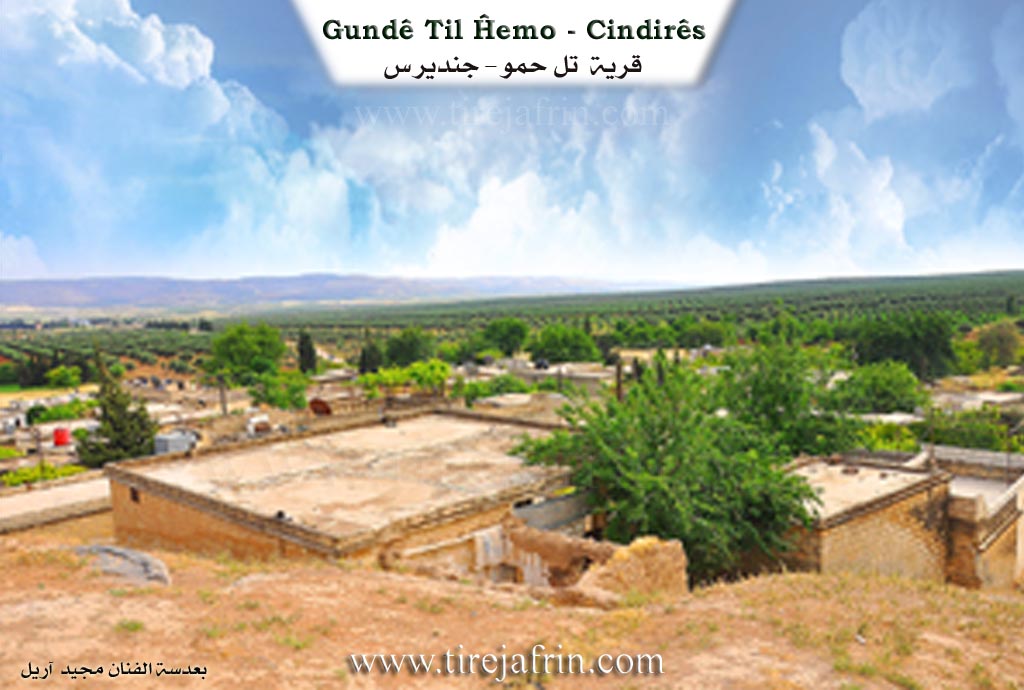
Hemo is a local Kurdish proper name derived from "Muhammad". It is a small village centered around the archaeological Til Hemo, surrounded by a group of shallow valleys that unite and then head south towards Çemê Efrîn (Afrin River).
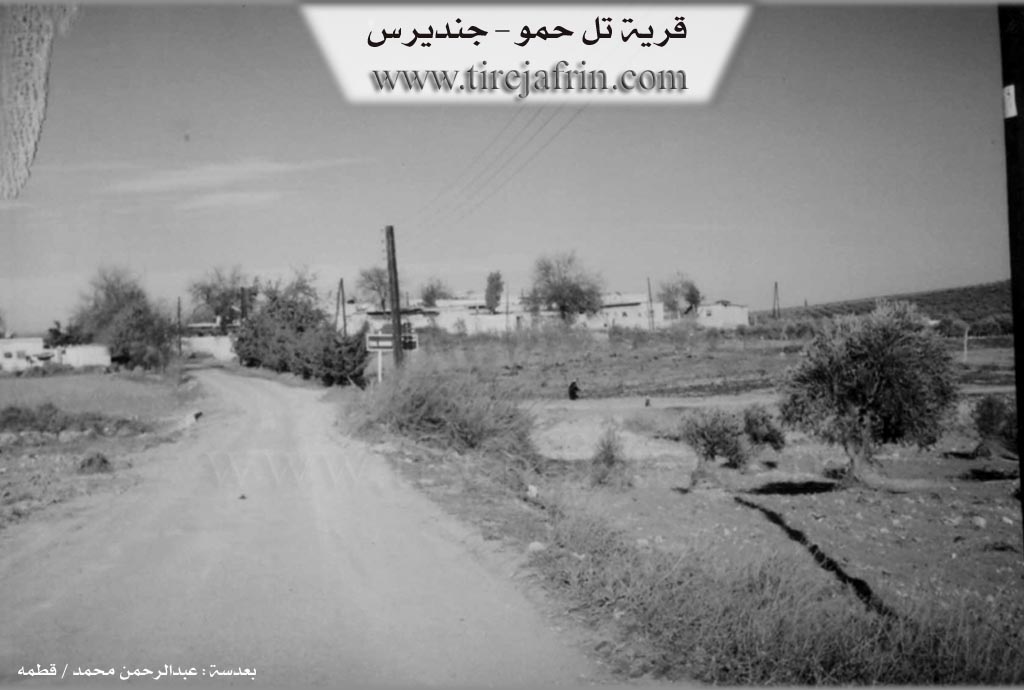
It is stated in the book عفرين .... نهرها وروابيها الخضراء Efrîn... Her River and Her Green Hills by the writer عبدالرحمن محمد Ebdulrehman Mihemed from the village of Qetme that Til Hemo is a village in Çiyayê Kurmênc following the township of Cindirês, district of Efrîn, governorate of Heleb. It is a small village located on the outskirts of the small Til Hemo and the plain of Cindirês and eastern Cûm. It is surrounded by a group of valleys that meet to its south, heading south to feed Çemê Efrîn. It is 8 km distant from the town of Cindirês to the east and north. The slopes of Çiyayê Kurmênc overlook it from the west and plateau highlands from the east. Its soil is fertile clay.
It is bordered to the north by a fertile agricultural plain, Riya Efrîn-Cindirês (Efrîn-Cindirês road), and the village of Şêx Ebdirehman. It is bordered to the south by a fertile plain and the village of Ferîriyê. It is bordered to the west by a fertile agricultural plain and the villages of Remadiyê and Hemîlk. It is bordered to the east by a fertile plain, highlands planted with olive trees, and the villages of Tilelf and Keferzît.
The number of its houses reaches about 30 houses, and its age is about 200 years. Its old houses are made of mud and stone with flat wooden roofs, while the modern ones are cement, scattered in the center of the village and around the archaeological Til Hemo. Available in the village are an electricity network, a primary school, and an agricultural cooperative society. A paved road passes through its center heading to Cindirês, Efrîn, and Ferîriyê. The village drinks from well water and from rainwater collected in cisterns in winter.
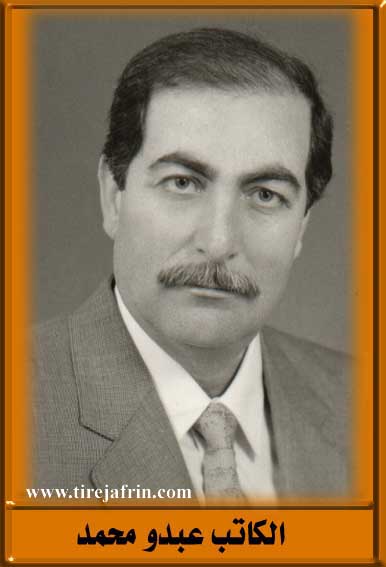
Residents work in rain fed agriculture on an area of 843 hectares (olives, grains, legumes) and 11 hectares irrigated by artesian well water producing summer vegetables, cotton, and fruit trees like pomegranate, walnut, and apricot, alongside raising sheep and cows. It is mentioned that the writer Ebdo Mihemed is among the sons of this village.
The mukhtar of the village is Mirad Izet Mirad.
Sources:
- Book: جبل الكرد (عفرين) دراسة جغرافية Çiyayê Kurmênc (Efrîn): A Geographical Study by د. محمد عبدو علي Dr. Mihemed Ebdo Elî.
- Book: عفرين .... نهرها وروابيها الخضراء Efrîn... Her River and Her Green Hills by عبدالرحمن محمد Ebdulrehman Mihemed from the village of Qetme.
- Preparation and execution by Navenda Tirej Efrîn director Ebdulrehman Hacî Osman
- 20/12/2013
II. Summary of Til Ĥemo from Afrin Flo
Source: https://www.youtube.com/watch?v=OMMJS3jMus4
The documentary focuses on the village of Telhemo (also referred to as Til Hemû) in the Afrin region. The narrative centers primarily on the religious and social life of the village, specifically highlighting the prominent Ziyareta Şêx Ebdurehman. This shrine serves as a spiritual anchor for the community and contains the tombs of several notable figures. The central figure is Şêx Ebdurehman, alongside Şêx Mihemed, who passed away in 2006. Other individuals interred within the shrine complex include Hacî Îbrahîm Cemîl, Fîdan Mihemed, and Emîna keça Şêx.
A distinct feature of the Ziyareta Şêx Ebdurehman is a ritual involving a specific stone known as Mrazê Xwedeghazê. Visitors attempt to stick a small stone to a vertical surface within the shrine; it is believed that if the stone adheres to the wall, the supplicant's wish or intention (mirad/mraz) will be granted. During the visit, a local man named Semîr attempts this ritual, though the stone does not stick on his attempt.
The social structure of Telhemo highlighted in the footage revolves largely around the Îbo family. The video is explicitly dedicated to Adnan Cemîl Îbobî (also referred to as Adnanê Cemîlê Îbo), suggesting his family's significance in the area. The host visits the grave of Malê Cemîl, identified as Adnan's father, located near the shrine.
The documentary also provides insight into the agricultural life of Telhemo through an interview with a farmer named Ebû Cemîl, who is a member of the Îbo family. He cultivates a garden growing zucchini (kundir), cucumbers (xitek), watermelon (zebeş), and beans (lûbîk). However, the village faces significant environmental challenges. Ebû Cemîl details a severe water shortage, explaining that the groundwater levels have dropped and the rain was insufficient despite early snows. To cope with the lack of electricity and water, the villagers rely on solar power systems, referred to as taqa, to run pumps (xetase), though the output remains low. The video concludes with scenes of the surrounding orchards and general well wishes for the villagers, particularly the Îbo lineage.
Transcriptions and Subtitles
| Source | Video | Subtitles | Transcript |
|---|---|---|---|
| Afrin Flo 1 | Watch Video | Download SRT | View Transcript |
Foundation/Origin Information of Til Ĥemo
A small village centered around the archaeological "Tel Hemo".
Source: TirejAfrin Site
Possible Village Name Meaning of Til Ĥemo
حَمو: A local Kurdish proper name from "Mohammed".
Source: TirejAfrin Site