General Information
Nahiya (Subdistrict)
Efrîn
Also Known As
Bablit, Bablitê, Bablîtê, بابليت
Tribes
Amîrat, Barazî, Bûzikî, Omêrat, Rûbarîn, Şêxîn
Families, Clans, etc.
Berî, Birîm Ehmed, Ebdo Ecac, Ebdulla, Ebdê Hesen, Ehmed Elêwî, Ehmed Hesen, Ehmed Naso, Ehmo, Essaf, Fadil Mosa, Hec Ibrahîm, Hec Istîf, Hec Sitî, Hemdê Elî, Hemdî Elêwî, Heskê ji Ehmed, Leqaf, Mamo, Mehmed Leqîf, Mhemed El Fadil, Mistefayê Celemê, Nûrî, Omer Inco, Riffet, Seydî Memî, Taha, Tofan, Tûfan, Umer, Welo, Xezal, Xezêl, Yaqûb, Yeqûb, Îso, Îso Ehmed, Şêx, Şêx Osman
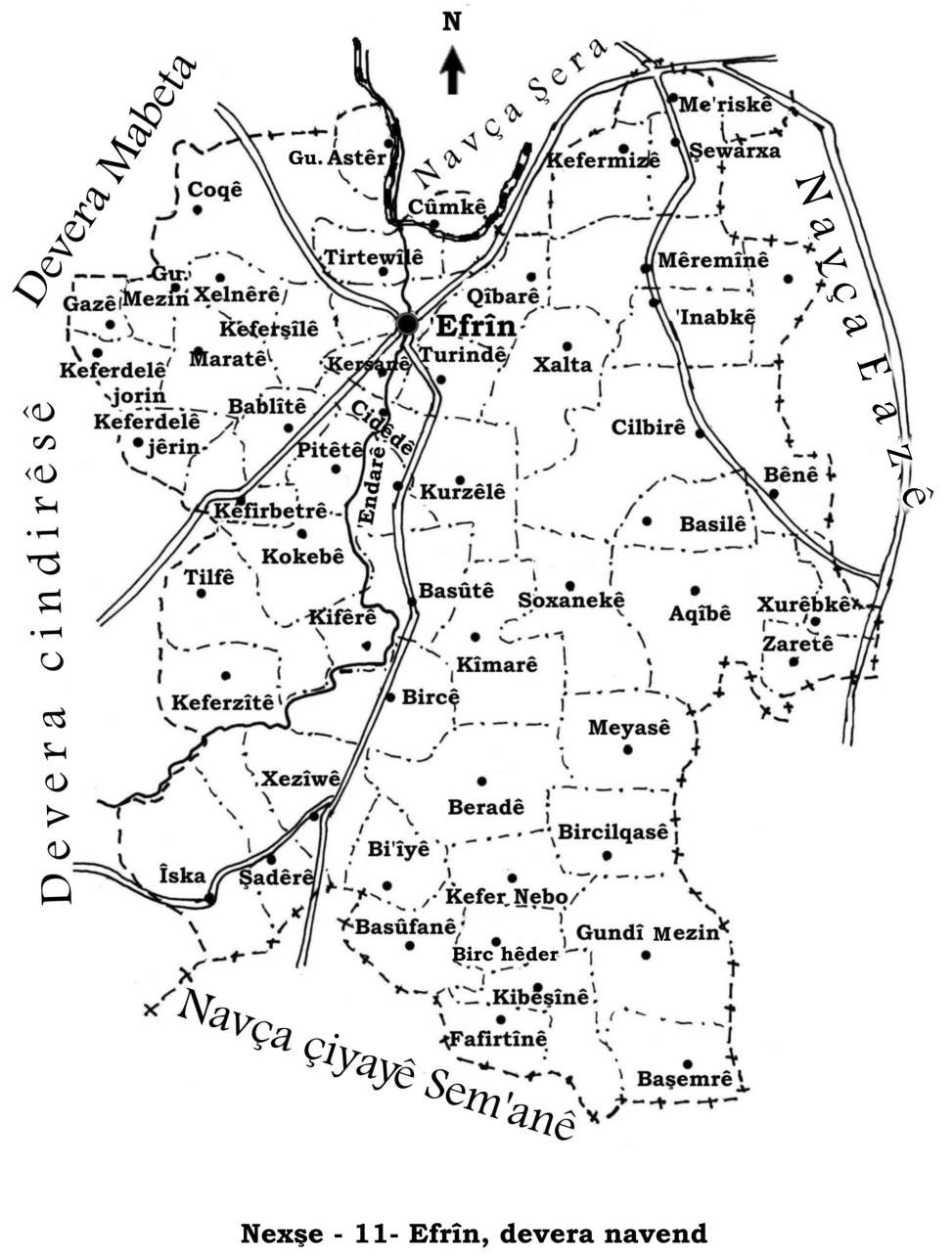
Photos
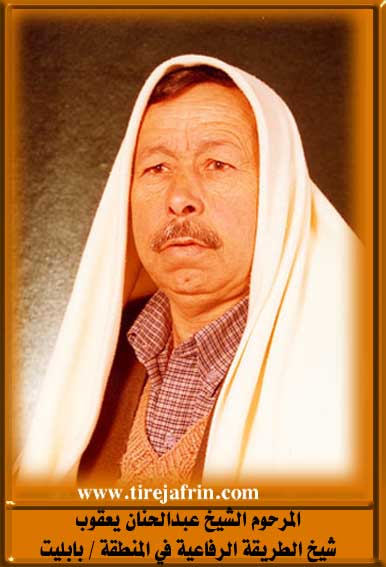
The late Sheikh Abdulhanan Yaqoob
Basic Information about Bablîtê
Source: Ax û Welat
Etymology: Some elders believe it comes from Baba Gît or Baba Agît meaning Father Egîd or Father Hero while the narrator suggests a Syriac origin meaning Mala Pît or House of Letters
Foundation Date/Period: Estimated 200 years ago
Springs: Kaniya Xezalê
Hills: Girê Bergirê
Shrines: Tekiya Şêx Ebdulqadir
Ruins: Qenaya Romane
Wells: Keferşîlê
Other Landmarks: Deşta Efrînê, Geliyê Heftê Rişkê, Qeracêreş, Sedê Meydankê
Summaries
I. Summary from TirejAfrin Site (English) of Bablîtê
Source: https://www.tirejafrin.com/site/kura%20afrin%20markaz-bablit.htm
According to the book جبل الكرد (عفرين) دراسة جغرافية Çiyayê Kurmênc (Efrîn): A Geographical Study by د. محمد عبدو علي Dr. Mihemed Ebdo Elî:
Bablît / 2251 inhabitants - 4km - 265m /:
It is believed that the name is Syriac, derived from "Ba" and "Blit". It is a small village located on the northern side of Wadiya Me'rate. In the early twentieth century, the family of Şêx Ebdulqadir, the Imam of the Rifa'i order in Çiyayê Kurmênc, lived there.
According to the book عفرين .... نهرها وروابيها الخضراء Efrîn... Her River and Her Green Hills by the writer عبدالرحمن محمد Ebdulrehman Mihemed from the village of Qetme:
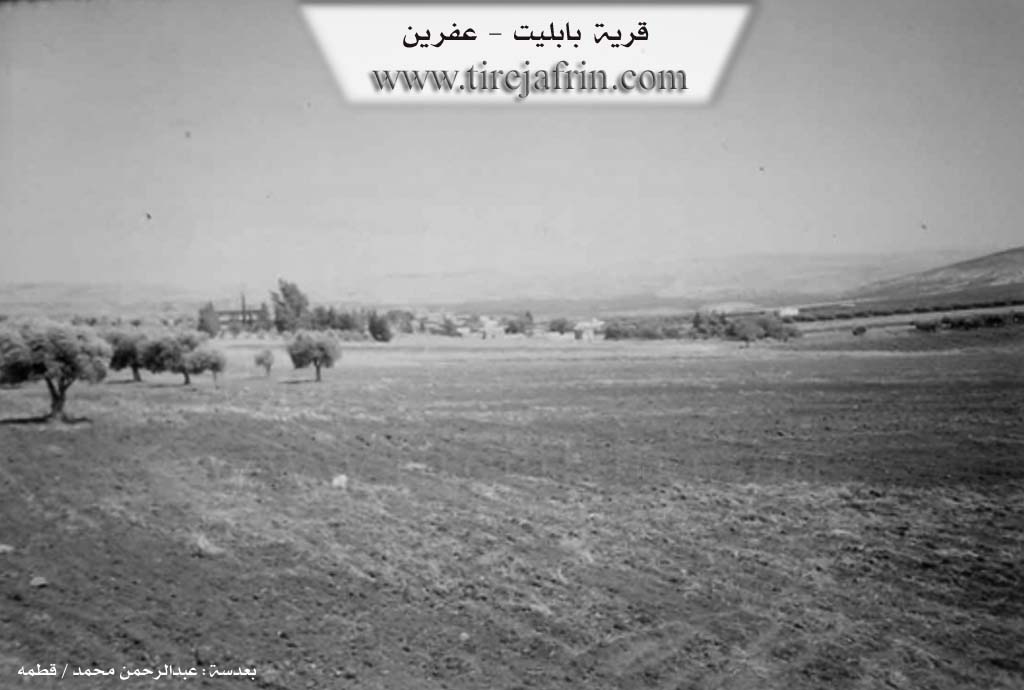
Bablît: A village in Çiyayê Kurmênc, administratively belonging to the villages of the central district of the Efrîn region, Aleppo governorate. It is a small village located at the end of the northeastern slope of Çiyayê Qereç (Black Qereç Mountain), on both sides of Wadiya Bablît, which cuts through it from the northwest to the southeast and terminates at Çemê Efrînê.
It is situated on a fertile agricultural plain. It is bordered to the north by an elevation and plateau planted with olive trees, the village of Me'rate, and Keferşîl. To the south, it is bordered by a slope, a fertile plain, the Riya Efrîn-Cindirês (Efrîn-Cindirês road), the village of Betîte, and the farm of Mezreya Bozîkê. To the west lie a plateau planted with olive trees, the village of Keferdela Jêrîn, and the nearby farm of Mezreya Enderiyê. To the east lie a wide and fertile plain, the Riya Cindirês-Efrîn (Cindirês-Efrîn road), the farm of Mezreya Cedîde Kersan Taş, the city of Efrîn, and its river.
The number of houses reaches about 30, and its age is approximately 150 years. Its old houses are made of stone and mud with wooden ceilings, while the modern ones are of reinforced concrete. The village is surrounded by olive trees on all sides. It has an electricity network, an asphalt road leading up to the village, a primary school, and a water network drawing from Bîra Me'rate (Me'rate well) belonging to the state.
Its residents work in the cultivation of grains, olives, and vegetables on an area of 489 hectares, and primarily in sheep raising. There are three modern olive presses in the village. The village soil is black clay, and it is considered one of the modern villages in the region.
Among the families present in the village are: Yeqûb, Xezal (Mihemed Ebd el-Xezal, sheikh of the Omêrat tribe), Tûfan, and Umer.
Holders of higher degrees in the village include: Ednan Yeqûb son of Mihemed (PhD in Mechanical Engineering/Metallurgy from Egypt), Dr. Xalid Şêx Hesen (PhD in Architecture), and many university graduates. The village Mukhtar is Hemûd el-Xezal.
Social figures include Şêx Mehmûd Ebd el-Xezal, who holds a law degree from the University of Aleppo, and Şêx Ebdulqadir Yeqûb son of Ebdulhenan, sheikh of the Rifa'i order in the region.
Sources:
- Book: جبل الكرد (عفرين) دراسة جغرافية Çiyayê Kurmênc (Efrîn): A Geographical Study by د. محمد عبدو علي Dr. Mihemed Ebdo Elî.
- Book: عفرين .... نهرها وروابيها الخضراء Efrîn... Her River and Her Green Hills by عبدالرحمن محمد Ebdulrehman Mihemed from the village of Qetme.
Preparation and Execution:
- Manager of Navenda Tirej Efrîn: Ebdulrehman Hacî Osman
- 20/12/2013
II. Summary of Bablîtê from Ax û Welat
Source: https://www.youtube.com/watch?v=K-pLvWB0wdU
The village of Bablîtê is situated near the city of Efrîn and is renowned for the deep historical coexistence between Kurd and Arab residents. The village was not always located at its current site; elders recount that the original settlement was situated approximately two kilometers away "li jor" (up above) near a ridge and a now-dry spring. The modern village is estimated to be around two hundred years old. There are differing accounts regarding the etymology of the name Bablîtê. Some residents believe it derives from Baba Gît or Baba Agît, translating to "Father Egîd" or "Father Hero," referring to a historical figure of righteousness. Alternatively, it is suggested the name may have Syriac origins, potentially meaning Mala Pît or "House of Letters."
The social structure of Bablîtê is a blend of Kurdish and Arab lineages who share a communal life, intermarrying and celebrating holidays together. The first family to settle in the village was the Hemdê Elî (or Hemdî Elêwî) family from the Arab tribe of Amîrat. They were followed by other families from the Amîrat tribe, including the Xezal, Tofan, Essaf, Fadil Mosa, and Hec Istîf. Kurdish families such as Şêx Osman, Mamo, Heskê ji Ehmed, Yaqûb of the Şêxîn tribe, and the Mamo family of the Rûbarîn tribe also established themselves there. Historical agrarian relations were defined by local Aghas, specifically Seydî Memî, Riffet, and Mistefayê Celemê, who employed families like Barazî, Bûzikî, and Ehmed Naso as sharecroppers before those families largely moved away.
Geographically, Bablîtê is bordered by the Deşta Efrînê to the east, the Geliyê Heftê Rişkê valley, the village of Tîtê to the south, and Qeracêreş and Kaniya Xezalê to the west. To the north lie Maratê and Girê Bergirê. Historical infrastructure includes remains of a Roman canal, known as Qenaya Romane, and ancient wells like Keferşîlê. Today, the village utilizes water from the Sedê Meydankê for agriculture, primarily cultivating olives and lentils.
A significant aspect of village life is the religious leadership of the Xezal family, who adhere to the Rifatî order. The late Şêx Ebdulhemîd Xezal was a prominent leader of the Amîrat tribe and a religious figure who resolved disputes. His son, Şêx Ebdulqadir Xezal, continues this tradition, maintaining a Tekiye or guest house that serves as a center for healing, prayer, and social mediation for the surrounding region. In recent times, the village has honored its modern history by naming its school and commune after Şehîd Şêrzad.
II. Ax û Walat Book 2
11
BABLÎTÊ
15.1.2017
[Image of the village of Bablîtê]
Ax û Welat
Bablîtê
The village of Bablîtê is affiliated with the center of Efrîn canton, located 5 km west of the city of Efrîn.
The village of Bablîtê has been woven and built like a mosaic of the two components, Kurds and Arabs.
It is not known where the village's name came from, but it is estimated to be a Syriac name meaning ((House of Bît), but this information has not been confirmed.
The first family to settle in the village was the family of Hemdî Elêwî from the Arab Imêrat tribe, after which the families of Xezal, Şêx Osman, Me’mo, and Hesîkêl Ehmed came and populated the village.
12
To the east of the village lie the Efrîn plain and the Evdê Reşkê valley; to the south, the village of Bitêtê; to the west, Qiracê Reş and the spring of Xezalê; and to the north, Rêka Qaçaq, the village of Maratê, and the Bergirê hill.
There are 15 families in the village from both the Kurdish and Arab components:
The families of Tofan, Essaf, Fadil Mûsa, Xezal, Ebdelah, Ebdo Ecar, Ehmed Ilêwî, Leqaf, and Hec Sitê. All are Arab families from the Imêrat tribe.
And the families of Ye’qob, who are Şêxî, the family of Me’mo who are Robarî, the families of Şêx Osman, Welo, Îso Ehmed, Umer Înço. Many people from the village have settled in the city of Efrîn and live there. These are all Kurdish families.
Nearly 55 houses and around 2000 people live in the village.
The people of the village make their living from agriculture, from olive groves, all types of grains, and many types of vegetables, and many families also raise livestock such as sheep, goats, and cattle.
Nearly 10 people work in various factories in the city of Efrîn, and more than 10 people also work in the institutions and bodies of the Autonomous Administration.
There is one martyr from the village named Martyr Şerzad. The village's commune is named after Martyr Dilşêr Qendîl, and the village's school is named after Martyr Şerzad.
13
[Image of Şêx Ebdilhenan Ye’qûb]
www.tirejafrin.com
The late Sheikh Abdul Hannan Yaqoub
Sheikh of the Rifai order in the Bablit region
Şêx Ebdilhenan Ye’qûb was a famous cleric of the Islamic religion and one of the mullahs of the Rifatî order; he had many followers in various areas.
Ebdilhemîd Xezal, as the sheikh or leader of the Imêrat tribe, solved many problems for the people of the tribe; he passed away 7 years ago.
Şêx Ebdilqadir had a room where he welcomed guests, and he treated illnesses with prayers, that is, with dhikr and the Quran.
The guest room, called ((Medafê)), existed in the village; it was a meeting place for the members of the tribe where all problems were discussed and resolved, and people from the village and surrounding villages would gather there.
It is worth mentioning that the two components, Kurds and Arabs, live in the village as one family, supporting each other in times of joy and sorrow, and living in harmony and equality. One can say that a democratic life has emerged in the village.
The literacy rate in the village is high, and many people have completed higher education, including teachers, lawyers, doctors, engineers, and many employees in all fields.
Transcriptions and Subtitles
| Source | Video | Subtitles | Transcript |
|---|---|---|---|
| Ax û Welat 1 | Watch Video | Download SRT | View Transcript |
Foundation/Origin Information of Bablîtê
The family of Sheikh Abdul Qader, imam of the Rifai path in Afrin, lived there in the early twentieth century. Among the families existing in the village: Al-Yaqoub - Al-Ghazal (Mohammed Abdul Ghazal / sheikh of Al-Amiran tribe) - Al-Tufan - Al-Omar.
Source: TirejAfrin Site
Possible Village Name Meaning of Bablîtê
It is believed that the name is Syriac from "Ba" and "Bleit".
Source: TirejAfrin Site