General Information
Nahiya (Subdistrict)
Reco
Also Known As
Al-Nasr, Kuri, Kurê, النصر, كري, كريه
Families, Clans, etc.
Ewnî Beg, Mala Hesen Reco, Mala Hesûnê, Mala Kodê, Mala Mihemed Elûş, Mala Çêwîşan, Mala Ûsê, Omaqa, Qaşqa
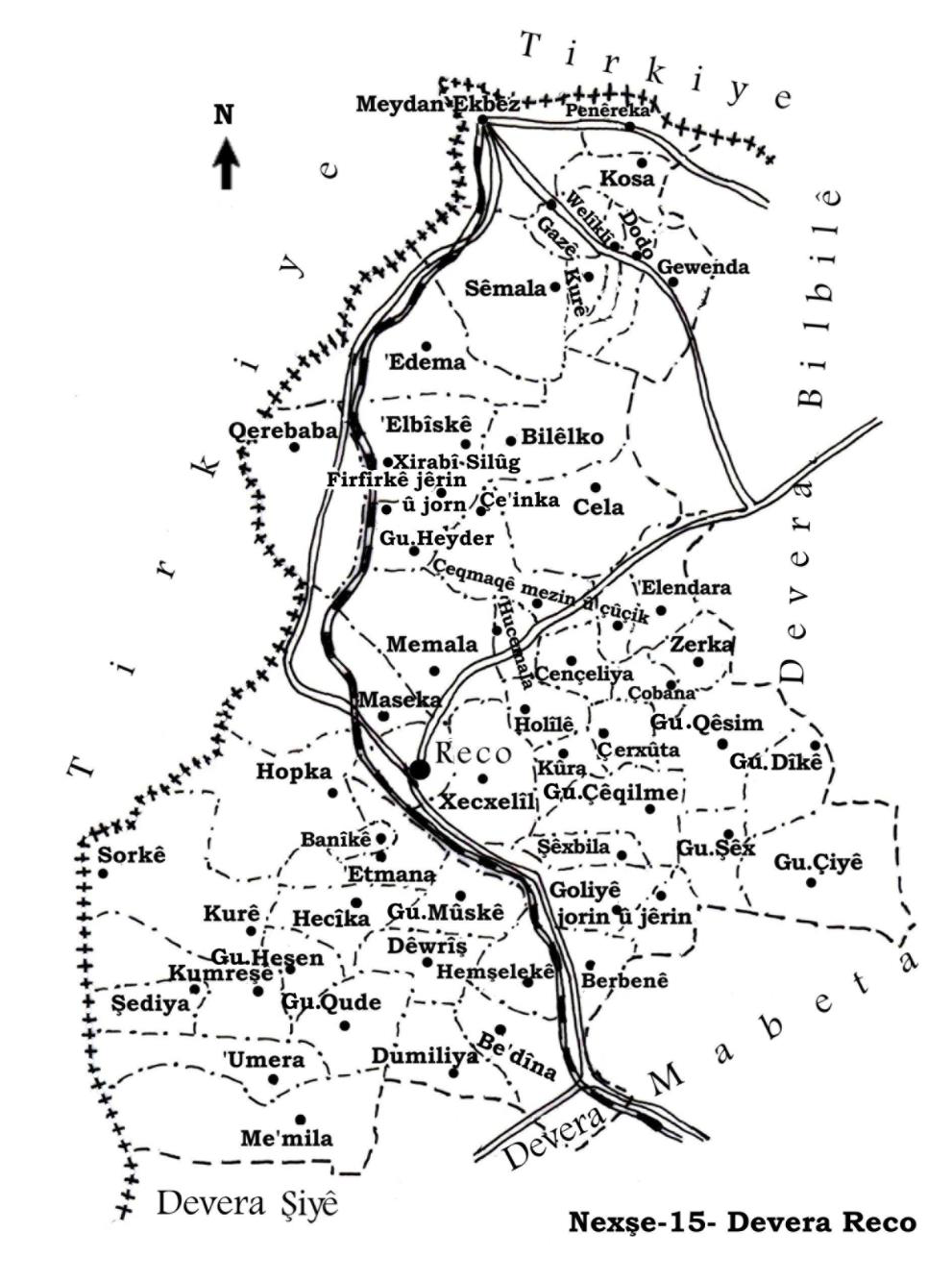
Photos
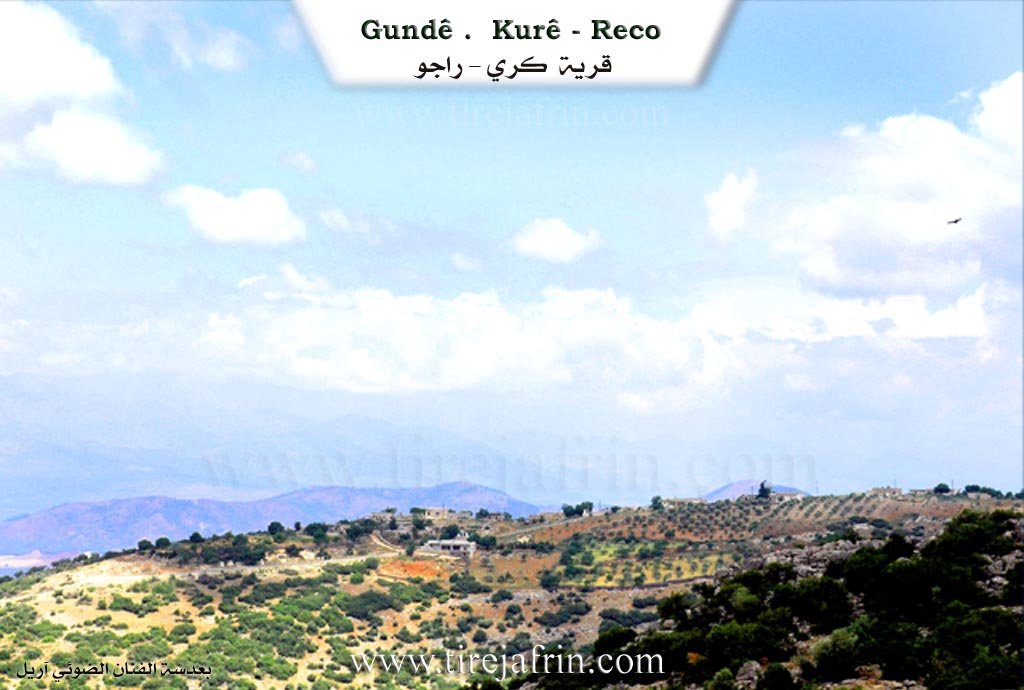
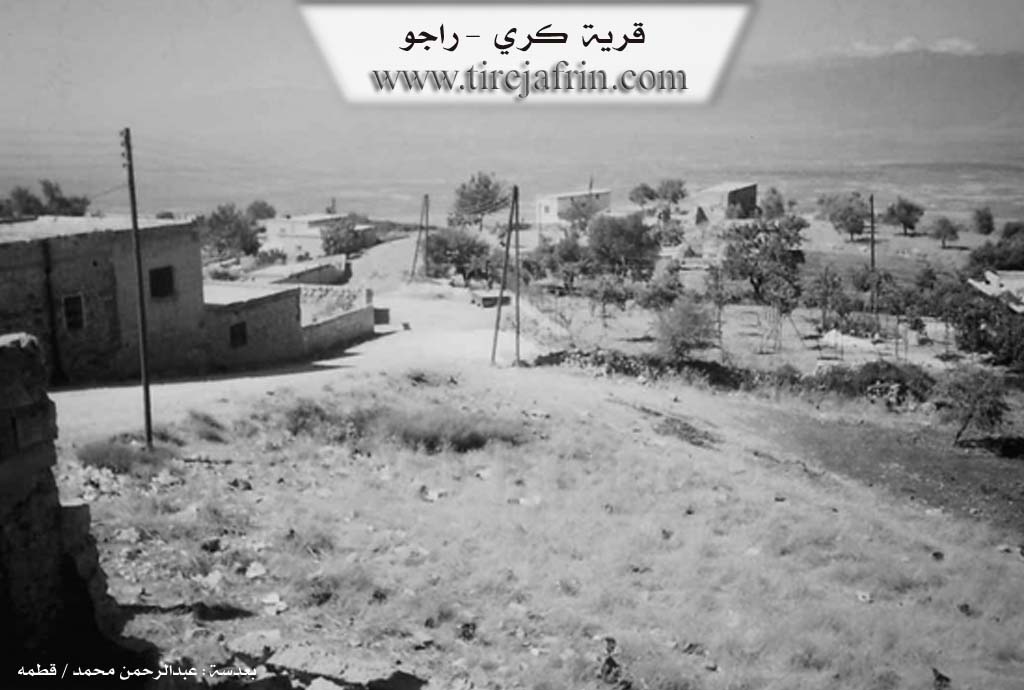
Basic Information about Kurê
Source: Tirej Afrin
Etymology: The name Kur means the clipped, the shaven, or the barren. It is a name given to a high place that is treeless, or where the trees are at a single level. The Arabized name El-Nesr has no connection to the original name.
Foundation Date/Period: Approximately 300 years ago
Hills: Ekaş
Ruins: Semaq, Old house of Ewnî Beg
Other Landmarks: Valley of Sarisn, Deşta Amûqê, Çemê Reş
Summaries
I. Summary from TirejAfrin Site (English) of Kurê
Source: https://www.tirejafrin.com/site/kura%20afrin%20%20%20Reco%20-%20kure.htm
Based on the book جبل الكرد (عفرين) دراسة جغرافية Çiyayê Kurmênc (Efrîn): A Geographical Study: Kur, Kurê, El-Nesr /494 inhabitants, 674m altitude/:
Kur: Meaning the clipped, the shaven, the barren. It is a name given to a high place that is treeless, or where the trees are at a single level. This description fits the location of the village. Kurds usually call such mountainous places Kur. As for El-Nesr, it is an Arabized name that has no connection to the original name of the village.
It is a small village located on a high, steep, forested mountainous hill that is difficult to climb except from the eastern side via the valley of Sarisn. The location of the village is extremely beautiful.
Based on the book عفرين .... نهرها وروابيها الخضراء Efrîn... Her River and Her Green Hills: Kurê: A village in Çiyayê Kurmênc belonging to the Reco district, Efrîn region, Heleb governorate. It is a small village located in the middle section of the mentioned mountain on the slope of a mountainous elevation overlooking the lands of Deşta Amûqê. It is 9 km away from the town of Reco towards the southwest.
It is bordered to the north by a rugged and harsh slope, a deep valley, the ruins of Semaq, and the mountain of Ekaş. It is bordered to the south by a harsh slope planted with forest trees, oak, and terebinth, and the village of Şediya. It is bordered to the east by a harsh slope and two deep watercourses, then a very high and rugged mountain range and the villages of Kumreş and Hesen Kelkawî. It is bordered to the west by a slope, Deşta Amûqê, Çemê Reş (Black River), and the Turkish border directly.
The number of its houses is about 10 houses, and its age is about 300 years. It is one of the old villages and was inhabited by old families in the region, such as the family of (Ewnî Beg) during the Ottoman occupation of the region. Slopes are located around the village from all directions. Its old dwellings are made of stone and mud with flat wooden roofs, while the modern ones are cement.
A electricity network, a dirt mountain road, and a primary school shared with the village of Şediya are available in the village. There is also an old archaeological house on the eastern side of the village belonging to the previously mentioned family. The village drinks water from cisterns where rainwater is collected in winter.
Village Mukhtar: Mihemed Hemo
Sources of Information:
- Book: جبل الكرد (عفرين) دراسة جغرافية Çiyayê Kurmênc (Efrîn): A Geographical Study by د. محمد عبدو علي Dr. Mihemed Ebdo Elî.
- Book: عفرين .... نهرها وروابيها الخضراء Efrîn... Her River and Her Green Hills by عبدالرحمن محمد Ebdulrehman Mihemed from the village of Qetme.
- Studies of Navenda Tirej Soft / Ebdulrehman Hacî Osman.
- Some residents of the villages.
Preparation and Execution: Manager of the site Tirej Efrîn: Ebdulrehman Hacî Osman 20/12/2013
II. Summary of Kurê from Ax û Welat
Source: https://www.youtube.com/watch?v=hiTBBtVq11E
The village of Kora is located in the Cindirêsê district of the Efrînê region. It sits six kilometers east of the district center and ten kilometers east of the cemetery Goristana Şehîd Seydo at the mountain Çiyayê Qaziqlî. According to village elder Mihemed, the name of the settlement originates from a prominent early resident named Korî. Today, the village consists of around 175 families and over 1300 residents who are highly regarded for their strong social cohesion and peaceful relationships.
Elder Mihemed explains that the village has been settled for over a century. His own lineage traces back to ancestors named Seyîd, Misto, Ahmed, and Îb, who originally migrated to Dêlihiso from Mêrêma before their descendants established themselves in the area. The village is home to several specific families, including Mala Çêwîşan, Omaqa, Mala Hesûnê, Mala Ûsê, Qaşqa, Mala Hesen Reco, Mala Mihemed Elûş, and Mala Kodê.
The residents historically faced severe hardships. An eighty year old woman recounts the devastating famine and the period of Sûnî insects which destroyed their crops. She explains that during the famine, they had to travel to Helebê and survived by eating wild plants such as tolik, çaxir, and sor sorîk because there was absolutely no bread or flour available.
The economy of Kora relies heavily on agriculture. Farmers grow wheat, barley, cotton, watermelons, and melons, alongside traditional olive cultivation. Water has historically been drawn from local wells. A notable historic well is Bîra Rikê, where women would gather to pull water by hand using ropes to provide for their families and livestock. Another well mentioned by the villagers is Çal Gazî Kûran. The women of Kora are also recognized for preserving traditional handmade sweets like qulutik, zengulok, nanê birîn, pælûl, and kumben.
Culturally, Kora has a renowned artistic reputation, producing several celebrated musicians like Edîb, Ebdilrehman Ehmed, and Cîhad Silêman. The most famous figure associated with the village is the artist and carpenter Hesenê Necar, widely known as Adîk. Although originally from Basûtê in the Şêrewa district, his family relocated to Kora. Adîk was a master tembur player who constructed his own unique twenty four piece instruments. He received widespread acclaim, including an award at a Kurdish music festival in Silêmaniyê in the Başûr region in 2005. Following his passing in 2007, he was buried in the village cemetery with a massive procession of over ten thousand people, leaving a lasting musical legacy that continues to inspire the artists of Kora.
Transcriptions and Subtitles
| Source | Video | Subtitles | Transcript |
|---|---|---|---|
| Ax û Welat 1 | Watch Video | Download SRT | View Transcript |
Foundation/Origin Information of Kurê
It is one of the old villages and was inhabited by old families in the region like the Awni Bik Family during the Ottoman occupation.
Source: TirejAfrin Site
Possible Village Name Meaning of Kurê
"Kuri" means the trimmed, shaved, bald. It is a name given to a high place that is not forested.
Source: TirejAfrin Site