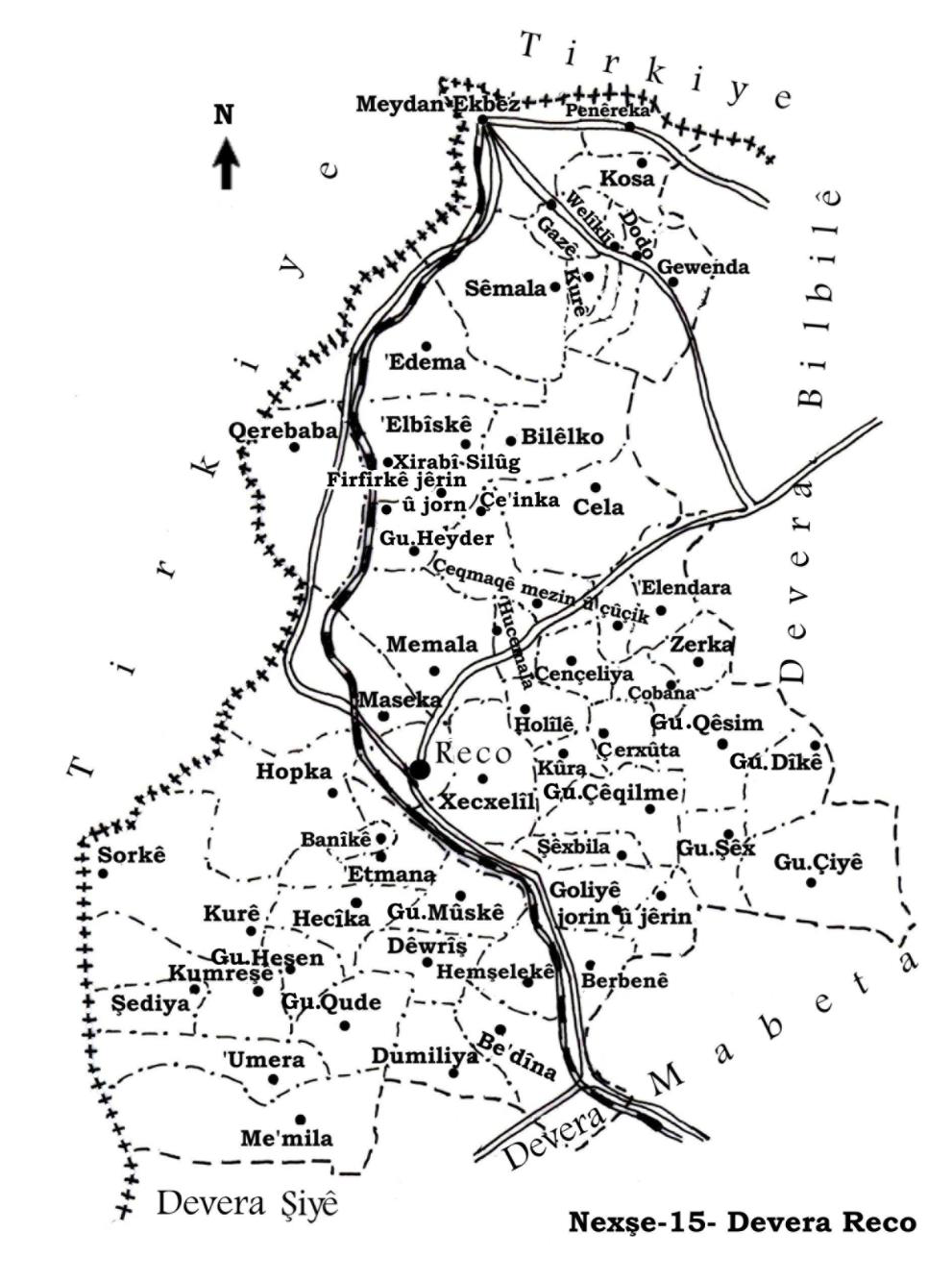
General Information
Nahiya (Subdistrict)
Reco
Also Known As
Ciqilmê, Jaqlmah, Çeqlme, Çêqilme, جقلمة, جقلمه, جلقمة, جلقمة، جيقلما, جيقلماه
Tribes
Hêvidî, Şêxan
Families, Clans, etc.
Bekirê Dêdo, Ezede, Seydê Çeqelme
Photos
Basic Information about Çêqilme
Source: Tirej Afrin
Etymology: Kurdish name Çeqilme meaning "sour milk" or "yogurt". It originates from a story where the village Agha poured yogurt into a spring for Ottoman horses to drink, leading the commander to call him "Çeqilme Oğlu" (Son/Owner of the Yogurt).
Foundation Date/Period: Approximately 300 years ago
Springs: Kaniya Romanî
Hills: Ebû Bekirê Kilisî
Trees: Zeytûn
Wells: Bîra Romanî
Other Landmarks: Riya Reco-Kotanlî
Summaries
I. Summary from TirejAfrin Site (English) of Çêqilme
Source: https://www.tirejafrin.com/site/kura%20afrin%20%20%20Reco%20-%20jaqlama.htm
It is stated in the book جبل الكرد (عفرين) دراسة جغرافية Çiyayê Kurmênc (Efrîn): A Geographical Study: Gundê Çeqilme Çeqilme 249 inhabitants - 116 hectares (approx) - 6km - 563m altitude:
Çeqilme: A Kurdish naming meaning "sour milk/yogurt" (curdled milk). There is a true story behind this name. An Ottoman military unit was crossing the region, so the Agha of the village honored them and provided them with food. Due to the large number of arrivals, and perhaps to relieve the burden of their hosting, he ordered his men to pour yogurt into a spring next to the village, saying: "Let their horses drink yogurt as well." The commander of the unit called the owner of the village "Çeqilme Oğlu," meaning "Owner or Son of the Yogurt," and his village became known by that name thereafter. As for the Arabicized name, it is merely a verbal distortion of the Kurdish name.
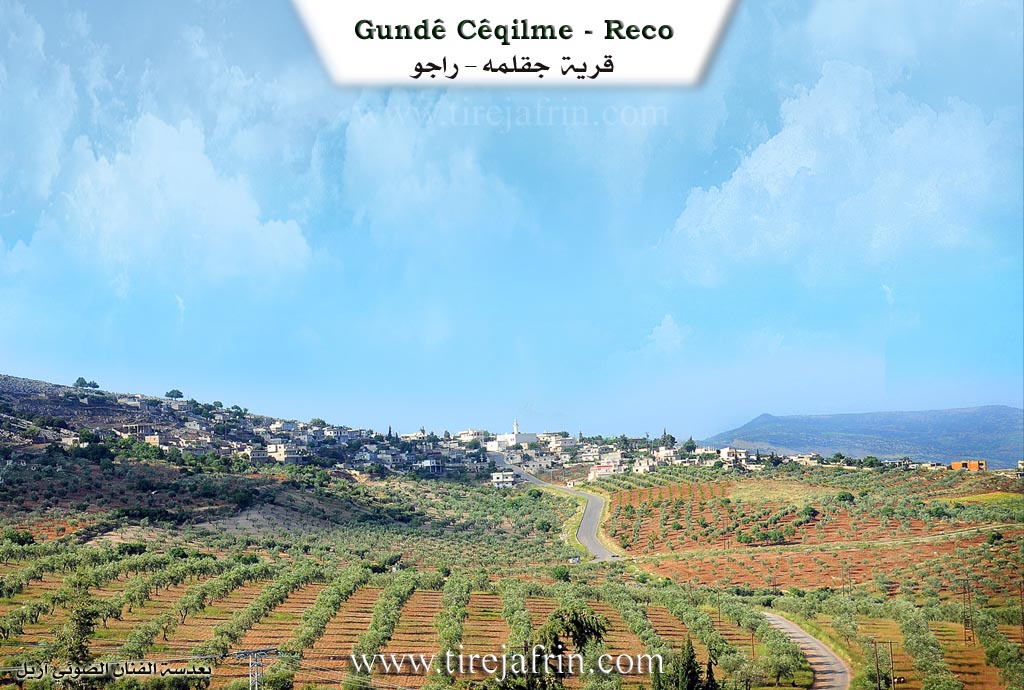
It is a small village located on the western slope of the Ebû Bekirê Kilisî heights.
It is stated in the book عفرين .... نهرها وروابيها الخضراء Efrîn... Her River and Her Green Hills: Çeqilme: A village in Çiyayê Kurmênc following the Reco sub-district, Efrîn district, Heleb governorate. It is a very small village situated on an agriculturally fertile plateau, surrounded by olive trees from all sides.
It is bordered to the north by a wide plain planted with olive trees, the Riya Reco-Kotanlî (Reco-Kotanlî road), and the village of Çerxetlî. To the south, there is a slope, a fertile valley, an old Roman spring at the bottom of the village, and the villages of Şêx Bilal and Şêxler Obasî. To the east, there is a mountain range planted with olive trees and the village of Çetel Qûyû. To the west, there is a slope, a valley planted with olive trees, and the village of Şêx Bilal.
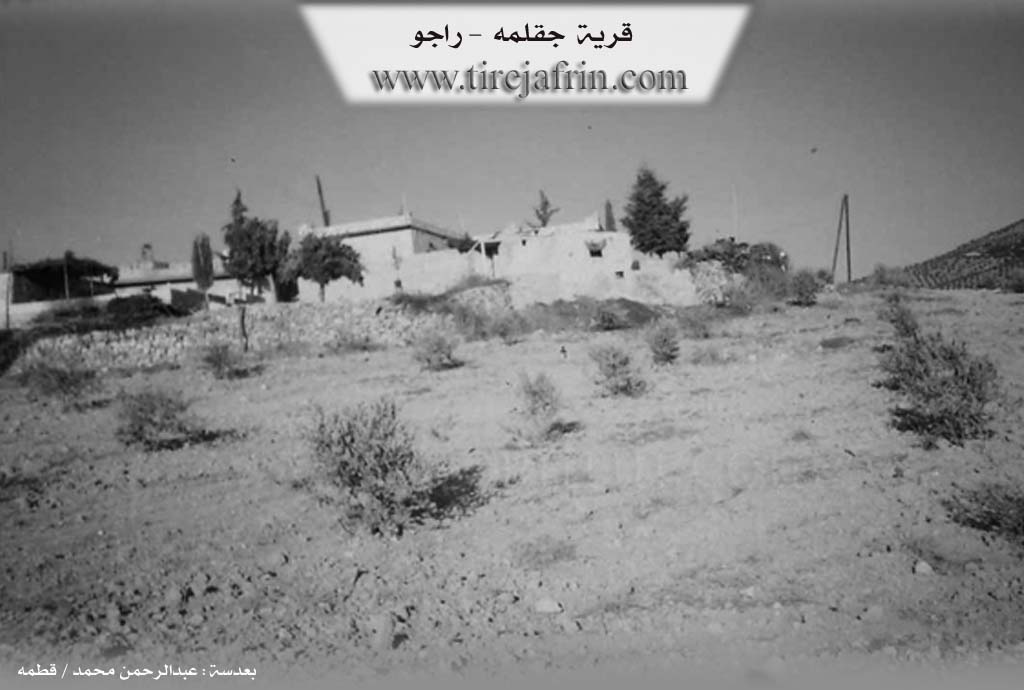
The number of its houses reaches about 15 houses, and its age is about 300 years. Its dwellings are of stone and mud with wooden roofs, while modern cement ones have spread to the north and west. An electricity network is available, as well as an unpaved dirt road and a primary school shared with the village of Şêx Bilal.
The village drinks water from an old Roman well located on the southern side of the village at the bottom of the valley. The residents work in rain-fed agriculture (olives, grains, legumes, vines). Recently, they have begun digging artesian wells and have undertaken irrigated agriculture such as vegetables and fruit trees, alongside raising sheep and goats.
Sources of Information:
- Book: جبل الكرد (عفرين) دراسة جغرافية Çiyayê Kurmênc (Efrîn): A Geographical Study by د. محمد عبدو علي Dr. Mihemed Ebdo Elî.
- Book: عفرين .... نهرها وروابيها الخضراء Efrîn... Her River and Her Green Hills by عبدالرحمن محمد Ebdulrehman Mihemed from the village of Qetme.
- Studies of Navenda Tirej Soft / Ebdulrehman Hacî Osman.
- Some residents of the villages.
Preparation and Execution: Director of the Tirej Efrîn website: Ebdulrehman Hacî Osman 20/12/2013
II. Summary of Çêqilme from Ax û Welat
Source: https://www.youtube.com/watch?v=J8Fa0ln4hUI
The village of Çeqelme is located in the Raco district of the Efrîn region within Çiyayê Kurmênc. It is an ancient settlement founded four to five hundred years ago by a man named Hesen Têr. Originally, the inhabitants lived near a spring called Kaniya Etê before relocating to the current village site, which was initially named after its founder. The modern name Çeqelme originated during an Osmanî military campaign led by the Pasha of Egypt, Mihemed Elî Paşa. According to local legend, after intense fighting, a village woman offered the exhausted soldiers a mixture of ayran and yogurt. This heavy drink made the soldiers and their horses sermast or intensely sleepy. Surprised by this effect, the Pasha called the place Çiqilma, which eventually evolved into Çeqelme. Decades later, the Arab Baath regime arabized the name to Celqeme.
Çeqelme has a profound history of rebellion and resilience. During the Osmanî era, the village was burned to the ground three times due to its fierce refusal to submit to outside authority. This legacy of resistance continued into the French mandate period. A group of about eight local men, led by Seydê Dîkê, sabotaged a French military train in the Geliyê Tîran valley. The train derailed, resulting in heavy casualties for the occupying forces. Additionally, the village faced aggression from Mîrê Mîran because of its political alliance with Şêx Îsmaîl. Due to this rich history of political engagement, Çeqelme is recognized as a hub for Kurdish politicians and intellectuals, including notable figures like Cemîl Ehmed Seydo and Îsmaîl Mihemed.
Socially, the village is small, comprising roughly twenty houses and around seventy residents today. The population primarily belongs to two tribes: the Şêxan and the Hêvidî. The prominent families include Bekirê Dêdo and Seydê Çeqelme from the Şêxan tribe, as well as the Ezede family from the Hêvidî tribe. Over the years, many residents migrated to nearby areas such as Şêx Bilo, Raco, and the city of Efrîn to escape conflict or seek better livelihoods.
The physical landscape of the village is marked by several significant landmarks and shrines. The Qestel was a major central spring shaded by a massive plane tree known as Darê Çinar. For generations, it served as a vital water source for massive flocks of sheep and a gathering place for people from nine surrounding villages, including Kûra, Dîkê, and Bahdîna. Unfortunately, modern water pumping has caused the Qestel to dry up entirely. Right next to it sits the Sûqî, a communal stone mortar where villagers spent weeks pounding wheat to make bulgur while singing traditional songs and hosting large communal meals.
The village is surrounded by sacred sites, including Ziyaretgeha Ebû Bekir on a mountain to the north, Ziyaretgeha Qere Doxan to the east which also serves as the village cemetery, and Ziyaretgeha Kurê situated in the southern lands of Rîşa Heskê. To the west lie the plains of Deşta Bîra û Sip and the well of Bîra Elûtê, while the ruins of an older settlement, Xerabeyên Zînkê, sit to the east. Today, the remaining villagers maintain their deep connection to the land by cultivating olive groves and preserving the enduring spirit of their ancestors.
II. Ax û Walat Book 1
THE VILLAGE OF ÇÊQILME
25.11.2016
The village of Çêqilme is affiliated with the Reco district of the Efrîn canton. It is located 8 km east of the city of Reco and 30 km north of the city of Efrîn.
The village of Çêqilme is between the two mountains of Hawar and Bilêl. It is a small but very ancient village. The village was previously known by the name ((Hesen Têr)), who was considered the founder of the village. But after a while, the Ottomans named it ((Çêqilme)), or in the Kurdish language ((unstrained whey that is made from yogurt)).
92
It is worth noting that the village of Çêqilme has been subjected to destruction and burning 3 times by the Ottomans, and this itself is the main reason for the village not expanding and growing.
A resistance movement against the French began, in which nearly 8 people from the village of Çêqilme, under the leadership of Seydê Dîkê, carried out an action against their train in the Tîran valley, and as a result, the train derailed and many soldiers died.
During the era of the Mirûdan, the village also faced attacks from the Mirûdan, because at that time the village was associated with Şêx Simela, who at the same time was an opponent of the Mirûdan.
There are 3 families in the village:
The family of Bekirê Bedo and Seydê Çêqilme, who are both from one family and from the Şêxî tribe, and the family of Ezetê Hevîdî, who is from the Hevîdî tribe.
There are 20 houses and nearly 700 people living in the village, but due to the many wars that occurred in the village, many families migrated to different areas. Some of those families migrated to the villages of Şêx Bila, Reco, and the city of Efrîn.
To the north of the village are the shrine of Ebo Bekir and the Bilêl mountain. To the east are the village of Qêsim and the shrine of Qere Doxan, which is also the cemetery of the village of Dîkê. To the south are the ridge of Hiskê, the land of Zeviyê, and the shrine of Kurê. To the southwest,
93
are the village of Şêx Bila, and to the west are the plain of Bîrê Ûsib, the well of Elûtê, and the villages of Kwîra and Hec Xelîl.
The ruin of Zênkê is to the east of the village. It was previously an ancient village, but now it has become a ruin.
The people of the village make their living from agriculture, from cultivating olive groves. Along with agriculture, some families also own livestock such as sheep and goats and sell their products in the markets of Reco and Efrîn.
There is a primary school named after the martyr Ehmed which is shared between the two villages of Çêqilme and Kwîra. The village commune is named after the martyr Cûdî.
Cemîlê Ehmed Seydo and Ismaîl Mihemed are both ancient politicians who have contributed a great deal of effort and work to the Kurdish National movement. Therefore, the village of Çêqilme is known as a center for politicians and intellectuals, and its history and resistance against the Ottoman and French occupiers are witnesses to this truth.
Transcriptions and Subtitles
| Source | Video | Subtitles | Transcript |
|---|---|---|---|
| Ax û Welat 1 | Watch Video | Download SRT | View Transcript |
Foundation/Origin Information of Çêqilme
The name comes from a story where an Ottoman military unit was passing through, and the village chief, to relieve himself of the burden of hospitality, had milk poured into a spring. The unit leader then called the village owner "Çeqilme Oğlu" (son of milk), and the village became known by that name.
Source: TirejAfrin Site
The Hecî Seydo family has lived in the village for over 700 years, with their ancestral stone house and well still standing.
Source: Afrin 366 Transcript
Possible Village Name Meaning of Çêqilme
A Kurdish name meaning "sour milk."
Source: TirejAfrin Site
The village's name is derived from a significant plane tree (çinar) estimated to be at least 500 years old.
Source: Afrin 366 Transcript