General Information
Nahiya (Subdistrict)
Reco
Also Known As
Hajmanli, Hecemala, Hojman, Ĝucemala, حجمانلي, حوجمان, حج جمولو
Families, Clans, etc.
Em Mehdîn, Gicoy, Hecemî, Hewlîkê, Hisên, Mihîdîn, Mislimê Qermû, Qermo
Photos
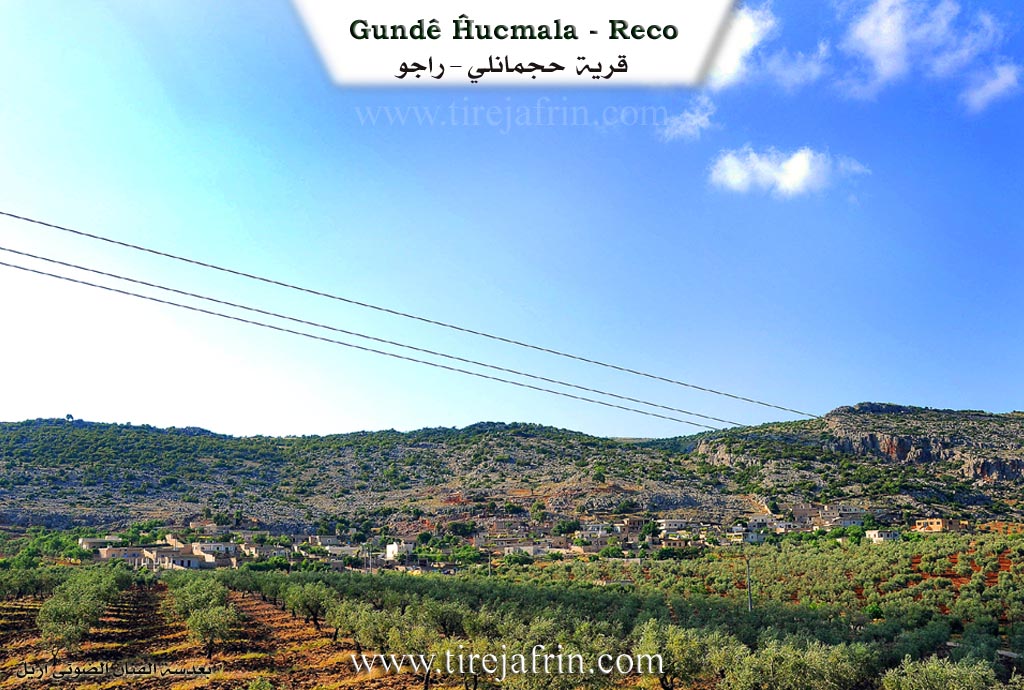
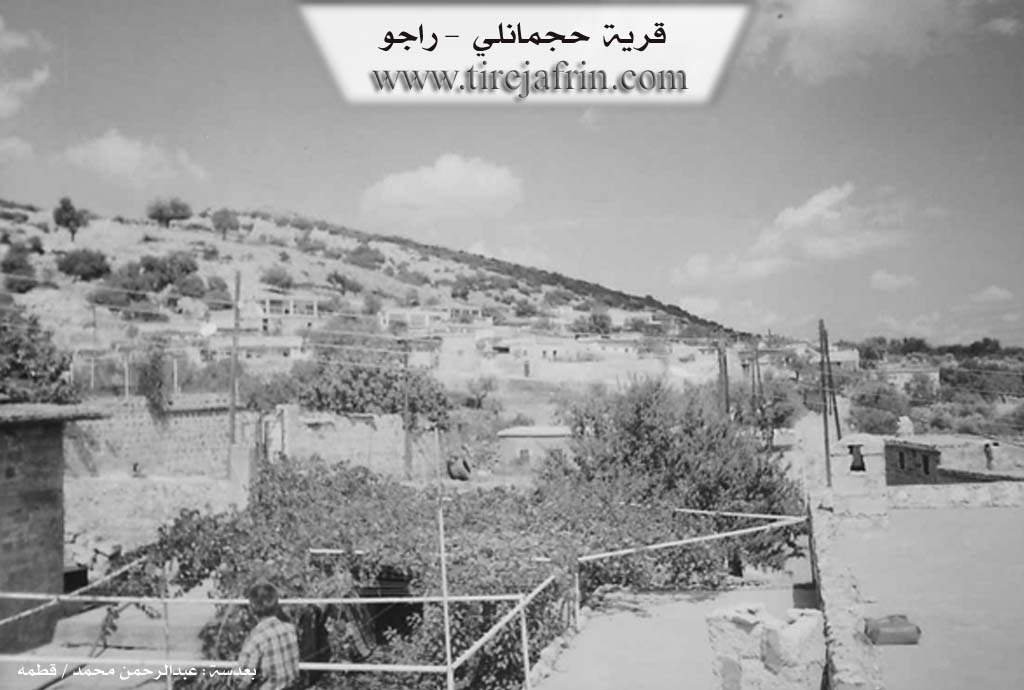
Basic Information about Ĥucemala
Source: Khalil Sino
Hills: Sirt
Ruins: Seyê neqloşîn
Wells: Bîra Hebîlan
Summaries
I. Summary from TirejAfrin Site (English) of Ĥucemala
Source: https://www.tirejafrin.com/site/kura%20afrin%20%20%20Reco%20-%20hucemala.htm
It is stated in the book جبل الكرد (عفرين) دراسة جغرافية Çiyayê Kurmênc (Efrîn): A Geographical Study: Ĥucemala, Hecmanlî, Hucman, /755 inhabitants, 69 houses, 8km distance, 806m altitude/:
Ĥucemala: The name is formed from the merging of the title "Hac" (Pilgrim) with the name "Cemal," who was one of the early residents of the village. The Arabized name is merely a close phonetic approximation.
It is a small village on the southeastern slope of Çiyayê Bilalîko.
It is stated in the book عفرين .... نهرها وروابيها الخضراء Efrîn... Her River and Her Green Hills: Hecmanlî is a village in Çiyayê Kurmênc that follows the Reco district, Efrîn region, Heleb governorate. It is a small village located in the aforementioned middle section on the southern slope of a limestone height. It is 4km away from the town of Reco heading northeast.
It is bordered to the north by a very high mountain range planted with oak and forest trees and the village of Bilalîko, named after Çiyayê Bilalîko. To the south, it is bordered by a slope and a plain planted with olive trees, the Riya Bilbil-Reco (Bilbil-Reco road), two deep torrents, and the village of Holîlo. To the west, there is a rugged mountain range, a plain planted with olive trees, and the village of Mamalî. To the east, there is a rugged mountain range, a deep valley, and the village of Çeqmaq Mezin.
The number of its houses is about 40 houses, and its age is about 300 years. Its old residences are made of stone and mud with wooden ceilings, while the modern ones are cement and extend towards the west and east. There are three houses on the Riya Reco-Bilbil (Reco-Bilbil public road). An electricity network and a very modern primary school are available in the village, and it is connected to the district center by an asphalt road.
The village drinks from cisterns dug next to the houses where rainwater is collected in the winter season, and currently, they have begun drilling artesian wells next to the houses for drinking. The residents work in rainfed agriculture on an area of 75 hectares (olives, legumes, vines, almonds, cherries, walnuts), alongside raising sheep and goats.
Village Mukhtar: Bilal Mecîd Etûn
Sources of Information:
- Book: جبل الكرد (عفرين) دراسة جغرافية Çiyayê Kurmênc (Efrîn): A Geographical Study by د. محمد عبدو علي Dr. Mihemed Ebdo Elî.
- Book: عفرين .... نهرها وروابيها الخضراء Efrîn... Her River and Her Green Hills by عبدالرحمن محمد Ebdulrehman Mihemed from the village of Qetme.
- Studies of Navenda Tirej Soft / Ebdulrehman Hacî Osman.
- Some residents of the villages.
Preparation and execution: Director of the site Tirej Efrîn: Ebdulrehman Hacî Osman 20/12/2013
II. Summary of Ĥucemala from Afrin 366
Source: https://www.youtube.com/watch?v=jabxlt46VBA
The village of Hecemala is located in the Raco district of the Afrin region in northwestern Syria. It sits approximately five and a half to six kilometers away from the town center of Raco. The village is relatively small and historically contained about seventy five households. The residents describe the location as possessing a beautiful natural environment with fertile soil suitable for agriculture although the community has faced significant challenges regarding water scarcity. Local elders note that the traditional wells have largely dried up and the villagers now rely heavily on purchasing water tanks to maintain their homes and gardens.
The social history of Hecemala is rooted in three primary families that are considered the founders of the village. According to a local elder the population descends from the lineages of Qermo, Hecemî and Hewlîkê. The community is described as tightly knit with the residents stating they are all one people without strangers among them. Other families or households mentioned in the contemporary context include Em Mehdîn and Gicoy. The village has experienced significant demographic shifts due to migration with many houses now standing empty or locked as families have scattered to various locations. Despite this dispersion the villagers maintain connections through digital means including a YouTube channel run by the Em Mehdîn family which documents daily life and local nature for the diaspora.
Architecturally the village features traditional stone courtyards and houses that reflect the style of the broader Afrin region. One notable building features an inscription with the religious phrase "Tewekel tû elellah" and dates that appear to be 969 and 389 likely referring to Hijri years which would suggest a history going back several centuries for that specific structure. The villagers take pride in their courtyards which are often planted with flowers such as stock and fruit trees including apples and olives. The village is situated near other settlements such as Çaqmoqê and Çençaliya which serve as key reference points for the locals. The residents express a deep nostalgia for the past when festivals and religious holidays like Eid would bring the entire community together filling the village with life and celebration.
II. Summary of Ĥucemala from Khalil Sino
Source: https://www.youtube.com/watch?v=bHb5vHEBLZ4
The village of Hec Cemala, located in the Afrin region near Badîna, possesses a history of movement and resettlement. According to the village elder Welîd Mihemed Hisên, the current settlement is old, but it was preceded by earlier habitation sites nearby. The ancestors of the current residents originally lived at a location called Sirt, which consisted of approximately eighteen households. Another historical site mentioned is Seyê neqloşîn, which is now described as a ruin ("xirabe"). Over time, these earlier settlements were abandoned or destroyed ("wêran bûn"), leading the population to establish the present-day village of Hec Cemala.
Water and Landmarks
The most significant historical landmark identified in the area is Bîra Hebîlan, an ancient well located in the plain near the juniper trees ("cem merxa"). The origins of Bîra Hebîlan are lost to time; elders recount that no one knows who dug it or when it was constructed, emphasizing its antiquity. This well served as a critical resource not only for Hec Cemala but also for surrounding villages. Before modern infrastructure, villagers transported water from Bîra Hebîlan using Kûn, large water bags fashioned from the hides of black sheep or goats.
Social Life and Customs
Historically, the village operated like a single extended household. Elder Welîd describes a tight-knit community where joys and sorrows, weddings, funerals, and sickness, were shared collectively without hesitation. A central feature of this communal life was the Dêlîb, a mechanism used for pounding wheat and bulgur. Villagers used a wooden tool called a Tîng (a heavy wooden pestle or hammer) to process grain, a task that was often a source of communal celebration. The culinary history of the village relied heavily on animal products, such as clarified butter ("rûnê eslî") and dried yogurt products, as vegetable oils were virtually unknown in the past.
Modern Identity and Families
In contemporary times, Hec Cemala has gained recognition through digital media. The village is home to a prominent family of content creators, referred to by the host as "êla Mihîdîn" (the Mihîdîn clan/family), named after one of the sons. This family, including members like Dilşan, Jantî (also known as Contî), and Mihîdîn, documents rural daily life ("yewmîyat") for an international audience. While they are central to the village's modern reputation, the social fabric remains connected to the wider region through marriage; specifically, there are strong matrimonial ties between Hec Cemala and the neighboring village of Badîna. Additionally, Dilşan, the matriarch of the filming family, originally hails from the village of Ma'serkê.
Transcriptions and Subtitles
| Source | Video | Subtitles | Transcript |
|---|---|---|---|
| Afrin 366 1 | Watch Video | Download SRT | View Transcript |
| Khalil Sino 1 | Watch Video | Download SRT | View Transcript |
Possible Village Name Meaning of Ĥucemala
The name is formed by combining the title "Haj" with the name "Jamal," who was one of the first inhabitants.
Source: TirejAfrin Site