General Information
Nahiya (Subdistrict)
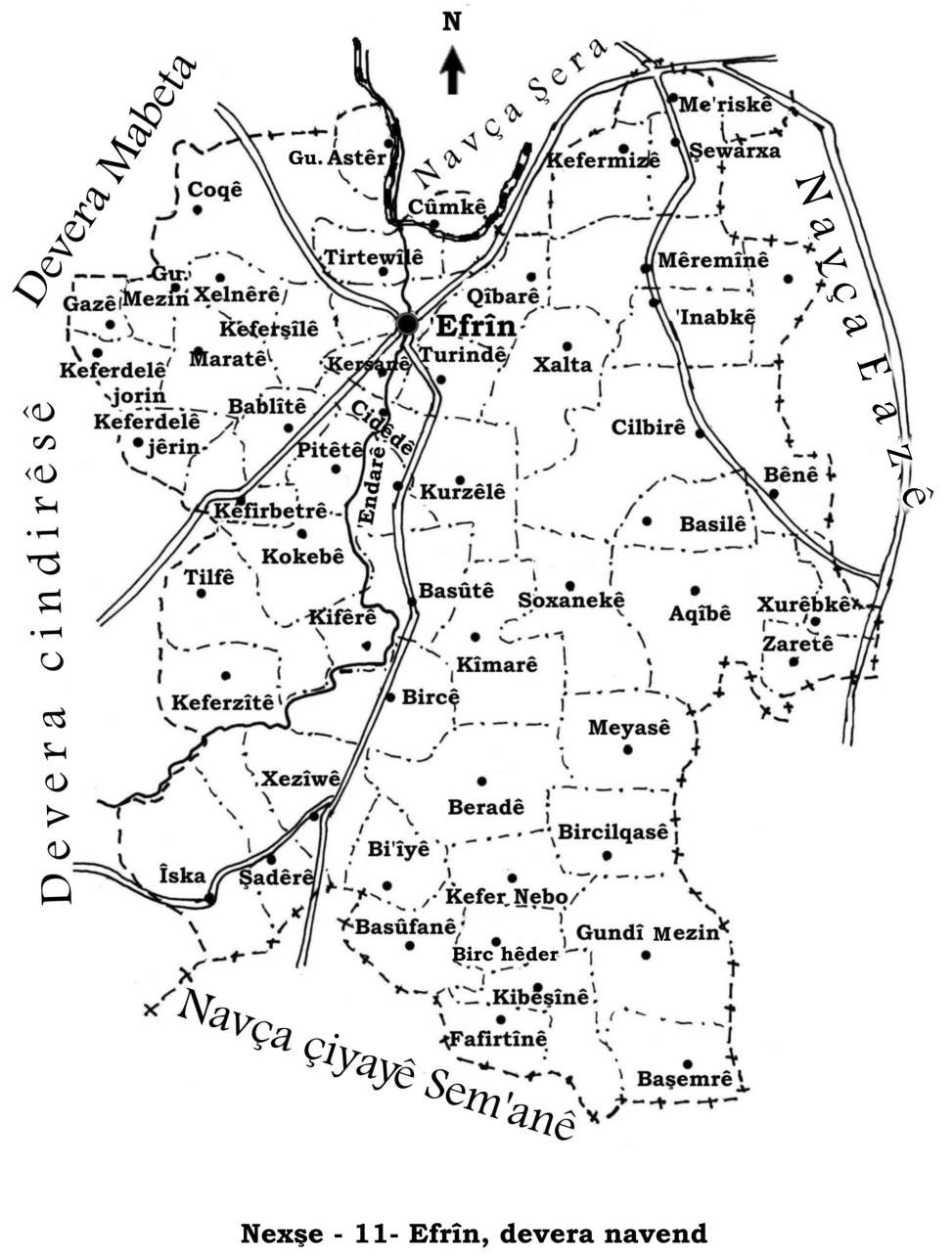
Efrîn
Also Known As
Kefer Mezê, Kefer Mizê, Kefermiz, Kefermizê, Kefir Mizê, كفرمز, كفر مزه
Tribes
Bû Sultan, Icêlî, Lehibî, Saab, Siltan, Xemîsî
Families, Clans, etc.
Alî Soz, Cimhal Ibêd, Cimhal Ibêd Derwîş, Cuma el-Ebêd, Cuma el-Ebêd Derwêş, Daxî, Ehmedî Mûsa, Elî Soz, Elî Umero, Gedro, Hemdûş, Hemdûşê, Hemşo, Hindo, Hisên El-Ecîr, Osman Hebîb, Qember, Qişkê Sêleh, Usmên, Wismê, Xelawî, Zekî Şomî
Photos
Basic Information about Kefermizê
Source: Ax û Welat
Number of Caves: 2
Springs: Kaniya jêr, Kaniya 'Eyn Hecer
Hills: Çiyayê Lêlûn
Shrines: Serdangaha henin
Wells: Bira Hemdûşê, Bîra Çeqelê
Other Landmarks: Geliyê hinaran, Zeviyên meşalê
Summaries
I. Summary from TirejAfrin Site (English) of Kefermizê
Source: https://www.tirejafrin.com/site/kura%20afrin%20markaz-%20Kefermiz.htm
The following is stated in the book جبل الكرد (عفرين) دراسة جغرافية Çiyayê Kurmênc (Efrîn): A Geographical Study by د. محمد عبدو علي Dr. Mihemed Ebdo Elî:
Kefermiz / 453 inhabitants - 7km - 670m /:
Al-Asadi quoted Father Chalhat stating that the name is of Aramaic origin: Kefermiz means the village of someone named Miz. It is a small village located at the end of the northwestern slope in the far northern part of Çiyayê Lêlûn. Its location is beautiful.
The following is stated in the book عفرين .... نهرها وروابيها الخضراء Efrîn... Her River and Her Green Hills by the writer عبدالرحمن محمد Ebdulrehman Mihemed from the village of Qetme:
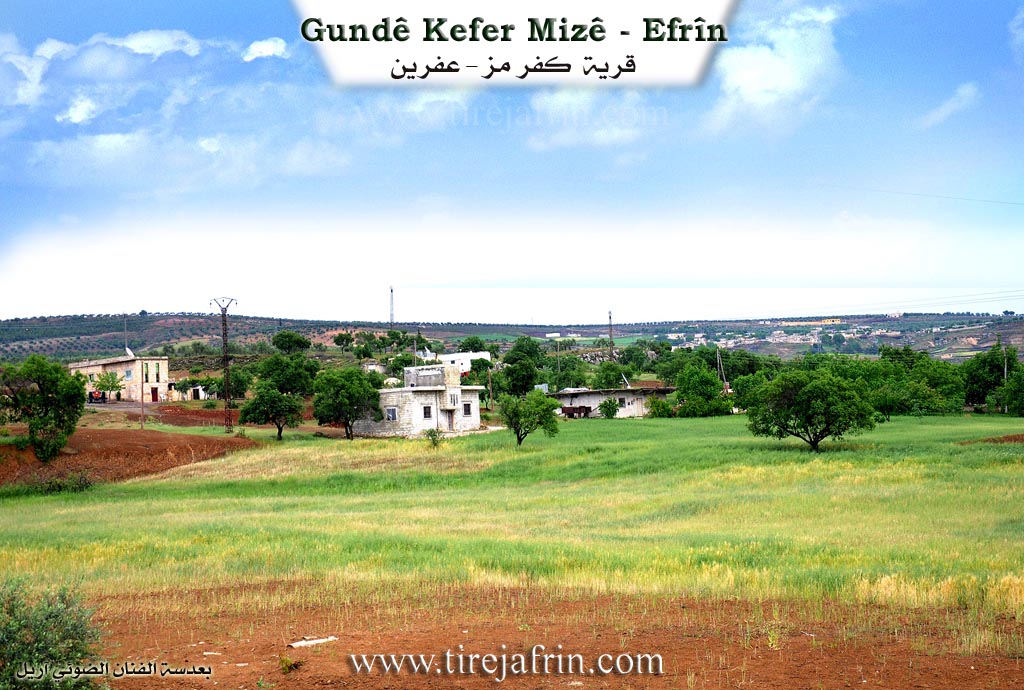
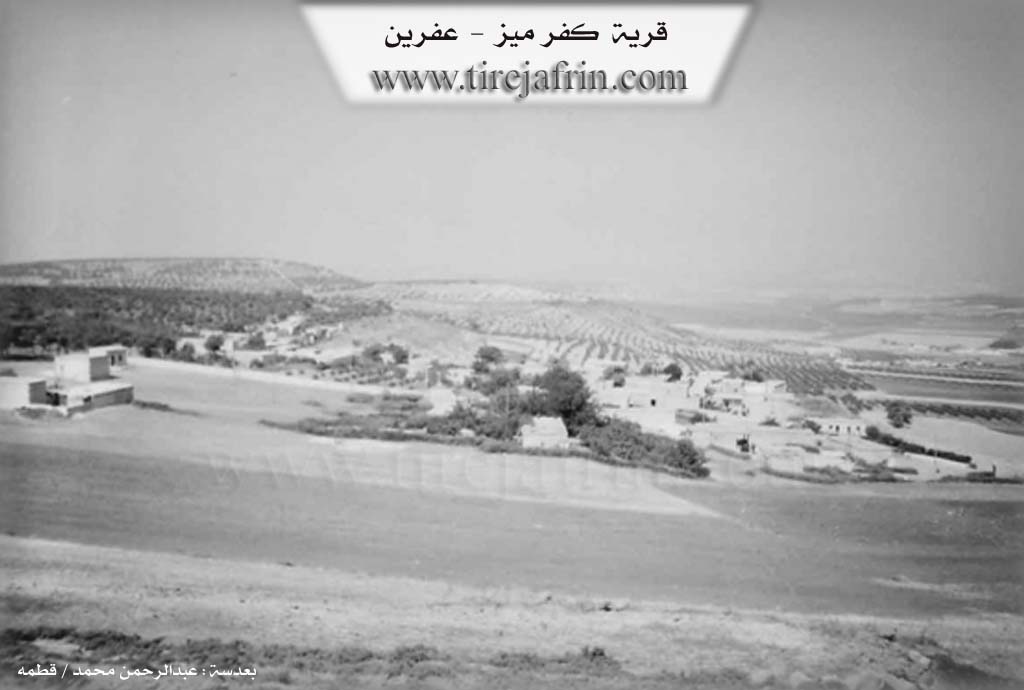
Kefermiz is a village in Çiyayê Lêlûn and Çiyayê Sîman, administratively belonging to the Efrîn Center sub-district and area, Heleb governorate. It is a very small village situated in the northeastern Çiyayê Sîman range. Its soil is calcareous and hilly, and its lands slope westward.
It is bounded to the north by a deep valley, the Riya Efrînê (Efrîn road), and the village of Meşelê. To the south, it is bounded by a mountain range, olive trees, and the village of Xaldiyê Erşqîbar. To the east, it is bounded by a mountain range and the villages of Me'erse Xetîb and Şewarxa Guz. To the west, there is a harsh volcanic slope, a deep valley, the Riya Efrîn-Heleb (Efrîn-Heleb road), the village of Kortek, and some soap manufacturing factories.
The number of houses reaches about 50, and the village is approximately 80 years old. Its houses are made of stone and mud with wooden roofs, while modern ones are cement. An electricity network and a modern primary school are available in the village. It is accessed by a paved road branching off the Riya Meryemîn-Kefercenê (Meryemîn-Kefercenê road). The residents drink from the spring located to the northeast of the village by transporting water by hand. The residents work mainly in livestock breeding and the cultivation of grains and olives. The origin of the village dates back to a family from the Armenian sect in the past, who emigrated to the city of Heleb.
Sources:
- Book: جبل الكرد (عفرين) دراسة جغرافية Çiyayê Kurmênc (Efrîn): A Geographical Study by د. محمد عبدو علي Dr. Mihemed Ebdo Elî.
- Book: عفرين .... نهرها وروابيها الخضراء Efrîn... Her River and Her Green Hills by عبدالرحمن محمد Ebdulrehman Mihemed from the village of Qetme.
Preparation and execution:
- Manager of Tirej Efrîn site: Ebdulrehman Hacî Osman
- 20/12/2013
II. Summary of Kefermizê from Ax û Welat
Source: https://www.youtube.com/watch?v=TzPad_IWDPk
The village of Kefer Mezê, located approximately 12 kilometers southwest of Şera and 15 kilometers east of Efrîn, sits at the beginning of the Çiyayê Lêlûn mountain range. It is a mixed community where Kurdish and Arab families have lived together for decades. The village history is defined by a series of ownership transfers and migrations. It was originally built by Osman Hebîb, whose father was Hemdûşê (associated with Kefer Cenê). The land was later sold to a merchant known as Xewacê Helebî, and subsequently to Zekî Şomî (also referred to as Zekî Corc Şomî). During the agrarian reforms of the mid-20th century (referenced as the sixty-six or sixty-seven period), the land was distributed to the villagers or sold to neighboring communities.
The social history of Kefer Mezê involves several distinct waves of settlement. The Hemşo family is recognized as the founders who eventually left due to social issues, handing their homes over to the Daxî family. The Alî Soz family were the first recorded settlers but later moved to Til Hemû, while the Hisên El-Ecîr family migrated to Nisriyê. The current Kurdish residents trace their lineage back to Şêxurzê (200-300 years ago) and later Keferrûmê, arriving in Kefer Mezê roughly 75 years ago.
The village population consists of several tribes and family lines. The Arab residents primarily belong to the Siltan tribe (families like Wismê, Hindo, and Xelawî), who trace their origins to Berv. Other residents belong to the Xemîsî tribe (such as the Cimhal Ibêd family) and the Icêlî tribe (represented by the Ehmedî Mûsa family). Kurdish families include Qişkê Sêleh and Mala Qember. Residents maintain a strong communal bond, sharing in weddings, funerals, and religious festivals regardless of ethnicity.
Economically, the village relies on olive cultivation and livestock. Notable residents include Elî Umero, a specialist beekeeper known for producing Royal Jelly (Gîzayê Melîkî), and long-time shepherds like Casim Osman Gedro and Ehmedî Mûsa. The village lacks a bakery and faces water scarcity, relying on wells and purchased water.
The geography around Kefer Mezê includes specific named landmarks such as the wells Bira Hemdûşê and Bîra Çeqelê, and the springs Kaniya jêr and Kaniya 'Eyn Hecer. Other features include the valley Geliyê hinaran and the fields known as Zeviyên meşalê. A local school and commune are named after Şehîd Ebdula. There is also a site mentioned as Serdangaha henin.
II. Summary of Kefermizê from Ax û Welat 2
Source: https://www.youtube.com/watch?v=PZvBU_reyKQ
The village of Kefer Mezê is situated in the Şera district of the Efrîn canton, located approximately 12 kilometers south of Kişera and 15 kilometers east of Efrîn city. It is a historically diverse community where Kurd and Arab families have coexisted for nearly a century, sharing a deep social bond described by residents as brotherly. While the village does not have a single recorded foundation date, its history is marked by shifting land ownership and migration patterns involving specific families and feudal landlords.
According to local accounts, the village land was historically owned by Osman Hebîb and his son, Hemdûş, who also held property in Kefer Cenê. Hemdûş eventually sold the land to a merchant from Heleb (Aleppo), who subsequently sold it to a landlord named Zekî Corc Şamî. The village remained under the ownership of Zekî Şamî until the mid 1960s. Around 1966 or 1967, coinciding with agrarian reforms, the land was sold to the villagers and people from surrounding areas, allowing the current inhabitants to establish permanent ownership.
In terms of settlement history, the Hemşo family is recognized as the founding family (damezrîner) of the village. However, due to social disputes, the Hemşo family departed, and their properties were transferred to the Daxî family. The narrator notes that the Elî Soz family was the first to settle in the village, though they were Kurd and later migrated to Til Hemô. Another early family, Hisên El-Ecîr, moved to Nisriyê.
The contemporary social structure of Kefer Mezê is defined by a mix of tribal affiliations. The Arab residents primarily belong to the Bû Sultan tribe, which includes the families of Usmên, Hindo, and Xelawî. These families trace their origins toward Munbic. The Xemîsî tribe is represented by the Cuma el-Ebêd family. Additionally, there are smaller groups identified as Lehibî and Saab, who originated from the Xenasir and Sfirê regions. The Kurd population includes families such as Mala Qember. Residents emphasize that despite these distinct tribal identities, there is no segregation; they share in all weddings, funerals, and communal labor.
Geographically, Kefer Mezê is surrounded by several notable landmarks. Key water sources include the wells of Bîra Hemdûşê and Bîra Çeqelê, as well as the springs Kaniya Ên Hecer and Kaniya jêr. An older water source area is known as Borê Hesenî. The landscape also features the Geliyê Hecî maran (Valley of the Hajj Pilgrims/Snakes) and a site known as Dargeha Henên, which implies a place of significance or a shrine. The village contains two ancient caves and a school named Şehîd Ebdullah.
Economically, the village is heavily reliant on livestock, with shepherds herding approximately 10,000 sheep. Notable figures include Omer, a skilled beekeeper known for producing Xîza el-Melikî (royal jelly), and veteran shepherds like Ehmed Mûsa and Ebdû. The villagers also cultivate olive groves and are reputed for their high quality cherries. Daily life is characterized by traditional practices, such as Zeyneb baking bread on a griddle and singing folk songs about the homeland.
II. Ax û Walat Book 2
23
KEFER MEZÊ
18.12.2017
[Image of the village of Kefer Mezê]
The village of Kefer Mezê is affiliated with the Şera district of the Efrîn canton, located 12 km south of the town of Şera and 15 km east of the city of Efrîn.
The village of Kefer Mezê is composed of the two components, Kurds and Arabs. The two components live together as one family, supporting each other in times of joy and sorrow.
The Hemdoş family is known as the founder of the village, and due to social problems, the Hemdoş family left the village, and their properties were handed over to the Daxêl family.
The Elî Soz family was the first family to settle in the village, but that family moved to the village of Til Hemo, and they are Kurds. The family of Hisên El-Ecîr also moved to the village of Nisriyê.
24
There are 14 families in the village:
The families of Qenber, Xelawî, Hindo Osman, Salihê Nesê Romî, Ehmed Mûsa from the Icêl tribe, the family of Cuma El-Ubêd, Bo Xemîs. Both the Xelawî and Hido Osman families are from the Bo Sultan tribe, and the Salihê Nesê Romî family is Kurdish, the families of Gedî Helo, Ebdelah El-Hisên, El-Hîbo, Mihemed El-Hemed, and the family of Beşîr El-Hemed.
To the south of the village are the Hemdoşê mountain and well, the Çeqelê well, the Hinaran valley, and the village of Meryemînê.
To the west is the road to Efrîn; to the north, the Meşalê fields, the Henên shrine, and the village of Meşalê; and to the east of the village, the Ên Hecer spring and the village of M’ereskê.
The village of Kefer Mezê consists of 70 houses, and nearly 1000 people live there.
There are 2 ancient caves, an olive press, and 2 water springs in the village.
The residents of Kefer Mezê village generally make their living by raising livestock such as sheep and goats, and they sell their products like yogurt, cheese, milk, cottage cheese, strained yogurt, and butter in the markets of Efrîn and Şera. In addition, the people of the village work in agriculture, and the cultivation and care of olive groves are the main products. They also plant cherry trees, as this village and the surrounding villages are famous for their good types of cherries.
Some families also plant vegetable gardens.
25
There is one martyr from the village named Martyr Ebdelah.
The village's school and the village's commune are both named after Martyr Ebdelah.
Transcriptions and Subtitles
| Source | Video | Subtitles | Transcript |
|---|---|---|---|
| Ax û Welat 1 | Watch Video | Download SRT | View Transcript |
| Ax û Welat 2 | Watch Video | Download SRT | View Transcript |
Foundation/Origin Information of Kefermizê
The origin of the village goes back to a family from the Armenian sect in the past who migrated to Aleppo city.
Source: TirejAfrin Site
During the agricultural land reforms ("islah ziraî"), poor residents purchased the land and formed their own community. It is composed of families and tribes with diverse origins, including the Arab Bu Sultan and Khamis tribes and Kurmanj families from Bîj Berî and Xanasir.
Source: Ax û Walat Transcript
The land was redistributed to local farmers. The inhabitants have different origins; some are Arabs from the Abu Sultan tribe who came from Bajar, while others are Kurmanj Kurds with a 130-year history of migration that began in Şêx Xorzê.
Source: Ax û Walat Transcript
Possible Village Name Meaning of Kefermizê
From Aramaic: kfermiz: village from the name miz.
Source: TirejAfrin Site