General Information
Nahiya (Subdistrict)
Cindires
Also Known As
Qijuma, Qijûma, Qojoman, Qoşîma, Qujman, Qujûma, الضخم, قوجمان, قوجه مانلي, قجيمو
Tribes
Elîncik, Mellî, Milla
Families, Clans, etc.
Bakîr, Ebd El Xedûc, Efendî, Elî Jiko, Elûş, Hac Ebdû, Hemo Yûsif, Hemê Şêx, Mihemed Ebdû Cuma, Mihemed Hesen, Ogula, Osê, Sîdo Mîmî, Sîwaro
Photos
Basic Information about Qujûma
Source: Ax û Welat
Etymology: Derived from a Turkish title meaning great or valuable person, interpreted locally as Însanê Mezin
Foundation Date/Period: 400 to 500 years ago
Hills: Çiyayê Lêlûn
Shrines: Ziyaretgeha Ebdirehman
Other Landmarks: Deşta Cûmê, Geliyê Komroviyê, Geliyê Xerîcê, Geliyê Tobaqa, Deşta Bêrganiyê
Summaries
I. Summary from TirejAfrin Site (English) of Qujûma
Source: https://www.tirejafrin.com/site/kura%20afrin%20Cindires%20-%20qujman.htm
It is stated in the book جبل الكرد (عفرين) دراسة جغرافية Çiyayê Kurmênc (Efrîn): A Geographical Study by د. محمد عبدو علي Dr. Mihemed Ebdo Elî:
Qujma Qocemanlî El-Dexim
/1208 inhabitants - 1286 hectares - 7 km - 300 m/
The folk name implies something fluffed up. It is also the name of a Kurdish tribe mentioned by /Lerch - p. 19/, which resides around the city of Qers in northern Kurdistan. The Arabizer translated its old name and called it "The Huge" (El-Dexim).
In the book عفرين .... نهرها وروابيها الخضراء Efrîn... Her River and Her Green Hills by the writer عبدالرحمن محمد Ebdulrehman Mihemed from the village of Qetme, it is stated:
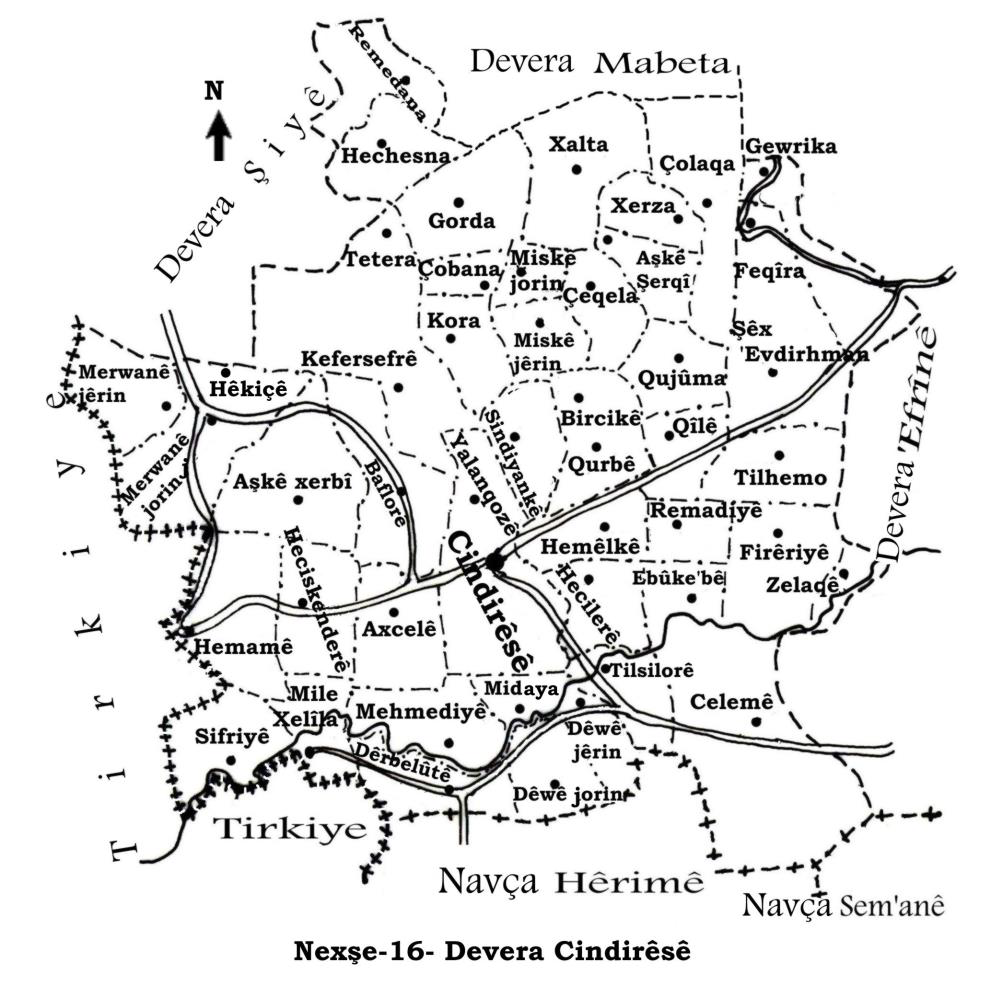
Qoceman is a village in Çiyayê Kurmênc following the Cindirês district of the Efrîn region, Heleb governorate. It is a medium-sized village located at the northeastern edge of the Cindirês plain. It is penetrated by a torrent that heads south to feed the Efrîn river. Its lands have fertile alluvial soil rich in groundwater. It is 7 km away from the town of Cindirês toward the northeast.
It is bordered to the north by a fertile agricultural plain, a mountainous rise, the village of Eşkan Şerqî, and the village of Xerzan. To the south, it is bordered by an agricultural plain planted with olive trees and the village of Qurbe. To the west, there is a fertile agricultural plain planted with olive trees, the village of Burc Kemoş, and Qîlê. To the east, there is an agricultural plain fertile for farming and planted with olive trees, and the village of Şêx Ebdulrehman.
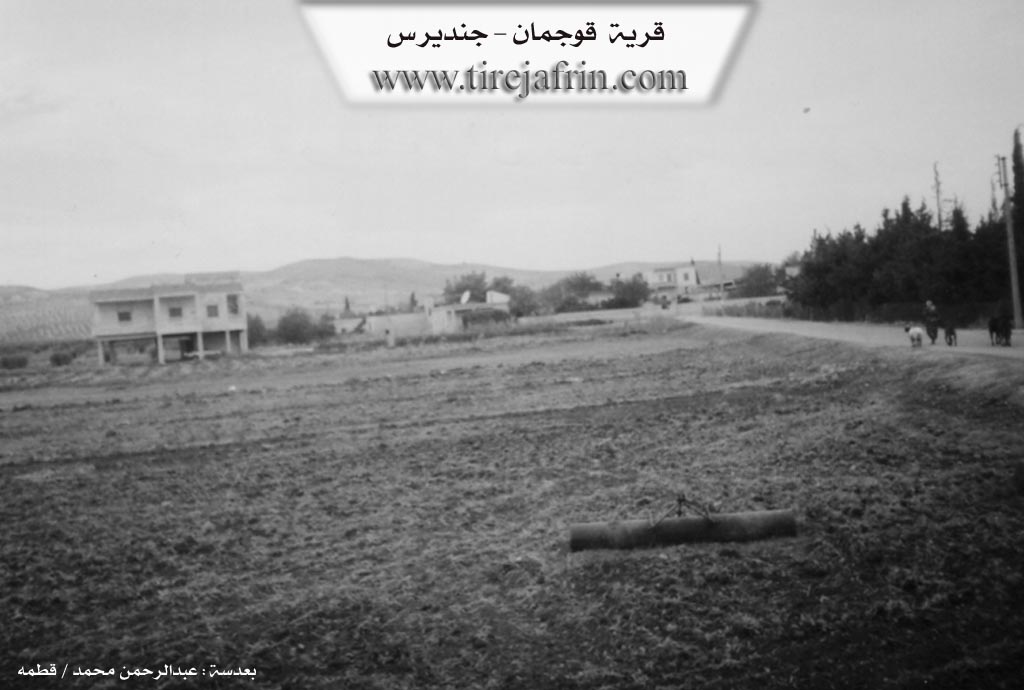
The number of its houses reaches approximately 65, and its age is about 250 years. Its old houses are made of stone and mud with flat wooden roofs, but they have been overwhelmed by modern concrete residences which have begun to spread eastward and westward. There are several modern villas in the center of the village; among the most important is the villa of Mr. Behcet Sîdo Mîmî. They are the original owners of the village and the first to inhabit it.
An electricity network, a primary school, and a modern mosque are available in the village. The village drinks from artesian wells located next to the houses. Most of its residents work in the cultivation of olives and grains, both rainfed and irrigated from artesian wells, in addition to summer vegetables, walnuts, and apricots, alongside raising sheep and goats. It connects to the district center and neighboring villages via an asphalt road that passes through its center up to Xerzan.
Village Mukhtar: Hesen Fehmî Husên
Sources:
- Book: جبل الكرد (عفرين) دراسة جغرافية Çiyayê Kurmênc (Efrîn): A Geographical Study by د. محمد عبدو علي Dr. Mihemed Ebdo Elî.
- Book: عفرين .... نهرها وروابيها الخضراء Efrîn... Her River and Her Green Hills by عبدالرحمن محمد Ebdulrehman Mihemed from the village of Qetme.
Preparation and execution:
- Manager of the Tirej Efrîn website: Ebdulrehman Hacî Osman
- 20/12/2013
II. Summary of Qujûma from Ax û Welat
Source: https://www.youtube.com/watch?v=p-LHjHSNIBs
The village of Qûjûma, also referred to as Xwejima by some residents, is situated in the Cindirês district of the Efrîn region. Located at the foothills of Çiyayê Lêlûn within the fertile Deşta Cûmê, the village lies approximately 17 kilometers east of Cindirês and 20 kilometers west of Efrîn. The settlement was established between 400 and 500 years ago by migrants who descended from Xarza to the plain in search of better grazing lands for their livestock. The first settler was Mihemed Hesen from the Mellî tribe. Historically, the residents initially lived in caves found in the area before constructing homes from mud and reeds, and eventually transitioning to modern stone structures.
The social structure of Qûjûma is predominantly defined by the Mellî tribe. Key families residing in the village include Elî Jiko, Sîwaro, Osê, Elûş, Ogula, and Hemê Şêx. While the majority of the village follows the Sunni Muslim faith, the Hemê Şêx family is identified as Êzîdî. The village has a strong reputation for education and culture. It was home to Xelîl Edîb, also known as Xelîl Efendî, an early intellectual who established a school there in 1937. Another prominent figure was Selahedîn Mihemed, a critic, writer, and architect who worked in Şam and authored books on culture and art, including works on the artist Luay Kayyali. The village also produced artists like Cemê, a singer in Koma Armanc, and Adnan Beyan.
The local economy is driven by olive cultivation, with the region boasting millions of trees. Qûjûma hosts small industries, including the Sezer charcoal and soap workshops, which export products as far as Erbîl. Geographically, the village is surrounded by natural landmarks such as Geliyê Komroviyê, Geliyê Xerîcê, Geliyê Tobaqa, and the plain of Deşta Bêrganiyê. To the east lies the sacred site Ziyaretgeha Ebdirehman. A unique contemporary feature of the village is the hand dug cave of Apê Xelîl, a resident who spent twenty years carving a living space into the rock to live a solitary life connected to nature. The village currently contains over 100 households, with public institutions named after local martyrs such as the Şehîd Biharîn school and the Şehîd Hesen commune.
II. Summary of Qujûma from Multi Channel
The village of Qocaman is situated in the Cûmê plain within the Cindirês district of the Efrîn region. According to local residents, the name Qocaman originates from a Turkish word meaning huge or giant, which was officially translated to Al Dhakhm in Arabic. The village was established during the late Ottoman period over 300 years ago. According to the local elder Qazîqlî Mihemed Huseyîn, the oldest Kurdish families migrated from the city of Sêrt and the Qerecdax mountain in Turkey. They initially settled at the mountain base in Xerzan before relocating to the fertile agricultural plains where Qocaman now stands. Over time, the village expanded as workers from other areas arrived and acquired land.
The Kurdish population of Qocaman primarily belongs to the Milla tribal confederation, specifically tracing their lineage to a large kinship group known as Elîncik. This name evolved from a Turkish diminutive form of the name Ali. Notable families include the Bakîr lineage, who own the oldest surviving house in the village, as well as the prominent Efendî family. The community is celebrated for its deep social cohesion, seamlessly integrating Kurdish, Arab, and Êzîdî households. The Êzîdî presence is anchored by the Hemo Yûsif family, while Arab lineages include the Ebd El Xedûc and Mihemed Ebdû Cuma families. Furthermore, the village has provided refuge to displaced Arab and Kurdish families from Heleb, Etarîb, Dêr Hesan, and Xota. Qocaman is bordered by several other villages including Eşkanê Şerqî, Feqîran, Korkan, Şêx Ebdilrehman, Qurbê, Qîlê, and Kemoş Burc. Local affairs are currently managed by community figures like the mukhtar Ferhad Mihemed Hesen, the imam Mihemed Hesen Şêxo, and the teacher Celal Mistefa.
Agriculture forms the backbone of the local economy with a strong focus on olive farming. Historically, fields were irrigated by water channels connected to the Meydankê dam and the Efrîn river. The village features remarkable traditional architecture characterized by intricate oriental arches and columns. Rather than using local stone from Eşqîbar, builders brought craftsmen and Syrian stone directly from Heleb to construct these distinguished homes. The women of Qocaman, such as Um Xelîl, preserve cultural heritage through traditional needlework, creating distinctive headpieces called shashiya and preparing local dishes like zinklok and shish barak.
Qocaman holds a prestigious reputation in the region largely due to Xelîl Mihemed Hesen, affectionately known as Xelîl Efendî or Xelîl El Edîb. Born in 1910, he made history in 1930 as the first person from the Efrîn area to earn a baccalaureate degree. He studied at the Preparatory School in Heleb alongside figures like Îbrahîm Henano. Fluent in Arabic, Kurdish, Turkish, and French, he dedicated 33 years to education across the province. He even transformed his own home into a school to educate the poor, supplying them with books and clothing. His legacy is deeply honored by his sons Mihemed, Hesen, and Selah Eldîn, the latter of whom became a renowned architect and art critic. A book about his life is also currently being authored by Mihemed Ebdû.
II. Ax û Walat Book 2
26
Qujîma
4.4.2017
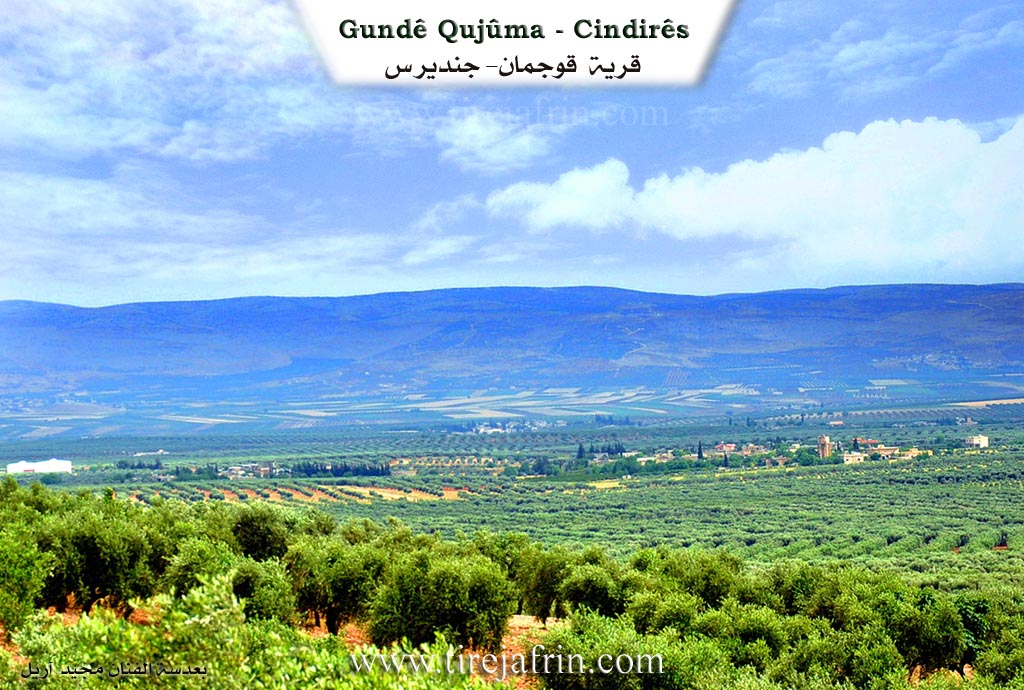
[Image of the village of Qujîma]
The village of Qujîma was built in the depths of the Cûmê plain, affiliated with the Cindirêsê district of the Efrîn canton, located 7 km east of the city of Cindirêsê and 20 km west of the city of Efrîn.
The name of the village comes from a Turkish word, which means (Valuable thing).
The village was built on the site of an ancient area, and the abundance of caves is a witness to this fact.
Mihemed Hesen was the first person to settle in the village, and he was from the Milî tribe; he came with his family from the Xerzan region and
27
settled here. To this day, his relatives are in the Xerzan mountain region across the border.
All the people of the village are Muslim; there is only one Yazidi family.
There are 17 families in the village:
The families of Mihemedê Hesen, Bekrê Nesê, Mirûdê Mistefê, Îbiş, Osman Axa—most of these families are one—the families of Osikê, Heyder, Hebîb, Tirko, Osmanê Uglo, Ebdê Elkê, Ûsib, Hisênê Xecê, Koçer, Elî Soz, Fatwerdê, and the family of Şêx Ebdelah, who is originally Arab from the Cêsî tribe.
More than 100 houses and nearly 1000 people live in the village.
To the north of the village are the water canal, the village of Aşka, and the Bîrgeniyê plain; to the east, the Kumroviyê valley, the shrine of Ebdilrehman, and the village of Kanî Gewrikê; to the south, the Xerîcê valley, the village of Qurbê, and the main road of Efrîn-Cindirêsê; and to the west, the Teboka valley and the villages of Bircikê and Qîlê.
The people of the village make their living from agriculture, and the area is famous for agriculture because the village is in the depths of the Çûmê plain and it possesses a distinct wealth; there are many grains and olive groves there.
Some families raise livestock. In the village, there is a soap factory and a charcoal factory. Nearly 20 people work in them.
Nearly 8 people work in various factories in Cindirêsê.
28
Around 15 people work in the institutions and bodies of the Autonomous Administration in Cindirêsê.
There is one martyr from the village named martyr Biharîn.
The village's school is named after Martyr Biharîn, and the village's commune is named after Martyr Hesen.
Xelîl Edîb, who was known by the name (Xelîl Efendî), was the first intellectual in the Efrîn region to receive a preparatory certificate in 1937 and worked as a teacher in many places in Efrîn. He was one of the founders of the Kurdish Association in Syria.
The agricultural engineer Ebdilrehman was the deputy head of the Agriculture Board of the Efrîn canton, and he continued in his work for 3 years.
The two artists Serbest and Ednan Biyan have sung many famous songs, including the song ((I am a stranger in my homeland)).
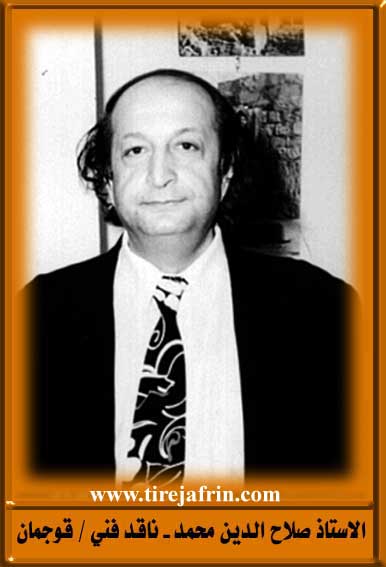
The artist Selahedîn Mihemed was a high-ranking employee in the Ministry of Culture of the Syrian state. He was also a world-renowned painter and critic. He wrote many books on cultural topics.
[Image of Selahedîn Mihemed]
www.tirejafrin.com
The late artist Salah Muhammad in Qamishli
The literacy rate in the village is high, including 16 doctors and pharmacists, and many other people who
29
have obtained university degrees in various fields.
It is worth remembering that the village's school was established by the UNESCO organization in 1985.
Transcriptions and Subtitles
| Source | Video | Subtitles | Transcript |
|---|---|---|---|
| Ax û Welat 1 | Watch Video | Download SRT | View Transcript |
| Multi Channel 1 | Watch Video | Download SRT | View Transcript |
Foundation/Origin Information of Qujûma
The Bahjat Sido Mimi family are the original owners of the village and the first to inhabit it.
Source: TirejAfrin Site
Its founding families, belonging to the Millî tribe from Northern Kurdistan, relocated from the village of Xerzûn.
Source: Ax û Walat Transcript
Possible Village Name Meaning of Qujûma
The folk name indicates something inflated. It is also a name for a Kurdish tribe living around Qars city in northern Kurdistan. The Arabs translated its ancient name to 'Al-Dakhm' (The Huge).
Source: TirejAfrin Site
The name Qojoman, meaning 'great man' in Turkish, was reportedly given during the Ottoman period.
Source: Ax û Walat Transcript
V. Links
- Tirej Afrin:
https://www.tirejafrin.com/site/kura%20afrin%20Cindires%20-%20qujman.htm - Ax û Welat:
https://www.youtube.com/watch?v=p-LHjHSNIBs - Jawlat:
https://www.youtube.com/watch?v=lP6NQ-ACWYw - Video:
https://www.youtube.com/watch?v=tvyudwN4d5k - Link:
https://www.youtube.com/watch?v=9PauoSZKds0 - Link:
https://www.youtube.com/watch?v=FlQ6XIQXzZg - Link:
https://www.youtube.com/watch?v=DmjWh67ytVI