General Information
Nahiya (Subdistrict)
Efrîn
Also Known As
Telfê, Tilfê, Tilifê, تلف, تللف
Tribes
Şîtka
Families, Clans, etc.
Elî Beg, Hesen Efendî, Hisênî Mistî Zelxû, Mala Elî Beg, Mala Hemgulî, Mala Hisênê Mistî Zelxû, Mala Mecîd, Mala Mûrad, Mala Seydo, Mala Xoca Henan, Mala Zênel, Malbata Hesen Efendî, Mûrad, Seydo, Seydî Mêmo, Xoca Henan, Zeynel, Zênal
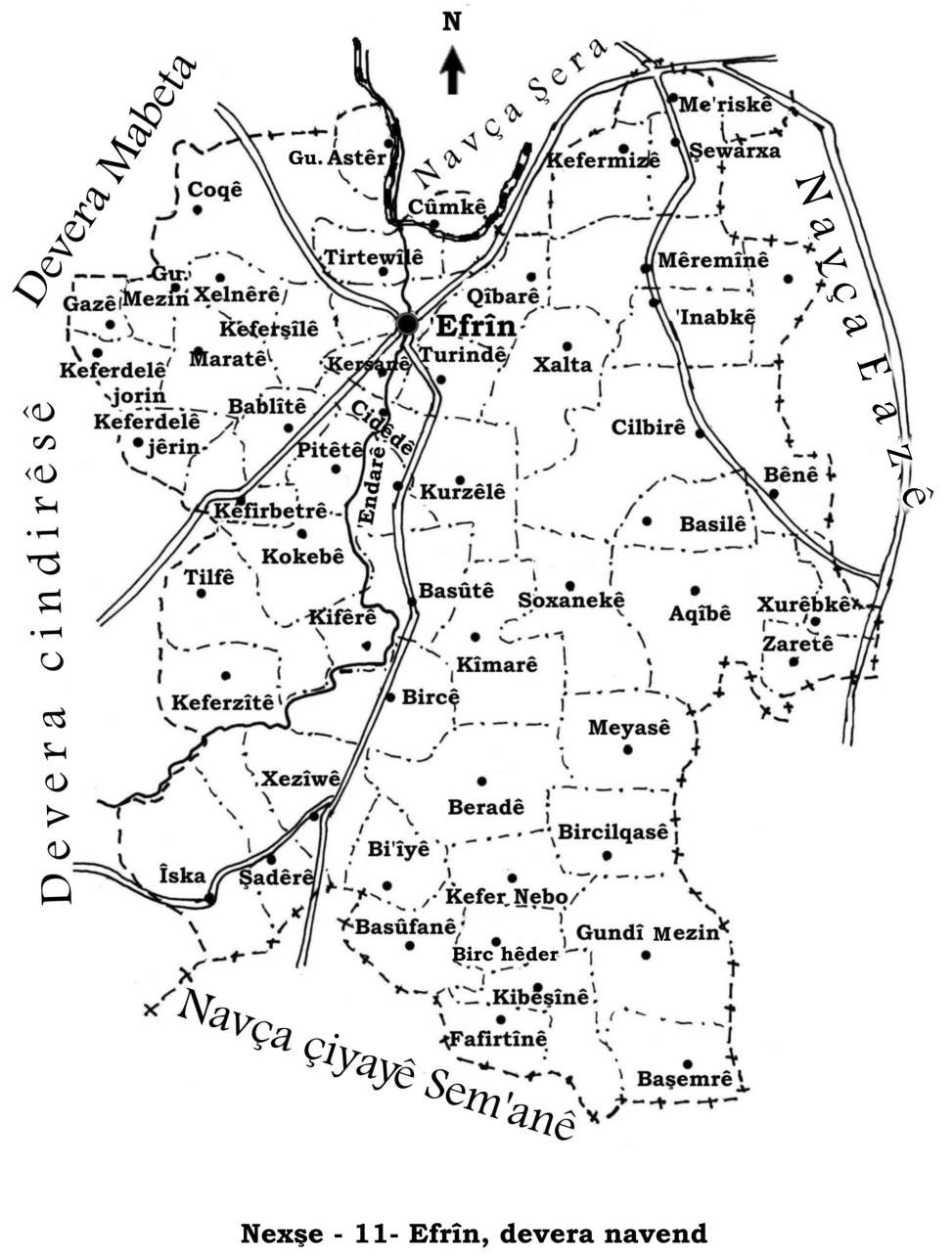
Photos
Basic Information about Tilifê
Source: Ax û Welat
Etymology: Derived from "Til" (hill) and "Liv" (interpreted as 'jî li vê', meaning 'also here', or related to 'Telîb')
Foundation Date/Period: Early 20th century
Hills: Serê Kût
Other Landmarks: Bêder
Summaries
I. Summary from TirejAfrin Site (English) of Tilifê
Source: https://www.tirejafrin.com/site/kura%20afrin%20markaz-%20tilife.htm
The following is stated in the book جبل الكرد (عفرين) دراسة جغرافية Çiyayê Kurmênc (Efrîn): A Geographical Study by د. محمد عبدو علي Dr. Mihemed Ebdo Elî:
Tilf / 811 people 290 hectares 10km 345m /:
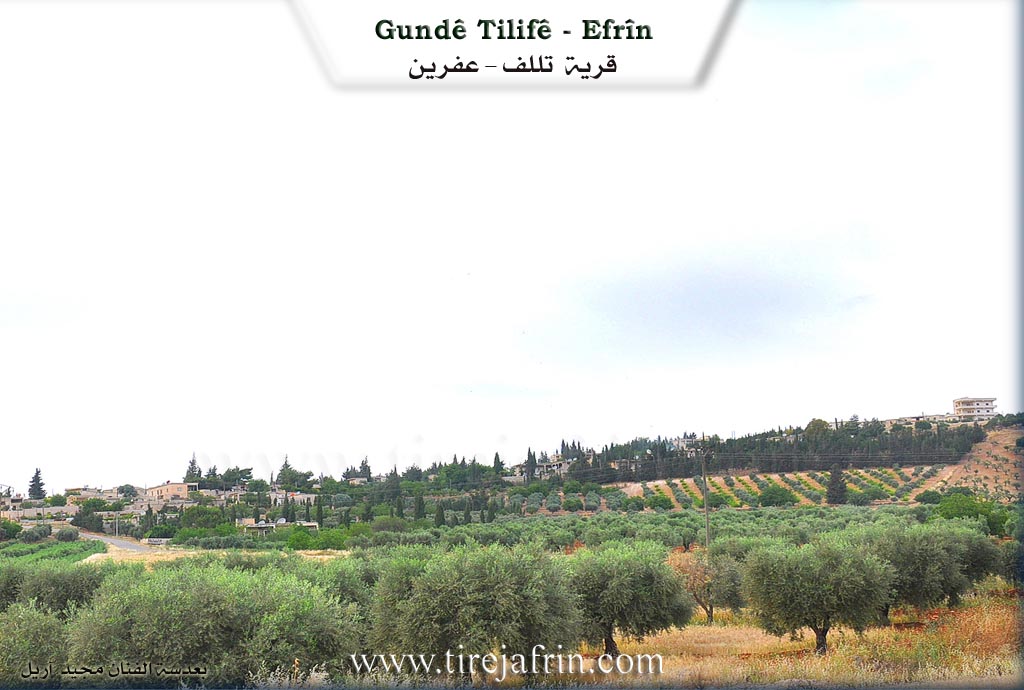
Tilf: In Kurdish, it means the remains of olives and grapes after pressing them (telf) /Kurdistan Dictionary/. The village is located amidst vast fields of olive trees.
It is a small village located on the western slope of the Qerac Tilf height. It has been inhabited by the Zeynel family from the Aghas of the Hesen Efendî family since the eighteenth century. It contains an important workshop for manufacturing some agricultural machinery parts.
The following is stated in the book عفرين .... نهرها وروابيها الخضراء Efrîn... Her River and Her Green Hills by the writer عبدالرحمن محمد Ebdulrehman Mihemed from the village of Qetme:
Tilf: A village in Çiyayê Kurmênc, administratively belonging to the central villages subdistrict of the Efrîn area, Heleb governorate.
It is a medium sized village situated on the western slope of the Kerac Tilf height (380m), at the beginning of a watercourse heading towards the northwest on land with clay soil. It is 10km away to the southwest of Efrîn city.
It is bordered to the north by a slope and an agriculturally fertile plain, the Riya Efrîn-Cindirês (Efrîn Cindirês road), and the village of Kefer Delê Jêrîn. To the south by a slope and a plain planted with olive trees and the village of Kefer Zît. To the west by a slope and an agricultural plain planted with olive trees and the village of Şêx Ebdulrehman and El-Ezîziyê. To the east by a mountainous height planted with olive trees and the villages of Kewkebê and Bozîkê.
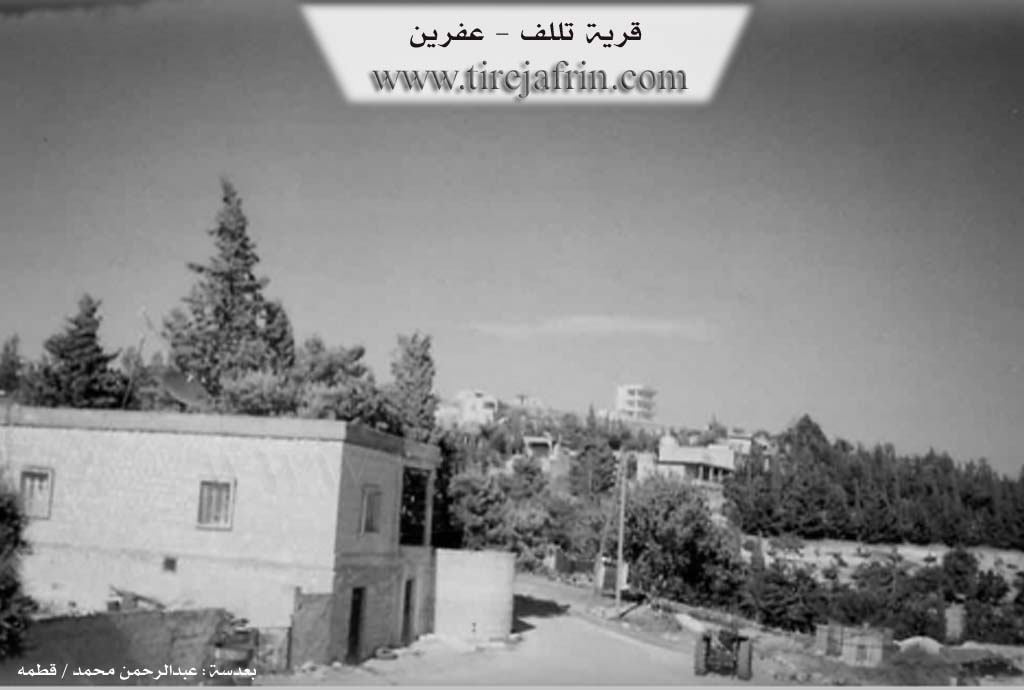
The number of its houses reaches about 45 houses and its age is about 400 years. Its old residences are made of stone and mud with wooden ceilings, while the modern ones are made of stone and reinforced concrete. Modern construction has spread in all directions. An electricity network is available, as well as a primary school and a paved road passing through its center to the nearby village of Kefer Zît.
The residents drink from artesian wells found in the courtyards of houses or water collection pools. Its inhabitants work in the cultivation of olives, vines, grains, and vegetables, and they raise sheep. Its lands are very fertile agricultural lands and surrounded by olive trees from all directions. Among its most important families are the Zeynel family and Hesen Efendî.
Village Mukhtar: Imad Eldîn Zeynel
Preparation and execution:
Director of the Tirej Afrin website: Ebdulrehman Hacî Osman
20/12/2013
Sources
Book: جبل الكرد (عفرين) دراسة جغرافية Çiyayê Kurmênc (Efrîn): A Geographical Study by د. محمد عبدو علي Dr. Mihemed Ebdo Elî.
Book: عفرين .... نهرها وروابيها الخضراء Efrîn... Her River and Her Green Hills by عبدالرحمن محمد Ebdulrehman Mihemed from the village of Qetme.
Studies of Navenda Tirej Soft / Ebdulrehman Hacî Osman.
II. Summary of Tilifê from Ax û Welat
Source: https://www.youtube.com/watch?v=qRqu5wLhDcg
The village of Tilefê (also referred to as Tilivê) is located in the Cindirêsê district of the Efrîn region, situated in the Cûmê plain. It is a relatively modern settlement compared to others in the region, with a history spanning approximately one hundred years. The name is locally understood to be a combination of "Til" (meaning hill or mound) and "Liv" (interpreted by elders as "jî li vê," meaning "also here"). The village was founded by Hesen Efendî, who migrated from the village of Gazê. His son, Îsa Axa, and grandson, Elî Beg, established the lineage that still dominates the village population today.
The social structure of Tilefê is unique in that it is almost entirely composed of one extended family descending from Elî Beg. Elî Beg had two sons, Mûrad and Zênal, whose descendants form the core of the village. Over time, the village integrated a few outsiders through marriage because the founding family had few sons initially and sought sons-in-law (zava) to settle with them. Notable additions include Xelîlê Seydî Mêmo from Çolaqa, who married Nazlî Xatûn; Ebdiyo from the Seydo family (also from Çolaqa), who married Şewû Xatûn; and Hisênî Mistî Zelxû from Kefer Şîlê. Additionally, Xoca Henan from the Şîtka tribe settled there after marrying into the family. Despite these additions, the residents describe themselves as one cohesive unit where everyone is related.
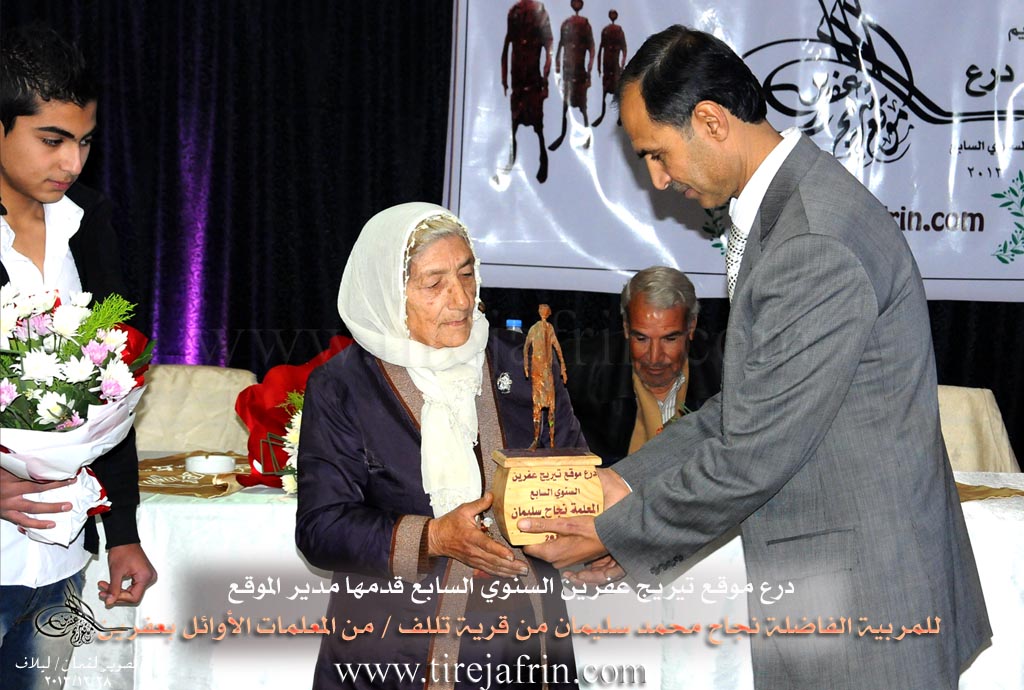
Tilefê is renowned within the Çiyayê Kurmênc for its exceptional emphasis on education. Despite its small size, the village boasts a disproportionately high number of university graduates, including over 20 doctors, 12 engineers, and 10 pharmacists. One of its most distinguished residents is Necah Silêman, originally from Mîrka, who was the first female teacher in the Efrîn region. She recounts beginning her education in the 1940s and facing discrimination in the 1950s when Kurdish teachers were removed from posts in Efrîn. Her husband, Şewket, was a lawyer.
The village economy is based on olive cultivation and agriculture on the Cûmê plain. It also hosts poultry farms, such as the one managed by Mistefa lûyî Xelîl from Meydankê. A notable industrial feature is a workshop run by Zuhêr that manufactures olive press machinery, reducing reliance on imported equipment from Turkey or Italy.
Social life centers around the Bêder (threshing floor), historically used for weddings and the Newroz celebration. A specific hill named Serê Kût is the traditional site where the villagers gather to light the Newroz fire. The village also historically supported a running club named Şoreş and a football team.
II. Summary of Tilifê from Ax û Welat 2
Source: https://www.youtube.com/watch?v=pMgrUkob3qo
The village of Tilif, located in the Çiyayê Kurmênc region of Efrîn, is a settlement defined by a cohesive familial structure and a strong reputation for education and industry. The name Tilif is said by locals to derive from the combination of "Til" (hill or mound) and "Liv" (movement or activity), or potentially "Lev" (edge), referring to its geographic position near a mound known as Tilk to the west. The village history is relatively recent compared to ancient sites in the region, having been founded over a century ago by migrants from the nearby village of Gazê. The primary ancestor of the village is identified as Hesen Efendî, specifically his son Îsa Axa and grandson Elî Beg. The first specific settler mentioned is Hec Hemîd.
The social structure of Tilif is unique in that the residents describe the entire village as consisting of a single extended family, primarily descending from the lineage of Elî Beg and his sons Mûrad and Zênel. However, the village population expanded through a practice of integrating sons-in-law (zava) into the community. Families such as Mala Seydo arrived from Çolaqa via marriage links to Nazlî Xatûn, while others like Mala Xoca Henan came from Şîtka, and Mala Hisênê Mistî Zelxû also joined the community. Despite these additions, the residents maintain a strong sense of kinship, stating there are no strangers among them.
Geographically, Tilif is situated in the fertile Deşta Cûmê. It is surrounded by specific local landmarks that anchor the community's daily life and history. To the east lies Serê Kût, a hill historically used for lighting the Newroz fire and community gatherings. Water sources played a crucial role in the village's development; the historic well known as Bîra Gund was once the sole source of water, supplemented later by Bîra Ezê and water channels like Erqa Avê and Erqa Xelo. To the north lies the pass Keliyê Bamirî.
Tilif is particularly renowned in the Efrîn region for its high level of education. Residents proudly cite a disproportionate number of doctors, engineers, and pharmacists relative to the village's small population. This dedication to learning is personified by Nejah, a resident originally from Mîrka, who is celebrated as one of the first women in Çiyayê Kurmênc to become a teacher. Her sister Henîfe is also a noted educator.
Economically, the village relies on olive cultivation, a staple of the region. However, Tilif has also developed a reputation for industrial innovation. A local machinist named Zuhêr established a workshop manufacturing olive press machinery (meqbes), branding his products with the name of Efrîn and exporting them to Urdun, Libnan, and across Sûriyê. Additionally, poultry farming is a significant local business, with large-scale operations managed by residents like Mistefa Luwî Xelîl Mîrîd.
II. Ax û Walat Book 1
VILLAGE OF TILIFÊ
14/9/2016
The village of Tilifê is affiliated with the Cindirêsê district of the Efrîn canton, located 10 km west of the city of Efrîn and 10 km east of the city of Cindirêsê.
The village of Tilifê is a small and new village; its history is at most 100 years old. It was built in the Cûmê plain.
The name of the village comes from the two words (Til liv), because to the east of the village there is a "til" or hill named (Serê Qut), and also the NEWROZ fire is lit there, and all the villagers gather there on the evening of the holiday and make the Newroz fire roar.
The village of Tilifê is composed of 4 main families:
Hemîd Henan Zênel, who is originally from the village of Gazê, was the first person to settle in the village, after which other families came and the village became populated. Xelîl Axa from the village of Çolaqa, Xocê Evdê Eşê from the village of Şîtka, and Hisênê Mistê Zelxo from the village of Keferşîlê came and settled in the village. Now the village is composed of 5 families:
The Zênel family, Hemgulî, Xoce, Evdê Axa, and the family of Hisênê Mistê Zelxo.
Due to the abundance of agricultural lands, their owners, who were also landowners at the time, returned and built houses near their lands and settled there.
To the north of the village are the Bamirî valley, the Cidirêsê road, the Efrîn Driving School, and Erqa Evdê Welkê, which is a river of water that comes from the base of Mount Maratê.
To the east are the Serî Qut hill, the village of Kokebê, and Kelem Sêwiyê Biçûk.
To the south are the Cirnikê Road, the Aşan Road, the Gund well, which is an old well from which the villagers used to get their water, the Water Canal, and the village of Keferzîtê.
To the west of the village are Erdê Sewkiyê, the Ezet well, Erqa Xelo, and the villages of Til Hemo and Kanî Gewrika.
The village threshing floor is to the west of the village, and to this day, farmers gather their sheaves there and thresh them with a thresher. In the past, celebrations and dances were held on the threshing floors, and also in 1993, the NEWROZ celebration was held there, and the May 1st holiday was also held there in the same year. In the spring, the threshing floor becomes a place for grass and herbs.
There are about 60 houses and around 600 people living in the village.
The people of the village make their living from agriculture, and the villagers only own olive groves. Some families also own livestock.
In the village, there is a modern factory for making olive pomace and olive press lines; the products of this factory are sent to all the cities of Syria, Jordan, and Lebanon, but now a branch has also been established in the city of Efrîn. About 10 people work in it and make a living for their families.
More than 15 people work in the institutions and bodies of the Autonomous Administration in Efrîn and Cindirêsê.
It is worth mentioning that the number of educated people in the village is very high; among them, more than 21 are doctors, 8 are pharmacists, 2 are lawyers, and 12 are engineers. That is, in total, more than 70 people have graduated from universities in various fields, and many people have also completed institute and high school studies.
Şewket Ne’san: one of the first people who participated in the founding of the Democratic Party of Kurdistan in Syria in 1957, along with Mihemed Elî Xoce and Reşîd Hemo. He is also one of the first lawyers from the Kurmênc Mountain region. He faced many obstacles, torture, and arrests at the hands of the Syrian authorities.
Edhem Hemgulî (Bavê Kawa): a poet who wrote in Kurdish and wrote many poems for artistic groups like the Armanc group and the Engîzek group.
Mecîd Hemgulî: a famous singer who has put in a lot of effort and work in the field of singing.
Kemal Henan: was a famous politician in the Kurdish Movement, and he was one of the founders of the Efrîn Local Council. He lost his life in 2014 due to shelling by gangs on the Şêxmeqsûd neighborhood.
It is worth mentioning that a running team named (Şoreş) was founded in the village in 1980, and also a football team in 1978 that continued for about 10 years.
Transcriptions and Subtitles
| Source | Video | Subtitles | Transcript |
|---|---|---|---|
| Ax û Welat 1 | Watch Video | Download SRT | View Transcript |
| Ax û Welat 2 | Watch Video | Download SRT | View Transcript |
Foundation/Origin Information of Tilifê
It is inhabited by the Zeinel family, relatives of Hassan Effendi from the 18th century. Among its most important families are the Zeinel and Hassan al-Effendi families.
Source: TirejAfrin Site
Founded by a single family lineage that migrated from the village of Gazi in Duderiyê. The community's primary ancestor is identified as Elî Beg, son of Qeyso Axa and grandson of Hesen Efendî, and nearly all inhabitants descend from him, with only one or two families having joined later from other villages such as Çolaqa.
Source: Ax û Walat Transcript
Founded by Hesen Efendî, an ancestor who migrated from the village of Gozê. Tilfê was established on former state land purchased from local figures Îsa Axa and Elî Beg. The entire village community descends from a single progenitor, Elî Beg, and has grown from an initial five households to over sixty.
Source: Ax û Walat Transcript
Possible Village Name Meaning of Tilifê
Tilf: In Kurdish means the remnants of olives and grapes after pressing them.
Source: TirejAfrin Site
Believed to derive either from the Kurmanji phrase "dordorê gir" (around the hill) or the older name "Til-Lev."
Source: Ax û Walat Transcript
The village's name is derived from a local landmark, a hill known in Kurdish as "Girê liv" (moving hill) or "Serê Kût".
Source: Ax û Walat Transcript
V. Links
- Tirej Afrin:
https://www.tirejafrin.com/site/kura%20afrin%20markaz-%20tilife.htm - Ax û Welat:
https://www.youtube.com/watch?v=zS94wtwF_X8 (no longer available) - Video:
https://www.youtube.com/watch?v=gdzONq7EFLU - Link:
https://www.youtube.com/watch?v=AcFIkSvwITQ - Link:
https://www.youtube.com/watch?v=pMgrUkob3qo - Ax û Welat:
https://www.youtube.com/watch?v=qRqu5wLhDcg