General Information
Nahiya (Subdistrict)
Efrîn
Also Known As
Xezîwê, Ĝezîwê, غزاوية, غزاويه
Tribes
Şêxleran
Families, Clans, etc.
Cemlo, El Hesen, Elî Axa, Hec Şêxo, Hemedo, Hemocor, Hemom, Hemîdê Qeydî, Hesenko, Hesenkê, Kedê, Kêfo, Mala Elî Axa, Mala Kîfo, Mala Mistefa Axa, Mala Silêman, Mala Tatar, Mala Ĝez, Mala Şêx Husên, Mehkê, Mihkê, Omer Cemîlo, Rêwiyan, Silêman, Sîdo, Sîlêmler, Teter, Weled, Xaço, Xezî, Xoce, Yûsif, Yûsifaxa, Îslêm, Şêx Husên, Şêx Larih, Şêx Mend, Şêx Milo, Şêxler, Şêxleran
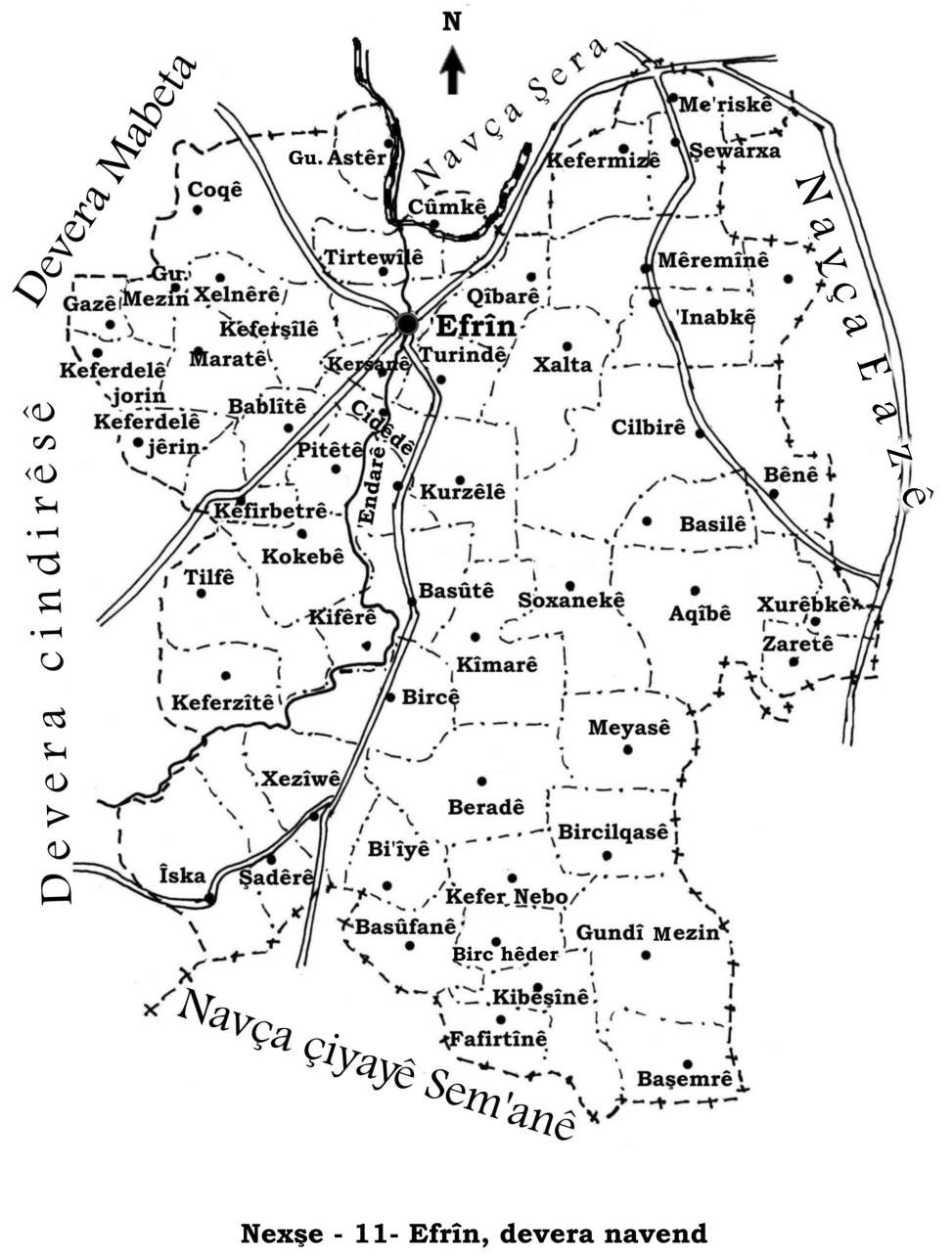
Photos
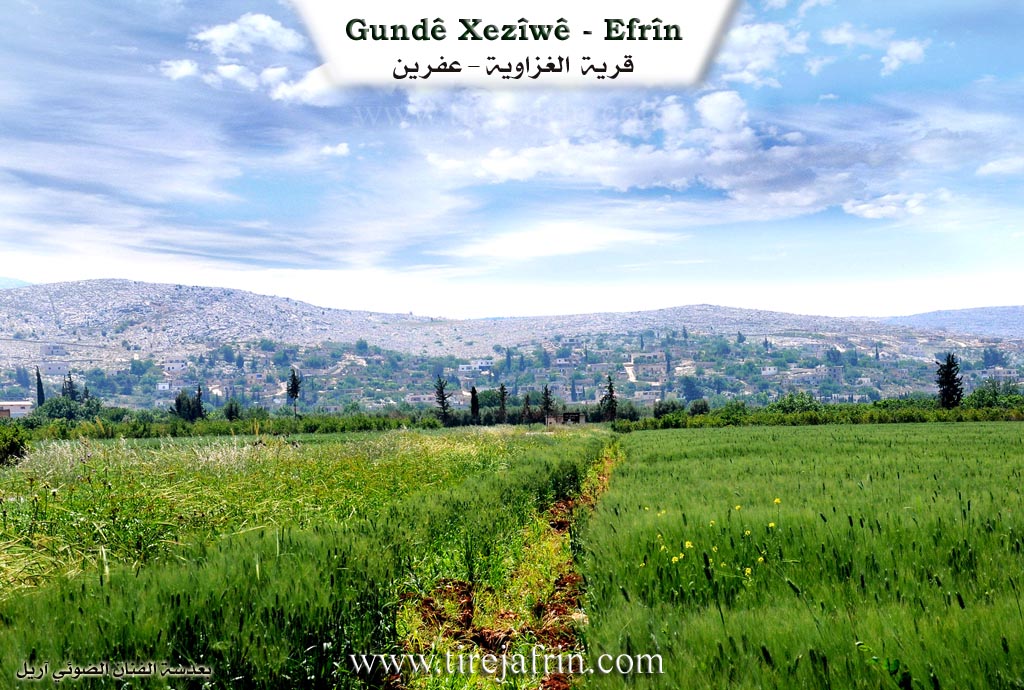
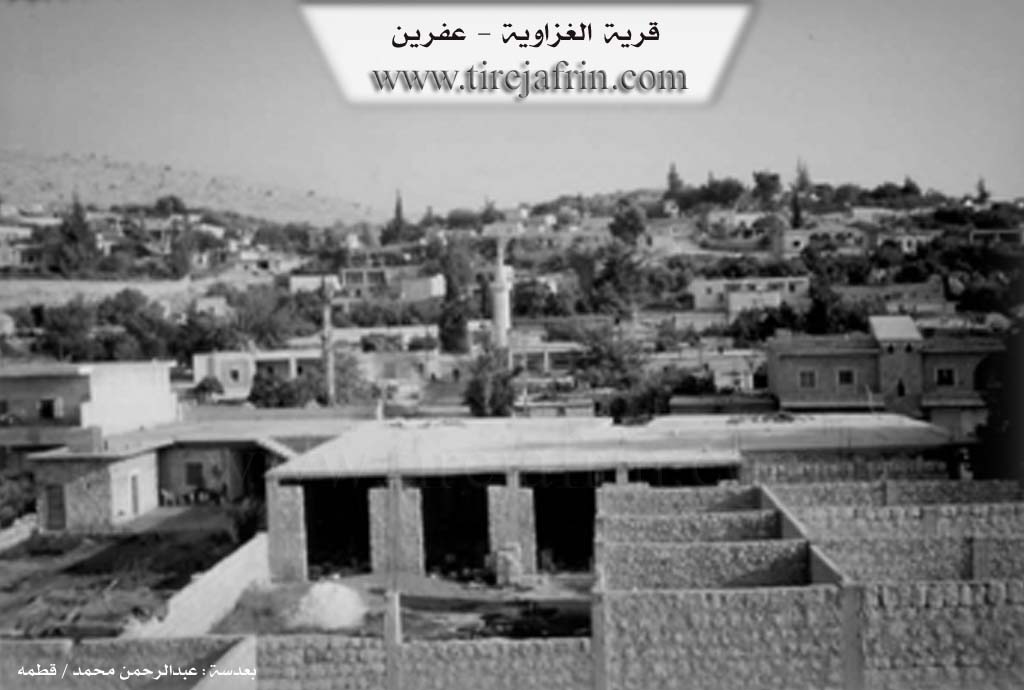
Basic Information about Xezîwê
Source: Tirej Afrin
Etymology: Derived from a Kurdish proper name; there are families in the village and neighboring villages named Mala Ĝez or Ĝez
Foundation Date/Period: Approximately 500 years ago
Hills: Çiyayê Lêlûn, Çiyayê Seman, Tûr, Şêx Berekat
Other Landmarks: Wadiyê Efrîn, Deşta Cûmê, Wadiyê Şêx Riqaq
Summaries
I. Summary from TirejAfrin Site (English) of Xezîwê
The following is stated in the book جبل الكرد (عفرين) دراسة جغرافية Çiyayê Kurmênc (Efrîn): A Geographical Study by د. محمد عبدو علي Dr. Mihemed Ebdo Elî:
Ĝezawiyê / Ĝezw
(2176 inhabitants - 102 houses - 18 km - 240 m)
I believe the name is derived from a Kurdish proper name, as there are families in the same village and some neighboring villages called Mala Ĝez, Ĝez, etc.
It is a large and prosperous village, located on the northern slope of a height of Çiyayê Lêlûn with an elevation of 355 meters. There are those who follow the Êzîdî faith, constituting about half of the village's population, and Şêx Husên, the Sheikh of the Êzîdî in the Efrîn region, resides there. The village contains shops, a fuel station, and some beautiful buildings extending along the paved road passing through it.
The following is stated in the book عفرين .... نهرها وروابيها الخضراء Efrîn... Her River and Her Green Hills by the writer عبدالرحمن محمد Ebdulrehman Mihemed from the village of Qetme:
Ĝezawiyê is a village in Wadiyê Efrîn and Deşta Cûmê, administratively belonging to the villages of the center and region of Efrîn and the governorate of Heleb. It is a large village located on the lower northern slope of Tûr mountain (355 m), at its convergence with the flood plain of Wadiyê Efrîn. Its lands slope towards the northwest of the Efrîn river valley.
It is bordered to the north by a wide, fertile agricultural plain, the Efrîn river valley, and the village of Kefer Zît north of the river. To the south, it is bordered by the Çiyayê Seman chain and Şêx Berekat. To the west, it is bordered by Wadiyê Şêx Riqaq, the plain, and the village of Şêx Dêr. To the east, it is bordered by the Çiyayê Seman and Çiyayê Lêlûn chains, and the crossroads of Efrîn-Daret Ize-Heleb, Berad, Baê, and Burc Ebdale.
The number of houses reaches approximately 200 to 250, and the age of the village, according to the narration of its residents, is approximately 500 years. An electricity network is available, as well as drinking water from the village well on the eastern side. It has two schools (primary and preparatory), a mosque, and telephone lines. A municipality house was established there, which includes a group of villages: Şêx Dêr, Îska, in addition to Ĝezawiyê.
Its old houses are made of stone and mud with wooden roofs, while the modern ones are made of stone and reinforced concrete, spread along the sides of the Riya Heleb-Efrîn-Celemê-Daret Ize (Aleppo-Efrîn-Celemê-Daret Ize road). A paved road connects it, passing through its center, to several neighboring villages. Its residents work in cultivating irrigated and rain-fed lands. Its most important crops are cotton, grains, sugar beets, vegetables, pomegranates (which are widely spread), apples, walnuts, peaches, and pears. Water comes to it from the Efrîn river and artesian wells. Residents also work in raising sheep, goats, and cows.
There is a spring of water at the end of the western slope of Çiyayê Seman overlooking Wadiyê Efrîn to the east of the village of Ĝezawiyê; it is 17 km away from Efrîn towards the southwest, and its water flows northward through the village's orchards. The state also dug three artesian wells east of the village to feed the network that irrigates the village and its crops.
Among its most important families are: Mala Mistefa Axa, Mala Elî Axa, Mala Şêx Husên (Sheikh of the Êzîdî sect), Mala Kîfo, Mala Tatar, and Mala Silêman.
Among those with higher degrees in the village is Mr. Mihemed Enwer Elî (Master's in Philosophy) and many holders of university degrees in various specializations. Among the social figures in the village are: Şêx Husên, Mr. Mihemed Enwer Elî, and Mr. Ziyad Silêman. The village Mukhtar is Mr. Semîr Mistefa.
The village of Ĝezawiyê is a socially cohesive village. There are also more than 150 families from Ĝezawiyê in countries around the world (Europe).
Sources:
- Book: جبل الكرد (عفرين) دراسة جغرافية Çiyayê Kurmênc (Efrîn): A Geographical Study by د. محمد عبدو علي Dr. Mihemed Ebdo Elî.
- Book: عفرين .... نهرها وروابيها الخضراء Efrîn... Her River and Her Green Hills by عبدالرحمن محمد Ebdulrehman Mihemed from the village of Qetme.
Preparation and execution:
- Manager of Tirej Efrîn website: Ebdulrehman Hacî Osman
- 20/12/2013
II. Summary of Xezîwê from Afrin 366
Source: https://www.youtube.com/watch?v=dmzcBiyNCAg
The documentary visits the village of Xezwê, also referred to as Xezwiyê, located in the Efrîn region. The host tours the village with Luqman, a local resident who has been living abroad in Viyana for fifteen years, where he runs a restaurant called Metem Lezîz. The village is noted for its beautiful natural surroundings, old stone houses, and strategic location with roads leading toward Heleb and Îdlib. Later in the journey, the camera crew also passes near the area of Basûtê.
When asked about the history and the meaning behind the name Xezwê, Luqman explains that the exact etymology is unknown. He notes that even the oldest elders, some who lived to be one hundred years old, did not know the origin of the village name. The foundation date remains unspecified, though the architecture and layout point to an old and established settlement.
Xezwê is a large and bustling village. The host and Luqman estimate that the village contains between 400 and 500 houses. The residents are described as incredibly hardworking, busy day and night. Several specific families make up the community. When asked about the prominent lineages residing there, Luqman lists the Cemlo, Sîlêmler, Weled, Şêxler, Hesenkê, and Mehkê families. During the visit, the host spends time at the home of Deştî and Omer Cemlo. The host sends greetings to all people, explicitly mentioning that greetings go out to everyone whether they are Kurd or Ereb.
Agriculturally, Xezwê is famous throughout the region for its fruit orchards. Luqman highlights the abundance of pomegranates, apples, peaches, and pears grown by the locals. The village is also deeply associated with traditional music and culture. The host pays respects to the late Omer Cemlo, remembering him as a great traditional Kurdish singer. This prompts a tribute to other legendary regional singers such as Ednanê Birîn, Mihemed Eliyê Tico, and Mihemedê Elkûrî, praising their enduring contributions to Kurdish music and culture.
Regarding religious or sacred sites, an older woman in the village mentions that people come from all over, including from Sûrî, Libnan, and Kurdstan, to visit local shrines. However, no specific names for these shrines are provided in the conversation. The community expresses hope for continued peace and prosperity in their homeland, with the host praising the residents and the beauty of their landscape before the crew continues their drive back toward Efrîn.
II. Summary of Xezîwê from Multi Channel
The village of Xezawiyê in the Efrîn region has a history spanning approximately 400 to 500 years. According to local historians, the village name has two possible origins. It might be derived from the Xezî family, whose name was once common in the surrounding area, or it could be named after Xezalê Mendî, an Êzîdî woman who owned the village around three hundred years ago.
In its early days, the area was an uncultivated plain used mainly for grazing. The first known inhabitants were the Şêx Larih lineage, a branch of the Şêx Mend group. They initially lived in simple tents and relied on herding livestock before eventually building houses from stone, red mud, and lime, with ceilings made of wood and river reeds. A historical Xan once stood where the modern mosque is now located. Today, elder Ehmed El Hesen preserves a 150 year old room in his family home that showcases this traditional building style.
The community of Xezawiyê is notably diverse and harmonious, comprising an Arab family alongside Kurdish Sunni Muslims and Êzîdî residents who share in each others joys and sorrows without discrimination. Among the notable families in the village are the Hec Şêxo, Sîdo, Yûsif, Şêx Milo, and El Hesen lineages. Recently, internally displaced persons have also settled in the village, bringing flocks of sheep and forming agricultural partnerships with local landowners. This blending of populations supports a modest local market where residents buy and sell fresh vegetables, bread, and sheep or cow yogurt sourced from nomadic herders.
Geographically, Xezawiyê is bordered by the rugged terrain of Çiyayê Lêlûn to the west and Çiyayê Seman to the southeast. It is situated roughly six kilometers north of the ancient ruins of Kela Seman. To the north lie the neighboring villages of Kefirzêtê, Birc Ebdalo, and Basûtê. The village serves as a vital trade link between Efrîn and the city of Heleb via Darit Ize.
Agriculture completely defines the identity of Xezawiyê. Historically, farming was limited because the lands lacked direct irrigation. However, around the year 1955, an Armenian company from Heleb constructed a canal drawing water from Çemê Efrînê starting at Birc Ebdalo and bringing it to Xezawiyê. This transformed the arid plains into lush orchards.
Over the last fifty years, the village became famous across Syria for its pomegranates. The locals cultivate specific varieties like the French pomegranate and the sour Laffan pomegranate. Women of the village, including Mewlîde Sîdo, Fatme Yûsif, and Mizgîn Ehmed Şêx Milo, are renowned for their traditional production of thick pomegranate molasses. They store harvested fruit on the ground under straw to ripen, then manually press the seeds in sacks. The pure juice is boiled over wood fires for hours until it naturally thickens without any added ingredients. This molasses is preserved for years and remains a staple ingredient for local dishes.
II. Summary of Xezîwê from Multi Channel 2
The documentary hosted by Rûlyan Hec Ehmed explores the village of Xezewiyê, located 15 kilometers from the city of Efrîn. Founded over 200 years ago, the village currently contains about 400 houses and a population of roughly 1500. The community is composed of Kurds, split equally between the Muslim and Êzîdî faiths. The residents maintain a strong bond, celebrating weddings and mourning together. An elder notes that the entire village was originally Êzîdî, but about 100 years ago, some families embraced the Muslim faith.
The religious life of the Êzîdî residents is rich in tradition. They celebrate Êda Xidir Elyas, also known as Êda Pêxûnê, on the first Thursday of February according to the eastern calendar. Young people eat a salty mixture of roasted seeds and grains called pêxûn before sleep, believing that whoever offers them water in their dreams will become their future spouse. They also celebrate Çarşema Sor on the first Wednesday of April, commemorating the creation of the world by Xwedê and the descent of his mercy at Laliş and Kaniya Sipî. The religious leader Şêx Reşîd explains that their faith strictly forbids theft, deceit, and usury, while emphasizing modesty and recognizing God.
Agriculture forms the backbone of the local economy. Interviewee Xalid Eb Mihemed, the village mukhtar, highlights that Xezewiyê is renowned for its pomegranates and the production of pomegranate molasses. Varieties grown include fransî, xemrî, lefan, and sedefî. However, water scarcity is a major challenge; water previously flowed from a dam at Meydankê, but residents now rely on newly dug wells to sustain their crops.
Historically, the village traces its roots to an Êzîdî ancestor named Soro, who settled near the ruins of Qişleya Eliyaxa above the land belonging to the Xaço lineage. He had two sons, Elî and Silêman. Elî married a Muslim woman from the Rêwiyan family. When Soro was dying, he adamantly refused the offer from Elî to bring a Muslim cleric. The village is now home to several prominent lineages, including Yûsifaxa, Kêfo, Şêxler, Teter, Hesenko, Kedê, Hemedo, Hemom, Hemocor, and Xoce. Historically, the dead were taken to Şadêrê for burial, a practice still maintained by the Êzîdî community today. Ancient graves known as Tirbên yahûdiyan are also located in the western part of the village, and notable local landmarks include the caves Şikefta Dideriyê and Şikefta Pêriyê Zînê.
Xezewiyê has a strong political history, acting as a stronghold for the Barzanî movement since the 1950s. The village produced educated figures like Mihemed Enwer Bimaroy, who recounts studying philosophy at a university in Şam. He later traveled to Hewlêr in 1970 to meet Mele Mistefa, who permitted him to write his master thesis on Ehmedê Xanî and the epic Mem û Zîn.
II. Summary of Xezîwê from Ax û Welat
Source: https://www.youtube.com/watch?v=2XMWyPVpdKc
The documentary explores the village of Xezewiyê, also known as Xezwê, located in the Deşta Cûmê at the foothills of Çiyayê Lêlûn. The village is situated near the ruins of Keleha Semanê and is bordered by Çemê Efrînê and Keferzîtê to the north, Şadêrê and Îska to the west, and Dêr Siman to the south.
The village was founded approximately 400 years ago, originally located a short distance from its current site before expanding. Local elders explain that the village is named after Xaza, also known as Xezal or Xezoya Menda, a prominent Êzdî religious woman from the Şêxleran tribe. Another local theory suggests the name derives from the Arabic word for conquest. Historically, the entire population was Êzdî and lived across the region known as Çiyayê Nebo in antiquity. Following the Ottoman occupation, many residents converted to Islam. Today, the village consists of about 400 homes and a population of roughly 3000 people. The residents are evenly split between Êzdî and Misilman Kurds, alongside one Ereb family. They all live together in deep harmony, sharing in each other's joys and sorrows.
The Şêxleran tribe forms the foundational core of the village. Several large families reside there, including the Şêxleran, Elî Axa, Silêman, Îslêm, Mihkê, Kedê, Hesenkê, and Kêfo families. The Elî Axa and Silêman families originally stem from the same lineage.
Xezewiyê is deeply rooted in spirituality. A key historical and religious site is the shrine of Şerfedîn. This shrine and its associated guest room are considered among the oldest in the region. People of all backgrounds, including Misilman and Êzdî visitors from across the region, would visit the shrine seeking healing and blessings. Historically, an old Xan stood in the center of the village, serving as a caravansary and rest stop for merchants traveling with camels between Qerexanê and Helebê. The village historically relied on Kaniya Xezewiyê for water, but as its flow decreased over the years, they began drawing water from Çemê Efrînê using a pump station built in 1980 known as Bîrca Eftaloy.
Agriculturally, Xezewiyê is highly famous for its pomegranates, boasting nearly 200000 trees of varieties like Lefon and Firensî. The village is also renowned for its celebration of Cejna Xidir Liyas, widely known as Cejna Mirazan or Cejna Pêxûnê. During this festival, villagers fast for three days and prepare Pêxûn, a mixture of forty different grains, seeds, and herbs. No blood is shed or meat used in this dish. Villagers eat the Pêxûn with the belief that they will dream of their future spouse or have their deepest wishes granted.
The village also has a rich artistic heritage. A local music group, Koma Zîlan, has been active since 1999. The village was also home to the famous Dengbêj Omer Cemîlo, who passed away in 1981. His home was a beloved gathering place for music lovers and guests from Qamişlo, Efrînê, and Cinderêsê.
II. Ax û Walat Book 1
THE VILLAGE OF XEZEWÊ
16.2.2016
The village of Xezewê is affiliated with the Şêrewa district of Efrîn canton, located about 17 km south of the city of Efînê, and at the same time is one of the villages of the Cûmê plain.
The name of the village comes from the name (Xeza Menda). This is also the name of an old woman from the village from the Şêxler family, which is known by that name as one of the main families in the village.
All the residents of the village were formerly Êzdî, but after the Ottoman occupation, many families were forced to become Muslim. Also, Êzdî Kurds live alongside Muslim Kurds
128
and an Arab family in the village in brotherhood and equality, and in all sad and happy activities and occasions, they support each other, so much so that one can hardly recognize any religious difference or separation among them.
The main families currently living in the village are:
The Şêxler family was the first family to settle in the village of Xezewê, the family of Elî Axa, Silêman, Kêfo, Kurdo, Îslim, Hesenkê, Kedê, Mihko, Nîsanê, and an Arab family named Hec Ebid live in the village.
The village of Xezewê looks like a modern village, but its history is ancient, so the village is large, with about 350 houses and 3000 people living there. Due to the size of the village, there are all kinds of household goods shops, even a pharmacy, so the villagers do not need any other village and find all their necessities in these shops.
The village of Xezewê, like many surrounding villages, is famous for pomegranates, and the entire surroundings of the village are filled with vegetable gardens and orchards with things like peppers, eggplants, beans, gourds, pumpkins, tomatoes, cucumbers, lettuce, garlic, onions, fava beans, etc., and fruit trees like apples, peaches, apricots, pears, walnuts, along with olive groves. In addition to these, the villagers plant fields of wheat, barley, lentils, chickpeas, fenugreek, and tobacco, which adorn the surroundings with greenery. So the residents
129
of the village rely on agriculture for their livelihood and sell their products in the markets of the canton.
Some families also own livestock like sheep and goats and sell their products in the surrounding villages and markets, and they make their living from it.
It is worth mentioning that all the courtyards and houses of the village are spacious and filled with trees, flowers, and blossoms, and the main roads within the village are all paved and clean.
The village of Xezewê is located at the foot of Qenterokê mountain, which is part of the Lêlûn mountain range, and it appears as if the mountain embraces the village.
The Sem’an Citadel is located about 4 km northwest of the village. After the citadel, there is the shrine of Şêx Berekêt, and the people of the village from both Êzdî and Misilman religions visit this shrine and make sacrifices for their intentions, illnesses, and the fulfillment of their wishes. The festival of Çarşema Serê Nîsanê is also celebrated there.
An ancient Êzdî shrine in the village named (Şerfedîn) existed, and its location is still known. It was considered a place of the Êzdî elders, but now it has become a shrine for both the Êzdî and Misilman peoples.
In the past, there was a spring named (Kaniya Xezewê) below the village, and all the villagers irrigated their fields
130
from it, but now its water has decreased, and the villagers rely on the water of the Birc Evdalo Dam for irrigation, which was built on the Efrîn River in 1998, and water channels have been extended to the surrounding fields.
In the village of Xezewê, there is a dance group named (Koma Zîlan) which has been continuously active since 1990, performing at national and religious holidays and occasions and presenting their works.
To the east of the village is Lêlûn Mountain, to the north is the Efrîn River and the village of Keferzîtê, to the west are the villages of Şadêrê and Îska, and to the south is the village of Dêr Sem’an.
There is one primary school and one middle school in the village, as well as a mosque.
There are many intellectuals from the village, including doctors, pharmacists, lawyers, engineers, teachers, and many who have graduated from university.
One of the famous folk singers of the region from this village is known by the name (Umerê Cemlo). He was born in the village of Xezewê in 1915. He practiced the art of folk singing for about 20 years, and he learned to sing and the art of folk singing from his uncle (Ehmed Kalo) from Bircikê Tepê or Bircilqas and from his mother (Kilê). He also sang songs at parties, gatherings, and weddings.
131
Umerê Cemlo passed away in 1981 and is buried in the cemetery of Xezewê.
He sang many folkloric songs and in this way preserved the culture of his people. Some of these songs are: Welat, Eyşa Îbê, Delal, Memê Alan, Siyad Ehmed, Bê mal, Zêneb, Besna Xêlî, Hemê Hacî, Êma Hemo, Gundê Qenterê.
He sang a national song called ((De rabin)), which was later taken and recorded by the artist Şivan Perwer.
It is worth mentioning that the tambur player of Çiyayê Kurmênc, who was famous by the name Adîkê Necar, was from the village of Xezewê. He later went to Basûtê and continued his life in the village of Kora until his passing.
Transcriptions and Subtitles
| Source | Video | Subtitles | Transcript |
|---|---|---|---|
| Afrin 366 1 | Watch Video | Download SRT | View Transcript |
| Ax û Welat 1 | Watch Video | Download SRT | View Transcript |
| Multi Channel 1 | Watch Video | Download SRT | View Transcript |
| Multi Channel 2 | Watch Video | Download SRT | View Transcript |
Possible Village Name Meaning of Xezîwê
Derived from a Kurdish proper name, as there are families in the same village and some neighboring villages called Ĝez Mala, Ĝezê...
Source: TirejAfrin Site
V. Links
- Tirej Afrin:
https://www.tirejafrin.com/site/kura%20afrin%20markaz-%20xezawe.htm - Ax û Welat:
https://www.youtube.com/watch?v=2XMWyPVpdKc - Jawlat:
https://www.youtube.com/watch?v=p9Fhp1wr0KU - Link:
https://www.youtube.com/watch?v=whC_AcmUWCg - Local FB page:
https://www.facebook.com/Xeziwe - Video:
https://www.youtube.com/watch?v=pwWOU4h69b8 - Link:
https://www.youtube.com/watch?v=-uzKiUVHA_s - Link:
https://www.youtube.com/watch?v=-dFujDY1ERc - Link:
https://www.youtube.com/watch?v=3nuVmGGGygE - Link:
https://www.youtube.com/watch?v=7c-b_WSFYDw - Afrin 366:
https://www.youtube.com/watch?v=dmzcBiyNCAg - Multi Channel:
https://youtu.be/eUTCaGhLtR4?si=UbUpoclSbvKoRuty